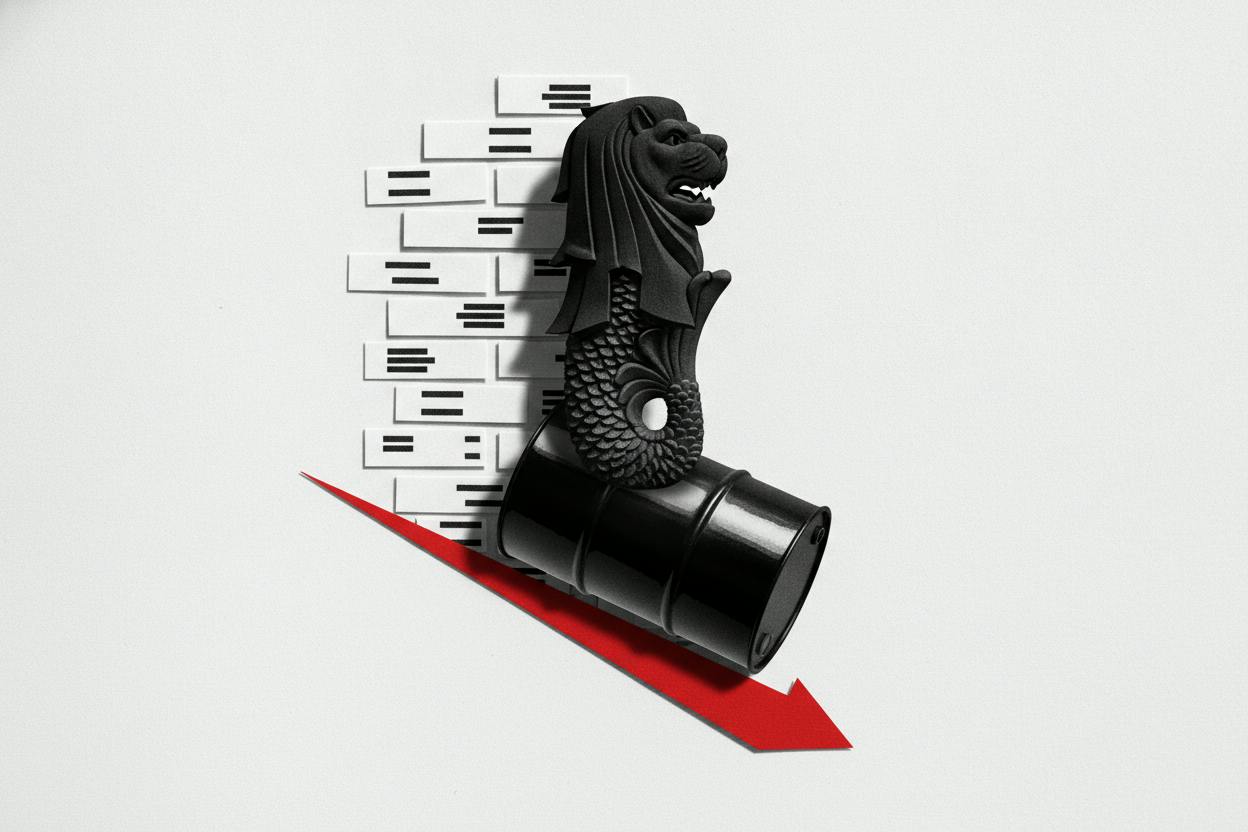
Singapore stocks took a hit on Wednesday, with the benchmark Straits Times Index (STI) dropping 1.6% to close at 5,608.44. The decline came as higher oil prices dampened risk appetite across the region, even as fresh data from the Monetary Authority of Singapore (MAS) showed the country's foreign reserves ticking up to SG$553.6 billion by the end of September.
The day's trading saw the index swing in a wide range, reflecting the mixed signals from global markets. While the reserves figure offered a positive headline, investors were more focused on the implications of rising crude prices for inflation and economic growth.
Why oil is weighing on markets
Oil prices have been climbing, and that tends to act like a small tax on economies that rely heavily on energy imports. When crude goes up, it pushes transport and production costs higher, which can revive inflation worries and make central banks more cautious about cutting interest rates. That, in turn, can dampen the mood across stock markets, as investors worry about squeezed corporate margins and weaker consumer spending.
This dynamic is not unique to Singapore. Across Asia, markets have been feeling the pinch from higher oil and bond yields. In a similar vein, emerging Asian stocks slipped as oil topped $100 and US yields stayed high, and European stocks also slid as oil and bond yields ticked higher. The pattern is clear: when energy costs rise, equities globally tend to struggle.
For Singapore, the impact is twofold. First, higher oil prices can feed into domestic inflation, which the MAS watches closely. Second, because Singapore is a small, open economy, its currency—the Singapore dollar—is the main tool for managing inflation. The MAS does not set interest rates like most central banks; instead, it manages the exchange rate.
What the reserves figure really tells us
The jump in foreign reserves to SG$553.6 billion from SG$550.7 billion a month earlier might look like a sign of strength, but it is not a clean read on policy or near-term market support. Official reserves can rise simply because the value of MAS's foreign-asset holdings went up, or because of routine currency market operations. A one-month move of that size is too small—and too affected by valuation swings—to explain a same-day drop in Singapore shares.
Instead, the reserves figure is better viewed as a signal about the Singapore dollar's path. Under the city-state's exchange-rate-based monetary policy framework, the MAS steers the currency against a basket of trading partners' currencies. When oil-driven inflation pressure builds, the MAS may allow the Singapore dollar to appreciate to help offset imported price pressures. That can affect returns for investors who hold Singapore-dollar-denominated assets but report in other currencies, and it can change the cost of hedging those positions.
So on an oil-heavy risk-off day, the reserves number is context, while the currency channel is often the transmission mechanism markets watch. For investors, the more useful question is what the oil-and-inflation backdrop means for Singapore dollar expectations, because that can alter returns once you translate them back into your home currency.
What it means for investors
For everyday investors, the key takeaway is that a single day's drop in the STI, driven by oil prices, does not necessarily signal a broader problem with Singapore's economy or corporate earnings. It is more a reflection of the global mood, which can shift quickly as energy prices move.
That said, if oil prices stay elevated, it could keep inflation pressures alive, which might influence the MAS's policy stance. That could have implications for the Singapore dollar and, by extension, for anyone holding Singapore assets or planning to convert currency in the future.
It is also worth remembering that the STI is just one measure of the market. While it fell on Wednesday, other regional markets have also been volatile. For instance, Malaysia stocks fell 1.3% even as the World Bank lifted its 2026 growth forecast, showing that even good news can be overshadowed by broader market forces.
Investors should keep an eye on oil prices and the Singapore dollar in the coming weeks. If crude continues to climb, it could put more pressure on the STI and other Asian markets. Conversely, if oil stabilises, the focus may shift back to corporate earnings and economic fundamentals.
As always, it is wise to avoid making hasty decisions based on a single day's move. Markets are noisy, and short-term swings often reflect sentiment more than substance. For long-term investors, the underlying health of the economy and the companies you own matters far more than a daily blip.