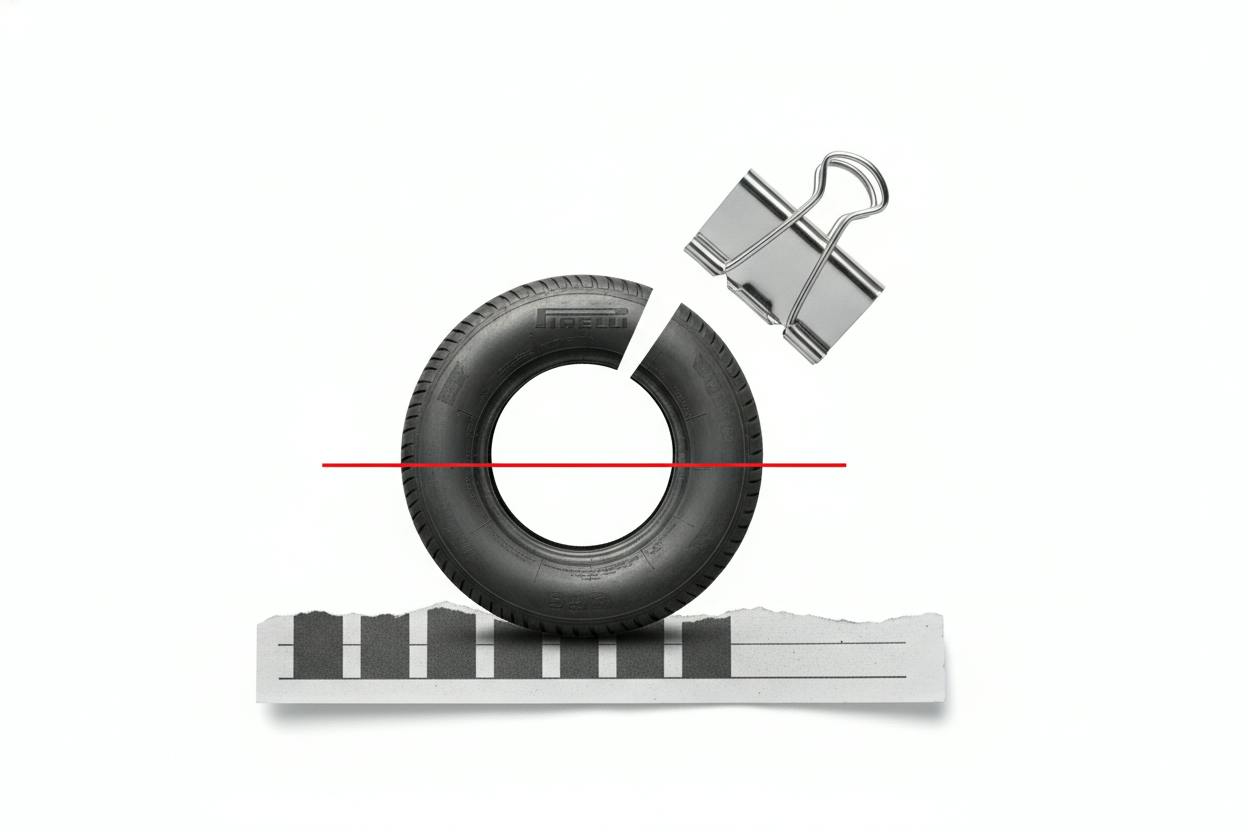
China-controlled Sinochem has trimmed its stake in Italian tiremaker Pirelli once again, selling a 6.5% block at roughly €6.5 per share. The placement, completed through an accelerated bookbuild, reduces Sinochem's holding to 13.6% and adds fresh pressure on Pirelli's share price.
Accelerated bookbuilds are a common way for large shareholders to offload big blocks quickly. Instead of dribbling shares onto the market over days or weeks, the seller works with a bank to place the entire stake with institutional investors in a matter of hours. To make that happen, the price is usually set at a discount to the last traded price. Italian broker Equita estimated the placement was priced about 3.8% below Monday's close, a typical sweetener to attract buyers for such a large block.
Why the stock is feeling the weight
Pirelli's shares fell after the announcement, a reaction that market watchers often call an “overhang.” When investors know a large shareholder still holds a big chunk of stock, they worry that more supply could hit the market at any time. That fear can keep a lid on the share price, because buyers are reluctant to pay up when they suspect another placement might be coming.
This is not the first time Sinochem has reduced its position. Earlier in 2026, the group sold a slice to Lumina Crown, a vehicle linked to Czech businessman Michal Strnad. That sale followed a governance dispute with Camfin, an Italian investor in Pirelli. The latest placement continues that unwind, and it raises the question of how much further Sinochem might go.
The 9.99% threshold that matters
One key number for investors to watch is 9.99%. Under Italy's “golden power” rules, Sinochem's voting rights are capped as long as it owns more than that percentage of Pirelli. In plain terms, shares above that line do not translate into extra voting power. That weakens the strategic value of holding a larger stake, because the extra shares are essentially a financial investment rather than a route to more control.
That dynamic makes further placements more plausible. If Sinochem cannot convert its stake into influence, it may see little reason to hold more than the threshold. Investors, in turn, may treat Pirelli's shares as more sensitive to sell-down headlines than to broader market moves, such as those in the STOXX Europe 600.
What it means for investors
For everyday investors, the immediate takeaway is that Pirelli's share price could stay volatile as long as Sinochem's stake remains well above the 9.99% line. Each new placement announcement can trigger a dip, because the market has to absorb a large block at a discount and because investors start pricing in the possibility of another sale.
That does not mean Pirelli's underlying business is struggling. The company is a major global tiremaker, and its operational performance is separate from the shareholder drama. But for investors, the overhang can dominate short-term price action, making the stock more reactive to placement headlines than to earnings or industry news.
The situation also highlights a broader theme in European markets: the interplay between foreign ownership and national security rules. Italy's golden power regime is designed to protect strategic assets, but it can also create odd incentives for large shareholders. When voting rights are capped, a big stake becomes less about control and more about pure financial exposure, which can lead to exactly the kind of sell-downs Sinochem is executing.
For now, the focus is on whether Sinochem will continue trimming toward the 9.99% threshold. If it does, each step could bring another placement and another dip. If it stops, the overhang may gradually fade. Either way, investors in Pirelli should keep an eye on the shareholder register as much as on the company's tire sales.
In the broader context, this is part of a pattern of Chinese groups reducing stakes in European companies, often amid geopolitical tensions and regulatory scrutiny. While each case is different, the trend can affect sentiment toward other China-linked holdings in Europe. For Pirelli specifically, the next few months will likely be shaped more by Sinochem's decisions than by the broader market's direction.



