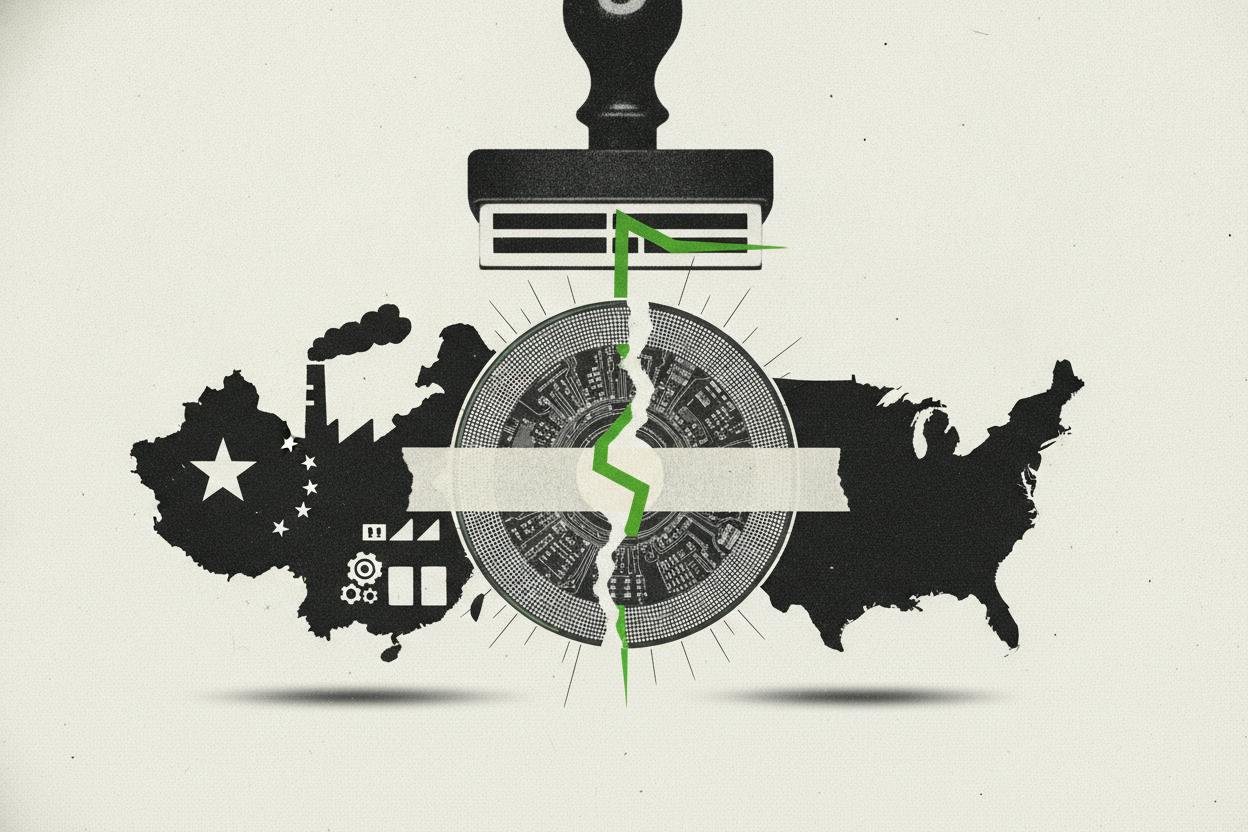
South Korean memory-chip maker SK Hynix has asked the US government for permission to use American-made NAND chipmaking equipment at its plant in Dalian, China, according to a Reuters report. The request comes as Washington tightens controls on advanced chip gear headed to China, part of a broader effort to limit Beijing's access to cutting-edge semiconductor technology.
NAND flash memory is the type of storage used in smartphones, solid-state drives, and data centers. SK Hynix is one of the world's largest producers of memory chips, and its Dalian facility is a key part of its global manufacturing network.
Why the US approval matters
The US has been restricting exports of advanced chipmaking equipment to China, citing national security concerns. Companies like SK Hynix, which operate facilities in China, must obtain licenses to bring in US-made tools that fall under these restrictions. Without approval, SK Hynix would be unable to upgrade or expand its Dalian operations with the latest equipment.
Reuters reported that the approval could help fund a future NAND plant in the US under Solidigm, SK Hynix's US-based subsidiary. Solidigm, which SK Hynix acquired from Intel in 2020, focuses on NAND storage solutions. A new US plant would align with Washington's push to bring more semiconductor manufacturing back to American soil, a goal supported by the CHIPS Act, which offers subsidies for chip production in the US.
The request is a delicate balancing act for SK Hynix. On one hand, it needs to keep its China operations competitive. On the other, it wants to expand in the US, where it could benefit from government incentives and closer ties to American customers. The outcome of this request could set a precedent for other chipmakers with operations in both countries.
Broader context: US-China tech tensions
The move comes amid escalating tensions between the US and China over technology. Washington has imposed multiple rounds of export controls on advanced chips and the equipment used to make them, aiming to slow China's progress in areas like artificial intelligence and supercomputing. These restrictions have forced companies like SK Hynix, Samsung, and TSMC to navigate a complex web of regulations.
For SK Hynix, the Dalian plant is crucial for serving the Chinese market, which is a major consumer of memory chips. But the company also sees growth potential in the US, where demand for data storage is booming thanks to cloud computing and AI. A US plant could help SK Hynix secure a foothold in that market and hedge against geopolitical risks in Asia.
The request also highlights the interdependence of the global chip supply chain. Even as the US and China compete, companies like SK Hynix rely on American equipment, Chinese manufacturing, and global customers. Any disruption to this balance could have ripple effects across the tech industry.
What it means for investors
For everyday investors, this story is a reminder of how geopolitical tensions can affect the companies they own. SK Hynix is not directly listed on US exchanges, but its performance influences the broader memory-chip market, which includes US-listed firms like Micron Technology and Western Digital. If SK Hynix is unable to modernize its China plant, it could lose market share to rivals, potentially affecting global chip prices.
On the other hand, a successful approval could boost SK Hynix's prospects and, by extension, the entire memory sector. Investors should also watch how this plays out for Solidigm, which could become a bigger player in the US market. The decision may signal how willing Washington is to allow foreign companies to operate in China while also investing in the US.
This is not the first time chipmakers have faced such dilemmas. China tech stocks have been volatile amid US-China tensions and macroeconomic pressures. Similarly, mixed inflation data from China has weighed on regional markets, showing how intertwined these issues are.
For now, investors should keep an eye on the US Commerce Department's decision. A clear approval or denial could set the tone for future requests and shape the competitive landscape in memory chips. As always, it's wise to stay informed but avoid making hasty decisions based on a single headline.