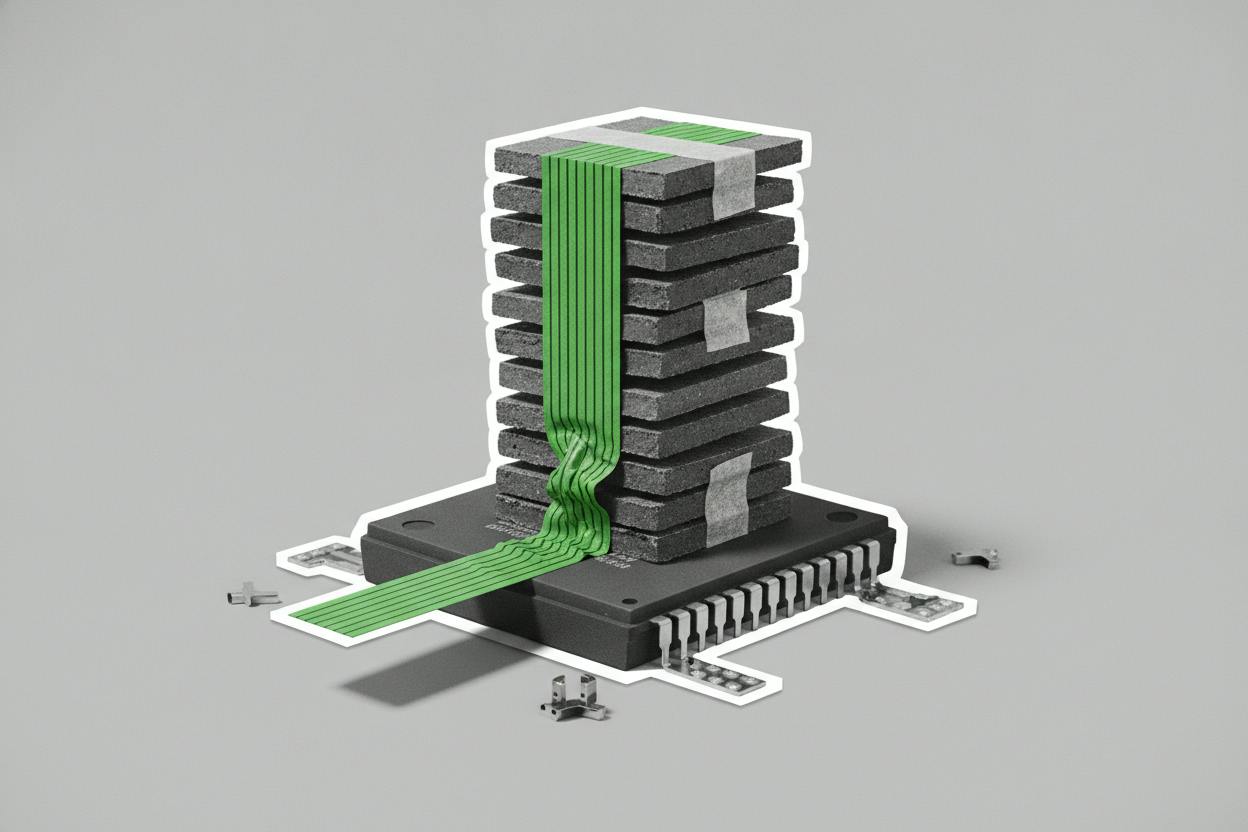
SK Hynix, one of the world's largest memory chipmakers, says artificial intelligence infrastructure will need roughly 20 times more memory performance by 2030. The company argues that the next big leap in AI won't come from faster processors alone, but from the memory systems that feed them data.
Speaking at a conference, Ahn Hyun, SK Hynix's development chief, explained that AI inference—the stage where trained models respond to real-world requests—is becoming increasingly demanding. As prompts grow more complex and arrive in larger volumes, systems struggle to fetch and move data quickly enough. That makes memory bandwidth (how much data can flow at once) and latency (how long it takes to reach the processor) the critical bottlenecks.
To meet this challenge, SK Hynix is betting on 3D stacked DRAM and higher-bandwidth memory. These technologies stack memory cells vertically and widen the data pathways, allowing AI systems to process more information in parallel and reduce delays.
Why memory is the new frontier in AI
For years, the AI hardware race focused on graphics processing units (GPUs) and specialized accelerators. But as models grow larger and more sophisticated, the speed at which they can access data has become just as important. If a processor has to wait for data to arrive from memory, even the fastest chip can't reach its full potential.
This is where memory bandwidth and latency come in. Bandwidth determines how much data can be transferred per second, while latency measures the delay before data starts moving. In AI inference, both are crucial: a model answering a search query or generating an image needs to pull vast amounts of data quickly, and any delay can slow the entire response.
SK Hynix's focus on 3D stacked DRAM is part of a broader industry trend. By stacking memory layers vertically, manufacturers can increase capacity without expanding the chip's footprint. Higher-bandwidth memory, already used in advanced GPUs, offers even faster data transfer rates.
The company's outlook aligns with other signals in the semiconductor industry. ASML recently lifted its outlook, suggesting AI chip demand will outpace supply. That points to sustained investment across the AI supply chain, from chipmaking equipment to memory.
What this means for investors
For everyday investors, SK Hynix's comments highlight a key shift in how AI growth is being monetized. While much of the attention has gone to chip designers like Nvidia, memory makers are emerging as essential beneficiaries. If AI infrastructure truly needs 20 times more memory performance, companies that produce advanced DRAM and high-bandwidth memory could see strong demand for years.
However, the memory industry is notoriously cyclical. Prices for DRAM and NAND flash have swung dramatically in the past, driven by supply-demand imbalances. Investors should be aware that even with strong AI demand, memory makers can face periods of oversupply and price declines.
SK Hynix is also navigating geopolitical complexities. The company has sought US approval for chip tools in China while eyeing a potential US plant. This reflects the broader tension between serving global markets and complying with export controls.
For those looking at the AI trade, it's worth considering the entire ecosystem. While chip designers often grab headlines, memory and other components are equally vital. The shift toward 3D stacking and higher bandwidth could create opportunities for suppliers and equipment makers as well.
Still, no one should treat this as a recommendation to buy any specific stock. Instead, it's a signal that AI's growth story is broadening beyond processors. As inference workloads become more complex, the memory that supports them will be a key battleground.
Investors will likely watch SK Hynix's earnings and product roadmaps for signs that this demand is translating into revenue. The company's confidence in a 20-fold performance increase by 2030 is ambitious, but it underscores the scale of the AI buildout that many in the industry expect.
In the meantime, the broader market is also reacting to other forces. Oil prices have been volatile, and China's lending data shows mixed signals. But for tech investors, the memory story is one to keep on the radar.
As AI models continue to evolve, the hardware that powers them will need to keep pace. SK Hynix's bet on 3D stacked DRAM and higher-bandwidth memory is a clear indication that memory is no longer a commodity—it's a strategic asset in the AI era.