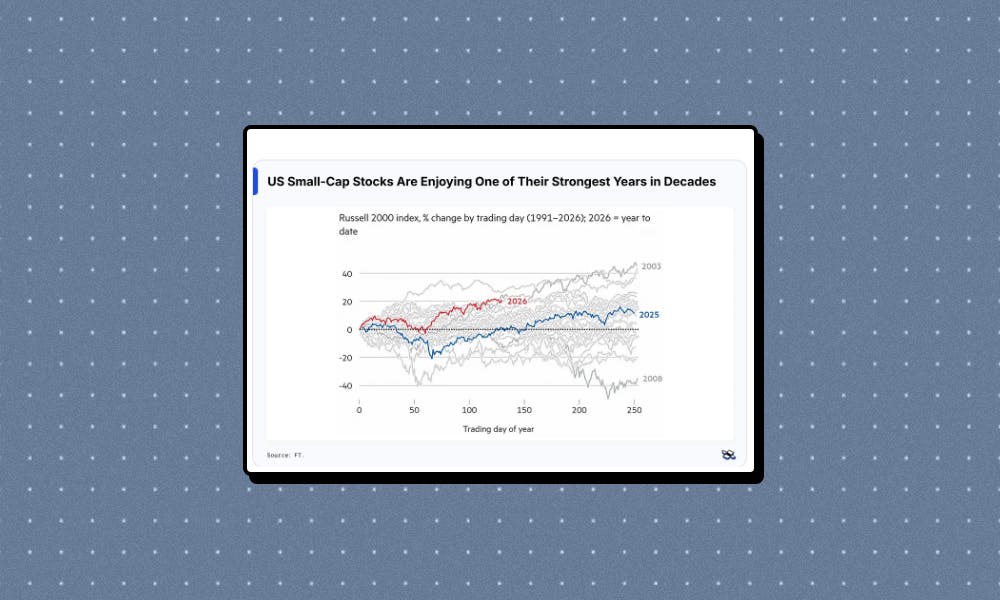
US small-cap stocks are stealing the spotlight in 2025, with the Russell 2000 index surging 20% so far this year. That puts it on track for its best performance since 2003 and comfortably outpacing both the S&P 500 and the once-unstoppable "Magnificent Seven" tech giants.
After years of lagging behind their larger peers, smaller companies are finally getting their moment. The shift reflects a broader reassessment of where the real value lies in the artificial intelligence boom.
What's Driving the Small-Cap Rally?
The key catalyst is a growing skepticism about whether Big Tech's enormous AI spending spree will actually translate into giant profits. Investors are starting to question the massive capital expenditures by companies like Microsoft, Amazon, and Google on AI infrastructure, wondering when the returns will materialize.
Instead, many are turning to smaller companies that supply the AI ecosystem. These include semiconductor equipment makers, cloud infrastructure firms, and other specialized providers that benefit from the AI build-out without needing to justify their own massive spending.
As the source notes, with the big-name US "hyperscalers" — the giant cloud providers central to the AI build-out — facing scrutiny over their spending, smaller suppliers are looking increasingly attractive.
Context: A Long-Awaited Turnaround
Small caps have been underperforming large caps for several years. The Russell 2000, which tracks roughly 2,000 smaller US companies, had struggled to keep pace with the tech-heavy S&P 500 and the concentrated gains of the Magnificent Seven stocks. This year's rally marks a dramatic reversal.
For everyday investors, this shift matters because small-cap stocks often behave differently from large caps. They tend to be more domestically focused, more sensitive to interest rates, and can offer higher growth potential — but also come with higher volatility and risk.
The broader market backdrop has also been supportive. With interest rates appearing to stabilize and the economy showing resilience, smaller companies — which often rely more on borrowing — are finding a more favorable environment.
What It Means for Investors
For ordinary investors, the small-cap surge highlights the importance of diversification. While the Magnificent Seven have dominated headlines and index returns for years, this year's rotation shows that market leadership can change quickly.
Investors who have been heavily weighted in large-cap tech stocks may want to consider whether their portfolios are adequately exposed to smaller companies. The Russell 2000's outperformance suggests that money is flowing into areas that had been overlooked.
However, it's worth noting that small-cap stocks can be more volatile. The same factors that drive their gains — sensitivity to economic conditions and interest rates — can also lead to sharper declines. As always, a balanced approach is key.
What to Watch Next
Investors will be watching whether this rotation continues. Key factors include upcoming earnings reports from both large tech companies and small-cap firms, as well as any signals from the Federal Reserve on interest rates.
If Big Tech's AI spending continues to face scrutiny, the shift toward smaller suppliers could accelerate. Conversely, if the hyperscalers start showing strong returns on their AI investments, the pendulum could swing back.
For now, small caps are living large — and the rally shows no signs of slowing down.



