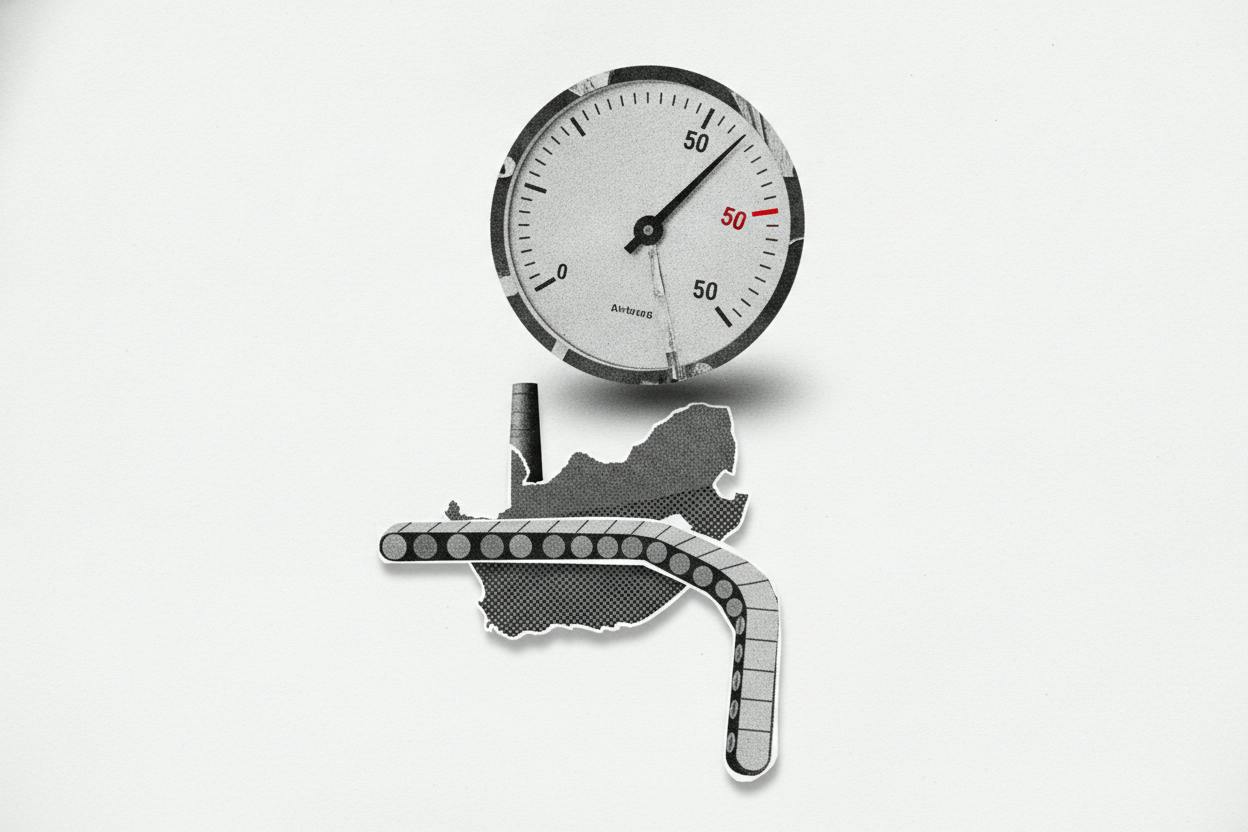
South Africa's manufacturing sector showed a touch more life in October, but the recovery remains fragile as the key purchasing managers' index (PMI) stayed below the crucial 50-point threshold that separates growth from contraction.
Absa, one of the country's largest banks, reported its seasonally adjusted PMI rose to 49.6 in October from a revised 48.7 in September. While that marks progress, it still indicates that slightly more manufacturers reported deteriorating conditions than improving ones. The index is a "breadth" gauge: a reading below 50 means more firms are contracting than expanding, not that the sector is barely growing.
Demand and production still weak
The details behind the headline number paint a mixed picture. Business activity came in at 48.6, while new sales orders were even weaker at 46.8. That gap matters because new orders tend to lead production. When demand is this soft, factories often run below capacity, and any bounce in output can quickly fade.
"The order book is the key thing to watch," said an economist familiar with the data. "With new orders still deep in contraction territory, the near-term growth signal for manufacturing remains muted even if the headline index edges up."
The weakness in demand is not unique to South Africa. Across the globe, manufacturers are grappling with sluggish consumer spending, high borrowing costs, and supply chain disruptions. In Central Europe, the factory recovery is uneven as energy costs bite, while France's factory activity slipped back into contraction in October. Even China's official PMIs slipped back into contraction last month, underscoring the global headwinds.
Confidence slips ahead of elections
Looking ahead, manufacturers' six-month expectations remained above 50, suggesting they still see better times ahead. But the index fell to 51.7 from 55.3, a notable drop. The decline reflects growing uncertainty ahead of municipal elections scheduled for November 4th, as well as ongoing logistics constraints that make it harder for firms to plan.
Elections often bring policy uncertainty, and businesses tend to hold back on investment and hiring until the landscape becomes clearer. Logistics problems—such as port congestion and rail bottlenecks—have been a persistent drag on South African exporters, adding to the challenges facing the factory sector.
What it means for investors
For investors, the PMI reading is a reminder that South Africa's economic recovery is still on shaky ground. A PMI of 49.6, while better than September, still points to contraction. The weak new orders figure is particularly concerning because it suggests demand is not picking up enough to sustain a meaningful rebound.
The drop in expectations to 51.7 is also a warning sign. Sentiment can cool quickly when delivery problems and election-related uncertainty make it harder for firms to plan. If confidence continues to slide, the factory sector could remain in the red for longer.
That said, the improvement from September is a positive sign. It suggests the worst of the downturn may be over, even if the recovery is slow. Investors will be watching upcoming data releases, including the next PMI reading, to see whether the trend continues.
For now, the message is clear: South Africa's factory sector is still shrinking, but at a slower pace. The path back to growth will depend on a sustained pickup in new orders and a resolution of the logistical and political uncertainties that are weighing on business confidence.