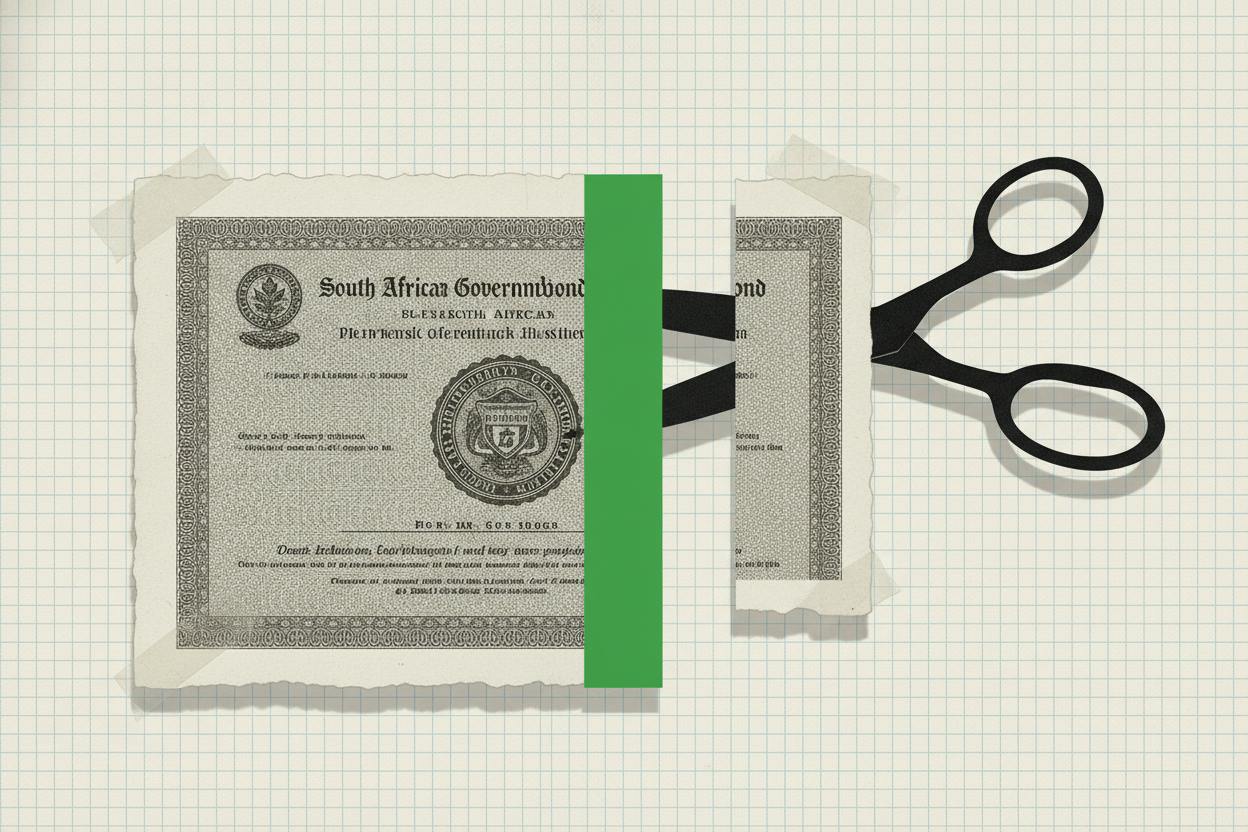
South African government bonds rallied this week after the Treasury announced plans to reduce the frequency of its weekly fixed-rate bond auctions and launch a buyback program for some outstanding debt. The move, aimed at tightening the supply of government paper, pushed bond prices higher and yields lower, even as the rand remained largely unchanged.
What the Treasury announced
The Treasury said it will cut the number of weekly fixed-rate bond auctions, a step that reduces the amount of new debt hitting the market. It also plans to buy back some existing bonds, effectively retiring a portion of the government's outstanding liabilities. Both measures are designed to manage the country's debt profile more efficiently and improve liquidity in the secondary market.
For everyday investors, the key takeaway is simple: when a government sells fewer new bonds, there is less supply for investors to absorb. That scarcity tends to push bond prices up and yields down. A buyback program does the same, by removing bonds from circulation. If the buybacks target older, thinly traded issues, they can also concentrate trading in a few benchmark bonds, making those easier to buy and sell.
Why the rand stayed calm
The rand's steadiness is notable, especially given the government also flagged two months of fuel price relief. Lower fuel prices typically ease inflation pressures and can support a currency by reducing import costs. But the rand's lack of movement suggests traders were more focused on the bond market mechanics than on the broader economic implications.
Fuel price relief is a double-edged sword for the economy. On one hand, it lowers costs for consumers and businesses, which can boost spending and growth. On the other, it reduces government revenue from fuel levies, potentially widening the budget deficit. The Treasury's bond measures may be partly aimed at offsetting that fiscal pressure.
What it means for investors
For investors holding South African bonds, the rally is a welcome development. Higher bond prices mean capital gains for those who bought earlier. But it also means lower yields for new buyers, which could reduce the attractiveness of South African debt relative to other emerging markets.
The buyback program could also have implications for bond liquidity. By concentrating trading in fewer benchmark issues, the Treasury may make it easier for investors to enter and exit positions. However, it could also make some older bonds harder to trade, as they become less liquid.
For those with exposure to South African assets, the key risks remain the country's fiscal position and its credit rating. The Treasury's actions are a sign that officials are trying to manage debt levels proactively, but the success of these measures will depend on broader economic conditions, including growth and inflation.
Broader market context
The bond rally comes amid a mixed picture for global markets. In Asia, South Korea's KOSPI fell 1% as a chip rally cooled and the central bank held rates steady. Meanwhile, Australian shares were steady as gold firmed on softer Treasury yields. These moves highlight how interest rate expectations and commodity prices continue to drive investor sentiment across regions.
In the US, Treasury yields eased to 5.102% as AI stock jitters drove safe-haven demand, a reminder that global bond markets remain sensitive to shifts in risk appetite. South Africa's bond market is no exception, and the Treasury's actions are partly a response to these global dynamics.
Looking ahead
Investors will be watching to see how the Treasury implements the buyback program and whether it extends beyond the initial tranche. The timing and size of the auction cuts will also be closely monitored. If the measures succeed in stabilizing the bond market, they could support South Africa's fiscal credibility and potentially improve its credit outlook.
For now, the rally reflects optimism that the government is taking steps to manage its debt more prudently. But as with any policy shift, the long-term impact will depend on execution and the broader economic environment. For everyday investors, the lesson is to pay attention to how governments manage their debt, as it directly affects the value of bonds and, indirectly, currencies and equities.