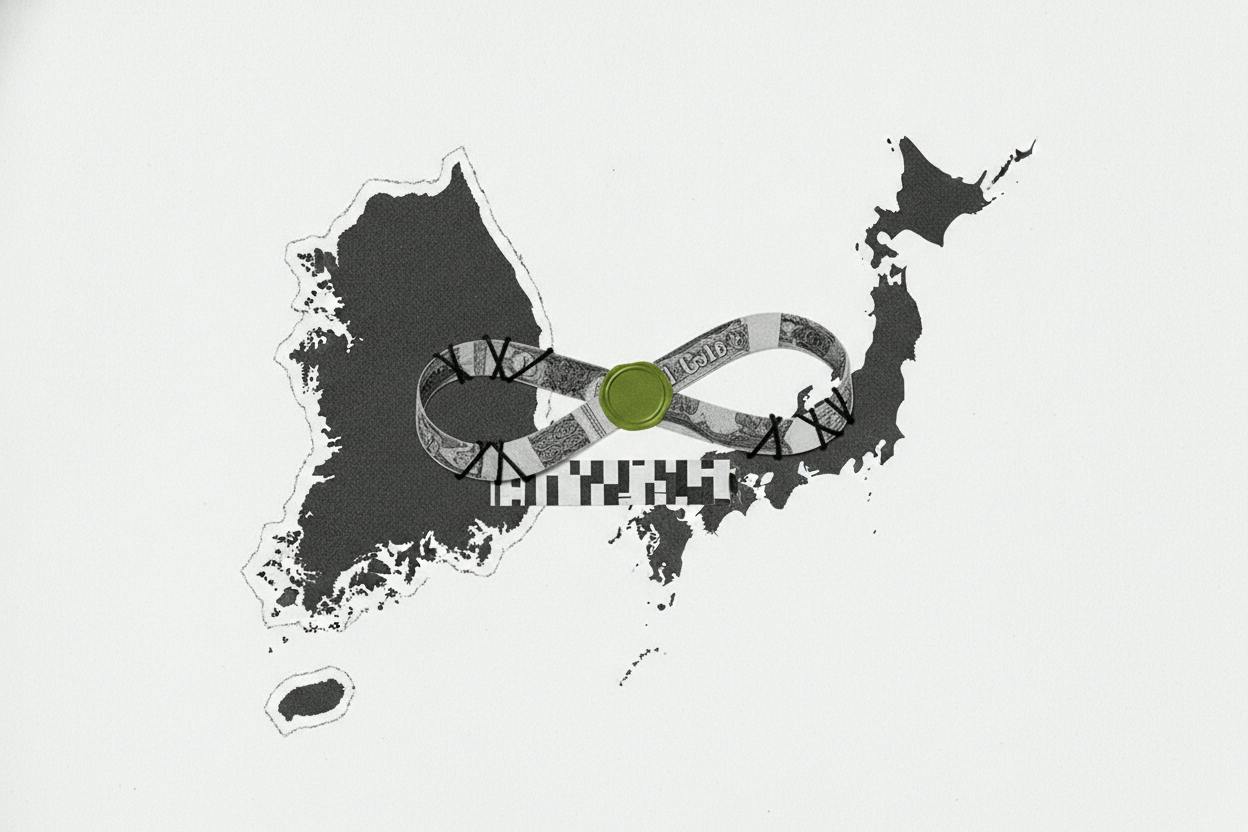
South Korea and Japan have agreed to extend their $10 billion currency swap agreement, keeping a financial safety net in place that was set to expire by the end of the year. The decision was announced Thursday by South Korea's finance ministry, following a meeting between the two countries' finance chiefs on the sidelines of the IMF and World Bank annual meetings.
The swap, first signed in December 2023 for a three-year term, will remain at its current size of $10 billion. It functions as an emergency line of credit: if one country's banks or companies suddenly need the other's currency and markets are under stress, the two central banks can exchange their currencies to provide liquidity.
What is a currency swap and why does it matter?
A currency swap is essentially an agreement between two central banks to exchange their currencies at a set rate, with a promise to reverse the transaction later. It's a tool used to ensure that financial institutions in either country have access to foreign currency during times of market turmoil.
For example, if a South Korean bank needs U.S. dollars or Japanese yen to settle international transactions but can't easily obtain them due to a liquidity crunch, the central bank can step in and provide those funds through the swap. This helps prevent a temporary shortage from turning into a full-blown financial crisis.
The extension is significant because it removes a source of uncertainty for markets. Had the swap lapsed, investors might have worried about the ability of either country to weather a future currency shock, especially given the global economic backdrop of high interest rates and geopolitical tensions.
What it means for investors
For everyday investors, this news is a quiet but reassuring signal. It suggests that the two Asian economies are committed to maintaining a safety net that can help stabilize their currencies and financial systems during turbulent times.
Currency stability matters for a range of investments. If you hold assets in South Korean won or Japanese yen, a sudden depreciation could erode your returns. The swap helps reduce the risk of such sharp moves, though it doesn't eliminate them entirely.
It also reflects a broader trend of regional cooperation. South Korea's export prices have been cooling while import costs accelerate, which could put pressure on the won. Having a reliable swap line with Japan, a major trading partner, provides a cushion against such pressures.
For investors with exposure to Japanese or South Korean equities, the extension is a modest positive. It reduces the likelihood of a currency-driven sell-off, which can hurt foreign investors who are not hedged against exchange rate movements.
Background and context
The two countries have a history of using currency swaps to bolster financial stability. The December 2023 agreement was itself a renewal of an earlier arrangement that had lapsed in 2015 amid diplomatic tensions. Its revival was seen as a sign of improving relations between the two neighbors, who share a complex history but are also major economic partners.
The swap is relatively small compared to the size of their economies, but its symbolic importance is larger. It signals that the two governments are willing to cooperate on financial matters, which can have a calming effect on markets.
Japan and South Korea are also both major exporters, and their currencies often move in tandem with global trade flows. A stable exchange rate between the two can help businesses plan and invest with more confidence.
What to watch next
Investors will be watching to see whether the two countries expand the swap in the future, especially if global financial conditions deteriorate. They will also monitor any signs of stress in Asian currency markets, which could prompt the central banks to actually use the swap facility.
For now, the extension is a low-key but welcome development. It removes one potential headache from the list of things that could go wrong in the coming year, and it reinforces the idea that policymakers are prepared to act if needed.
As always, it's worth remembering that currency swaps are just one tool in a larger toolkit. They don't prevent crises, but they can make them less severe. For the average investor, that's a small but meaningful piece of good news.