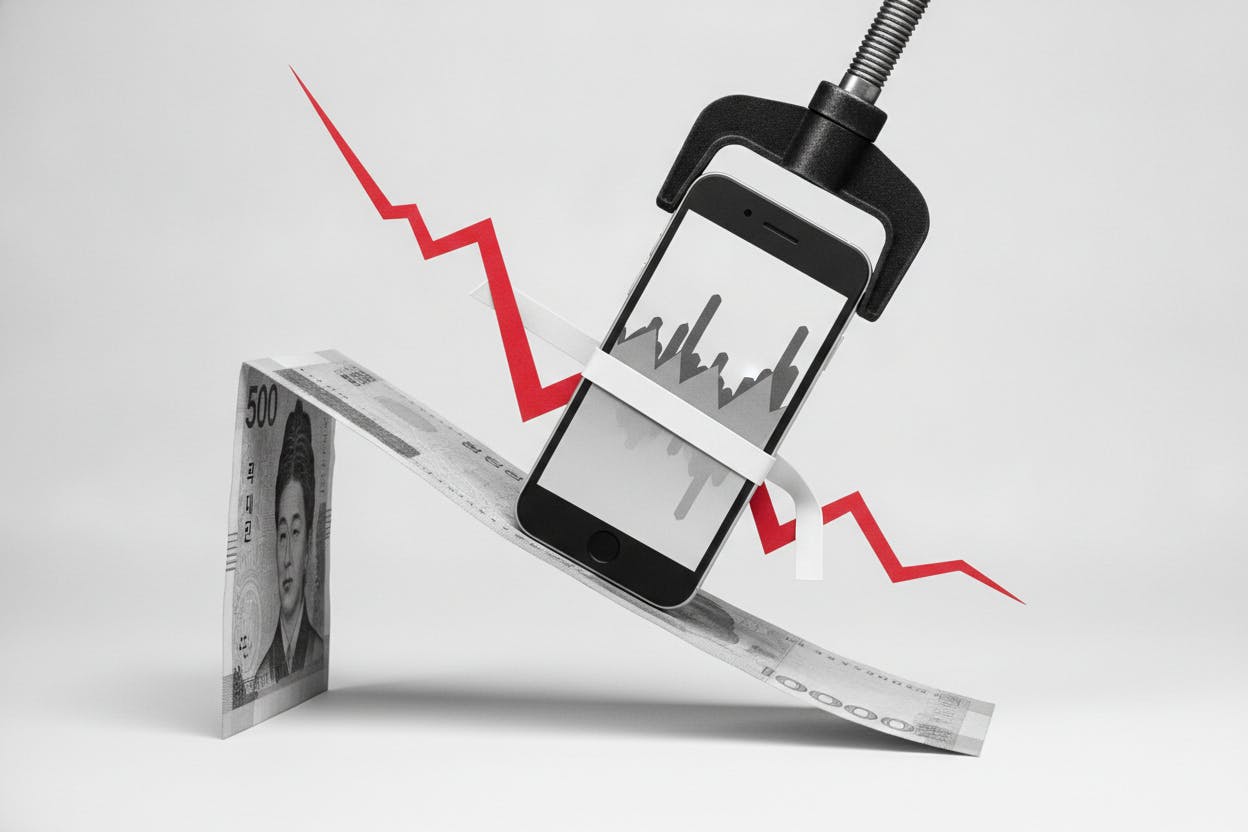
South Korea's Financial Services Commission (FSC) has announced plans to introduce new restrictions on single-stock leveraged exchange-traded funds (ETFs), following a sharp 6% drop in the KOSPI index that reignited concerns about these products' impact on market stability. The move aims to address risks tied to leveraged trading, particularly in stocks like Samsung Electronics and SK Hynix, which dominate the index.
What Are Single-Stock Leveraged ETFs?
Single-stock leveraged ETFs are investment funds that aim to multiply the daily return of a single company's stock, typically by two or three times. For example, if a stock rises 1% in a day, a 2x leveraged ETF tracking it would aim to rise 2%. However, this works in reverse on down days, amplifying losses. These products are popular among retail investors seeking quick gains, but they come with significant risks due to their daily reset mechanism, which can lead to compounding losses over time.
In South Korea, the largest single-stock leveraged ETFs track Samsung Electronics and SK Hynix, two tech giants that together account for more than half of the KOSPI's weight, according to Reuters. This concentration means that volatility in these stocks can quickly ripple through the broader index, amplifying market swings.
Why Regulators Are Stepping In
The FSC's announcement comes after the KOSPI experienced a more than 6% decline, which highlighted the potential for leveraged ETFs to exacerbate downturns. The regulator has floated several potential fixes, including tighter leverage caps, stricter suitability checks to ensure products are appropriate for retail investors, and circuit breakers that would slow trading during periods of high volatility. Officials have also warned that a blanket trading halt could create its own disruptions, so any changes are expected to be targeted rather than an outright ban.
Beyond the ETFs themselves, regulators are concerned about the broader borrowing environment. Reuters reported that retail investors' borrowed equity positions have reached a record 60 trillion won ($40.39 billion) as of the end of May, partly driven by these leveraged products. Borrowed trading tends to unwind quickly when prices fall, potentially accelerating market declines. This dynamic has put market stability back on the agenda, especially after the recent volatility.
What It Means for Investors
For everyday investors, the FSC's proposed rules could have several implications. First, tighter leverage caps may reduce the potential for outsized gains and losses in these ETFs, making them less risky but also less attractive for speculative trading. Stricter suitability checks could limit access for inexperienced retail investors, potentially reducing the pool of buyers and sellers in these products.
Second, the announcement itself can affect markets before any rules take effect. If investors anticipate that new caps or retail rules will shrink the size of these ETFs, they may try to exit positions early, altering the expected timing and magnitude of forced rebalancing flows. This could keep Samsung Electronics, SK Hynix, and the KOSPI volatile in the near term, as traders adjust to the changing landscape.
For context, South Korea's central bank, the Bank of Korea, recently raised its benchmark rate to 2.75% after a 3.5-year pause, as inflation hit 3.2%. This tightening cycle has already weighed on borrowing costs and market sentiment, making the FSC's focus on leveraged trading particularly timely. Additionally, the KOSPI's recent 7% plunge, driven by chip stock declines and rate hikes, underscores the index's sensitivity to both domestic and global factors, including chip stock slides and geopolitical risks.
Broader Market Context
The FSC's move is part of a global trend of regulators scrutinizing leveraged and complex financial products after periods of market stress. In the U.S. and Europe, similar products have faced restrictions or warnings from regulators. For South Korea, the concentration of risk in a few stocks makes the issue particularly acute. The KOSPI's heavy reliance on Samsung and SK Hynix means that any disruption in these stocks can have outsized effects on the index and on retail investors' portfolios.
Investors should also consider the impact of global factors, such as rising oil prices and geopolitical tensions, which have affected markets worldwide. For example, energy stocks have dipped amid threats to Red Sea shipping routes, while U.S. stocks have split as cooling inflation offsets those worries. These external forces can compound domestic volatility, making the FSC's regulatory response even more critical for market stability.
Looking Ahead
The FSC has not yet specified a timeline for implementing the new rules, but the announcement signals a clear intent to act. Investors should watch for further details on the specific leverage caps and suitability criteria, as these will determine the actual impact on the market. In the meantime, the uncertainty around the rules could keep the KOSPI and its heavyweight stocks on edge, as traders adjust to the prospect of a more regulated environment for leveraged ETFs.