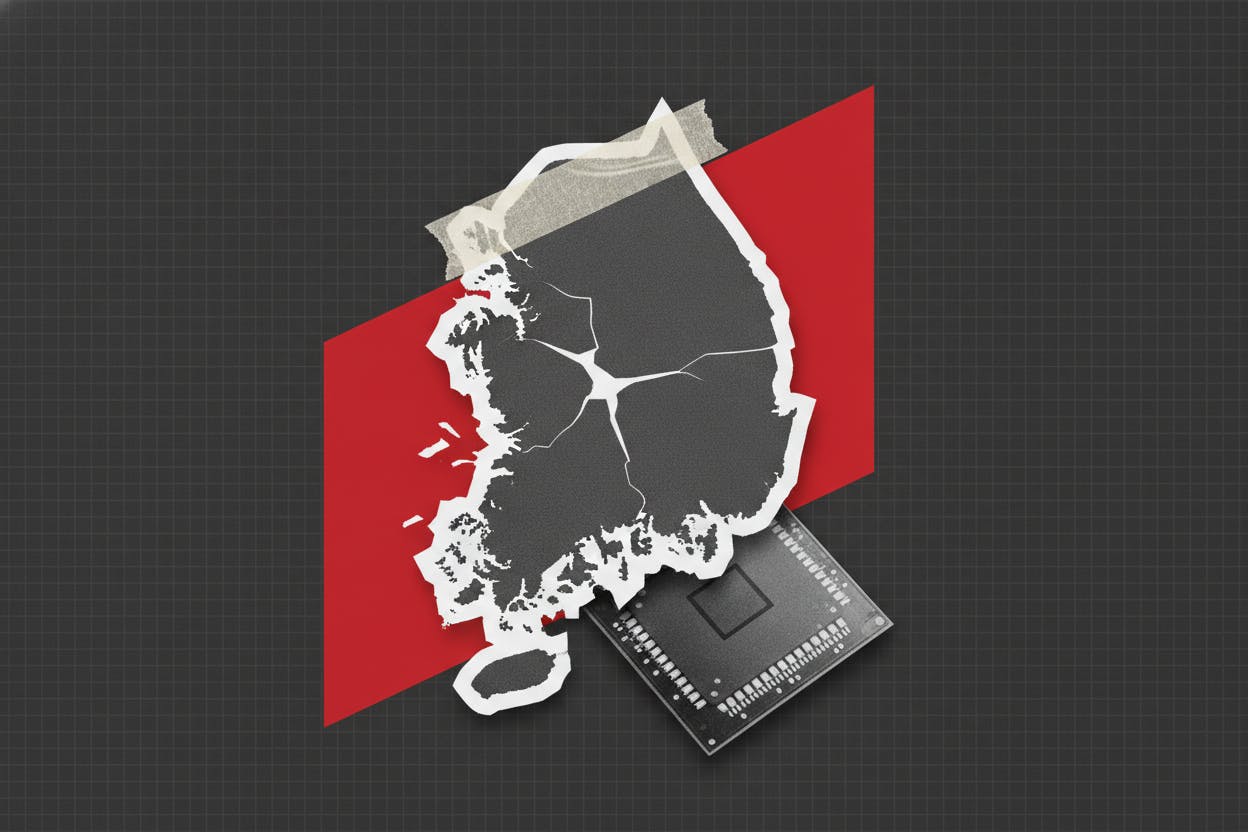
South Korea's benchmark stock index, the KOSPI, suffered its worst day in months on Tuesday, sliding more than 5% as a wave of selling in US technology stocks spilled into Asian markets. The selloff was driven by renewed worries that the biggest tech companies could scale back their massive spending on artificial intelligence, a key driver of demand for South Korea's semiconductor industry.
The Korea Composite Stock Price Index fell 5.44%, according to Reuters, triggering a so-called "sidecar" mechanism that briefly halted program trading. A sidecar is a circuit breaker designed to slow down automated, high-frequency trading when prices move too sharply, giving human traders a moment to assess the situation.
Chip Stocks Take the Brunt
The pain was concentrated in semiconductors, the backbone of South Korea's export-driven economy. Samsung Electronics, the country's largest company, dropped 7.22%, while SK Hynix, a leading memory chip maker, slid 6.83%. Both companies are major suppliers to global tech giants, and their fortunes are closely tied to demand for AI-related hardware.
The selloff followed a sharp decline in US tech stocks overnight. Alphabet, the parent company of Google, fell more than 7%, while Microsoft, Meta, and Amazon also dropped as investors worried that the billions of dollars being poured into AI infrastructure might not deliver returns as quickly as hoped. For more on the US tech selloff, see our earlier coverage: Wall Street Pulls Back as Big Tech's AI Spending Spooks Investors, Oil Hits $100.
Oil Above $100 Adds to the Gloom
Compounding the anxiety, oil prices pushed back above $100 a barrel, a level that historically rattles markets. Higher energy costs can squeeze corporate profits and fuel inflation, making central banks less likely to cut interest rates. The surge in oil was driven by ongoing geopolitical tensions, including attacks on tankers in the Red Sea that have disrupted shipping routes.
The combination of tech-led losses and rising oil prices created a risk-off mood across global markets. Similar moves were seen in other Asian indices, with Japan's Nikkei also falling sharply. For context on how AI spending concerns have affected other markets, see: Nikkei Tumbles Over 2% as Alphabet's AI Spending Spooks Global Tech Investors.
What It Means for Everyday Investors
For ordinary investors, the KOSPI's slide is a reminder of how interconnected global markets have become. A selloff in US tech stocks can quickly ripple across the world, especially in economies like South Korea that rely heavily on semiconductor exports. The drop in Samsung and SK Hynix shares directly affects anyone holding Korean stocks or exchange-traded funds (ETFs) that track the KOSPI or emerging markets.
The oil price spike is another factor to watch. When oil stays above $100, it can raise costs for everything from transportation to manufacturing, potentially eating into company earnings and slowing economic growth. For investors, this often means a shift toward defensive sectors like energy or utilities, and away from growth stocks that are more sensitive to higher input costs.
It's also worth noting that the sidecar triggered during the selloff is a normal market mechanism, not a sign of a crash. These curbs are designed to prevent panic selling and give markets time to find a fair price. They are common in Asian markets during sharp moves.
Looking Ahead
Investors will now be watching for any signals from major US tech companies about their AI spending plans. If more firms follow Alphabet's lead and report lower-than-expected returns on AI investments, the selloff could deepen. On the other hand, if oil prices ease or central banks signal a more dovish stance, markets could recover quickly.
For now, the key takeaway is that the AI boom, which has driven much of the market's gains over the past year, is entering a more uncertain phase. As we've seen with Intel's recent spending hike, the race to build AI infrastructure is expensive, and not every company will see immediate profits. For more on that story, see: Intel Boosts Forecast, Hikes Spending to $20B on Surge in AI Data Center CPU Demand.
In the meantime, the KOSPI's drop serves as a cautionary tale about the risks of concentrated exposure to any single sector, even one as promising as semiconductors. Diversification remains a key strategy for weathering such storms.



