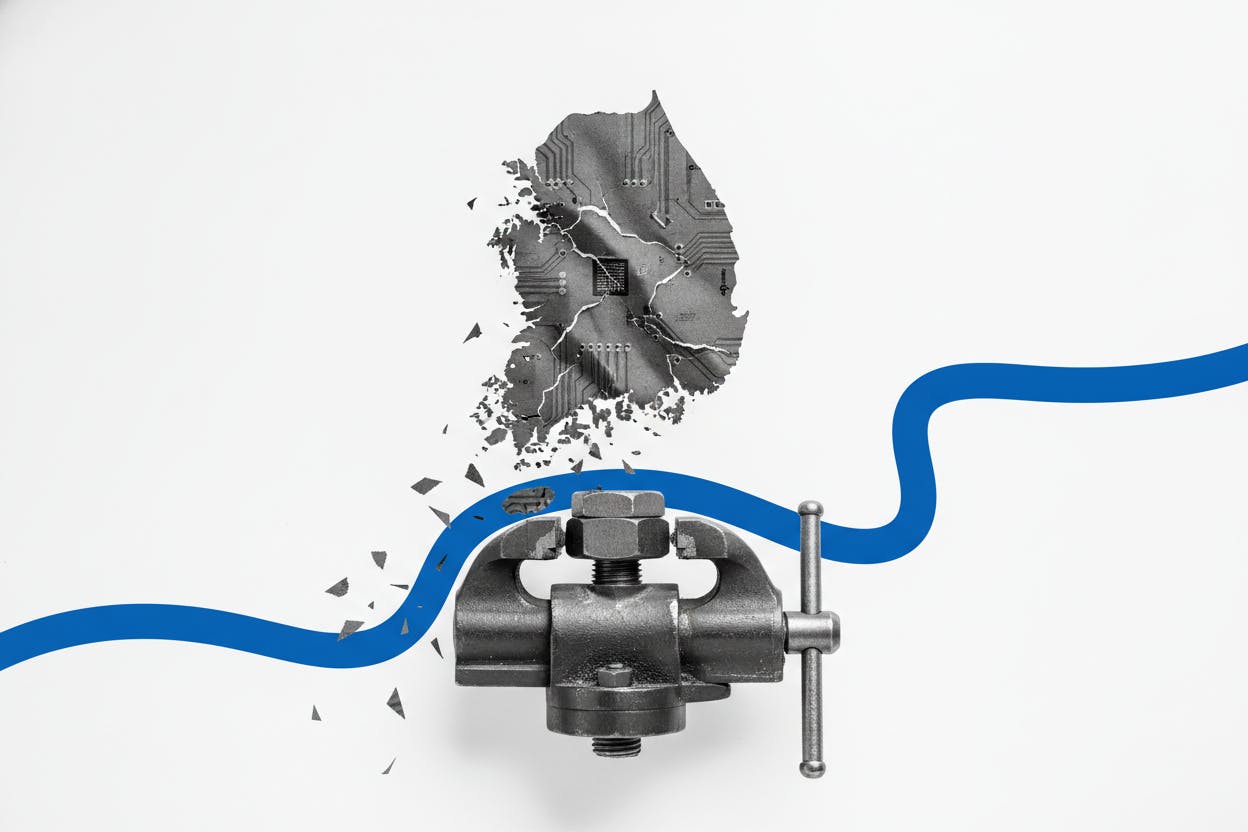
South Korea's benchmark KOSPI index suffered a brutal sell-off on Thursday, falling nearly 7% and triggering a so-called "sidecar" trading halt. The sharp decline was driven by a rout in semiconductor stocks and a rate hike from the Bank of Korea (BOK), the country's central bank.
The sidecar mechanism is a circuit breaker that temporarily suspends program trading—automated trades by large institutions—when the index drops more than 6% from the previous close. It is designed to give the market a breather and prevent panic selling. Thursday's halt was the first such event in over three years.
Chip Stocks Lead the Slide
The sell-off was overwhelmingly concentrated in the technology sector, particularly semiconductors. SK Hynix, one of the world's largest memory chip makers, sank as much as 11.7%, while Samsung Electronics, the country's largest company, fell 8.9%. Together, these two stocks account for just over half of the KOSPI's total market capitalization, meaning their declines dragged the entire index lower.
The rout in chip stocks reflects broader concerns about a potential slowdown in global demand for memory chips, which have been a key driver of South Korea's export-driven economy. Investors are also watching for any spillover from trade tensions and shifting demand in key markets like China and the United States.
The heavy weighting of a few mega-cap stocks in the KOSPI means that when they fall sharply, the impact on the overall index is outsized. This is a structural risk that investors in South Korean equities need to be aware of—a concentrated index can amplify both gains and losses.
Bank of Korea Raises Rates to Support the Won
Adding to the market's jitters, the Bank of Korea raised its seven-day repo rate by 25 basis points to 2.75%. This was broadly in line with economists' expectations, according to a Reuters poll. The rate hike is the first in over three years and is aimed at supporting the South Korean won, which has weakened about 3% against the US dollar this year.
By raising rates, the BOK hopes to make won-denominated assets more attractive to foreign investors, which can help stem the currency's slide. However, the timing of the hike—on a day when stocks were plunging and foreign investors were selling heavily—complicated the central bank's efforts.
Foreign investors net sold 776.8 billion won (roughly $520 million) of KOSPI shares on Thursday. When overseas investors sell Korean stocks, they often convert the proceeds back into US dollars, creating demand for the greenback and putting further downward pressure on the won. This dynamic can offset the currency-supportive effect of higher interest rates, at least in the short term.
For context, a similar dynamic played out in Canada recently, where the Bank of Canada held rates steady and the loonie rally faded—a reminder that currency moves are influenced by a mix of rate decisions, investor flows, and broader market sentiment. You can read more about that in our article on the Loonie Rally Fades After Bank of Canada Holds Rates, Drops Hike Warning.
What It Means for Investors
For everyday investors, the KOSPI's sharp drop and the BOK's rate hike carry several important implications.
Currency Risk Remains Elevated
A 2.75% policy rate can help steady the won over time, but foreign capital flows can move the currency much faster. When the KOSPI's biggest names fall, foreign selling can quickly become a currency story, keeping won volatility elevated. Investors holding South Korean assets—whether stocks, bonds, or real estate—should be prepared for continued swings in the exchange rate.
Higher rates also raise the cost for US-based investors to hedge won exposure back into dollars using FX forwards, because the interest rate gap shows up in forward pricing. This can discourage foreign investment in Korean assets, even as the BOK tries to attract it.
Concentration Risk in the KOSPI
The KOSPI's heavy reliance on Samsung Electronics and SK Hynix means that any sector-specific shock—like a downturn in chip demand—can have an outsized impact on the entire index. Diversification across different markets and sectors is one way to manage this risk. For example, investors might look at broader Asian or global equity funds that are less concentrated in a single industry.
What to Watch Next
Investors will be watching for further BOK commentary on the rate path, as well as any signs of stabilization in the semiconductor sector. Global demand for chips, particularly from data centers and AI-related applications, will be a key driver. The recent dip in some AI-related stocks, as seen in the SpaceX shares dip below IPO price, suggests that market jitters about the AI rally may be spreading.
Also worth monitoring is the impact of the rate hike on South Korea's housing market and consumer spending, which could influence the BOK's next moves. If the economy slows too much, the central bank may pause or reverse its tightening cycle.
In the meantime, the KOSPI's year-to-date gain of over 62% remains impressive, but Thursday's sell-off is a stark reminder that even strong rallies can face sharp corrections. For investors, staying diversified and keeping an eye on currency and concentration risks is key.



