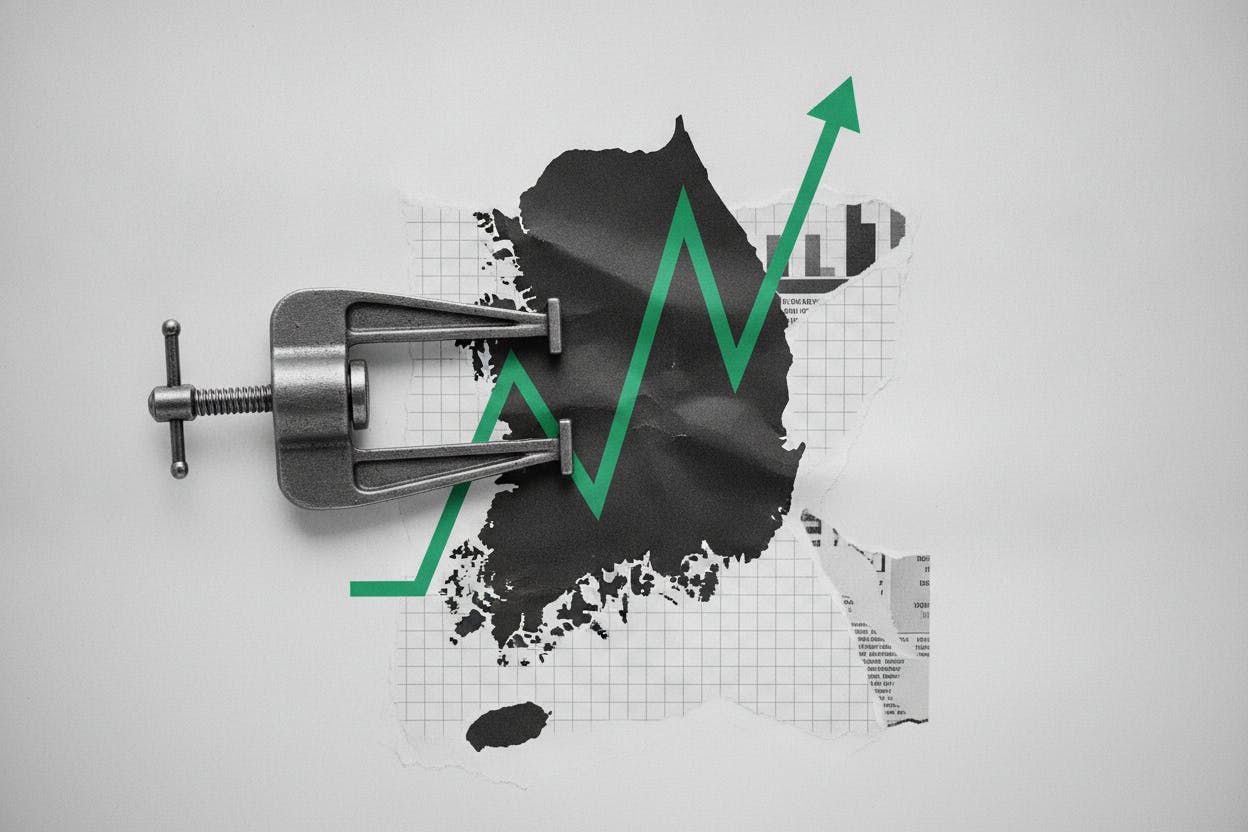
South Korea's benchmark KOSPI index delivered a whipsaw session on Tuesday, swinging from a gain of 5.5% to a loss of 2.1% as financial authorities tightened restrictions on single-stock leveraged exchange-traded funds (ETFs) tied to major semiconductor companies. The move underscores the growing influence of these leveraged products on market dynamics, particularly in heavily traded tech stocks.
What are single-stock leveraged ETFs?
Leveraged ETFs are a type of exchange-traded fund that use financial derivatives and debt to amplify the daily returns of an underlying asset. A single-stock leveraged ETF, as the name suggests, tracks the performance of just one company's shares rather than a broad index. For example, a 2x leveraged ETF on Samsung Electronics aims to deliver twice the daily percentage change of Samsung's stock price.
To achieve this, the fund rebalances its exposure at the end of each trading day. Market makers who facilitate these products also hedge their own risk by buying or selling the underlying stock as prices move. This creates a feedback loop: after a rally, the ETF and its hedges need to add exposure, pushing prices higher; after a drop, they need to cut exposure, accelerating the decline. In heavily traded names like Samsung Electronics and SK Hynix, this mechanism can amplify intraday volatility significantly.
Regulatory action triggers reversal
South Korean regulators announced tighter limits on single-stock leveraged ETFs, particularly those tied to chipmakers, which have seen explosive growth in trading volumes. The move came amid concerns that these products were contributing to excessive speculation and destabilizing the broader market. The KOSPI initially rallied 5.5% on optimism around the semiconductor sector, but the regulatory news triggered a sharp reversal, sending the index down 2.1% by the close.
This is not the first time South Korean authorities have intervened in leveraged products. In 2023, they imposed caps on leverage ratios for certain ETFs to curb volatility. The latest action reflects ongoing unease about the role of these instruments in a market already sensitive to global tech demand and Federal Reserve policy shifts.
Broader market context
The KOSPI has been particularly volatile in recent months, driven by swings in the semiconductor sector, which accounts for a large share of the index's weight. South Korea's chipmakers are heavily exposed to global demand for memory chips and artificial intelligence hardware, making them sensitive to both macroeconomic trends and company-specific news. Earlier this year, Samsung's AI chip outlook lifted South Korean stocks 4.7% in a sharp rebound, illustrating how quickly sentiment can shift.
The leveraged ETF episode also comes amid a broader backdrop of global monetary policy uncertainty. The Federal Reserve held rates steady at its last meeting, but three officials dissented, pushing for a hike, which has kept markets on edge. For South Korea, a rate-sensitive economy with large export sectors, any change in U.S. policy can have outsized effects on capital flows and currency stability.
What it means for investors
For everyday investors, the KOSPI's wild swing is a reminder that leveraged ETFs are not buy-and-hold instruments. Their daily rebalancing mechanism means they can amplify losses as well as gains, especially in volatile markets. Investors holding these products overnight face the risk of significant gap moves, as the fund's exposure is reset each day.
Regulatory changes can also create sudden dislocations. When authorities tighten rules on leveraged ETFs, it can force funds to adjust their positions quickly, leading to sharp price moves in the underlying stocks. This is what happened in Tuesday's session: the initial rally was partly driven by leveraged ETF buying, and the reversal was exacerbated by forced selling as funds and market makers unwound positions.
For those invested in South Korean stocks directly, the episode highlights the importance of understanding the market's structure. The KOSPI's heavy reliance on a few large-cap tech names means that any regulatory or product-specific shock can have outsized effects on the broader index. Diversification across sectors and geographies can help mitigate such risks.
Looking ahead, investors will watch for further regulatory moves in South Korea and how they affect trading volumes and volatility. The South Korean feed buyers locking in corn purchases at stable prices suggests that other parts of the economy are less affected, but the tech-heavy KOSPI remains a focal point for global investors monitoring the semiconductor cycle.
In summary, Tuesday's session was a textbook example of how leveraged products can turn a rally into a rout. For ordinary investors, the key takeaway is to be aware of the tools they use and the regulatory environment they operate in. Leveraged ETFs can be powerful instruments, but they require careful timing and risk management.