SpaceX, Elon Musk's rocket, satellite-broadband, and AI venture, finally pulled back the curtain on its finances last month, and the numbers were mostly spectacular. Revenue surged 92% year over year in the second quarter to $7.8 billion, comfortably beating analysts' forecast of $6.8 billion. But the company's eye-watering spending plans gave investors pause, echoing the same jitters that have dogged the hyperscalers like Microsoft and Amazon.
The numbers that impressed
The revenue beat was broad-based, with all three of SpaceX's main businesses – Space, Connectivity, and (presumably) Starlink-related services – contributing to the growth. This isn't a one-trick pony; the company is firing on multiple cylinders. The Space segment includes launch services for satellites and cargo, while Connectivity covers Starlink's satellite internet service, which has been expanding rapidly across the globe.
For context, a 92% year-over-year growth rate is exceptional for a company of this size. Most mature tech firms would kill for even a fraction of that growth. It signals that SpaceX is still in its hyper-growth phase, with demand for its services outstripping supply.
The spending that spooked
But here's the catch: SpaceX's spending plans are astronomical. The company is investing heavily in next-generation rockets, satellite constellations, and AI infrastructure. This is not unusual for a company in its position – growth often requires heavy upfront investment – but the scale of the spending is what's giving investors pause.
This is the same story we've seen with the hyperscalers, the big cloud and tech companies that have been pouring billions into AI data centers. Microsoft's AI spending has shown a clearer payoff as Azure growth hit 43%, but investors are still wary of the massive capital outlays. The fear is that these spending sprees might not deliver the expected returns, or that they'll squeeze margins for years to come.
What it means for investors
For everyday investors, the key takeaway is that SpaceX is a high-growth, high-spending company. The revenue opportunity is enormous – satellite internet alone is a massive market, and launch services are in high demand. But the spending means that profits may be thin or non-existent for a while.
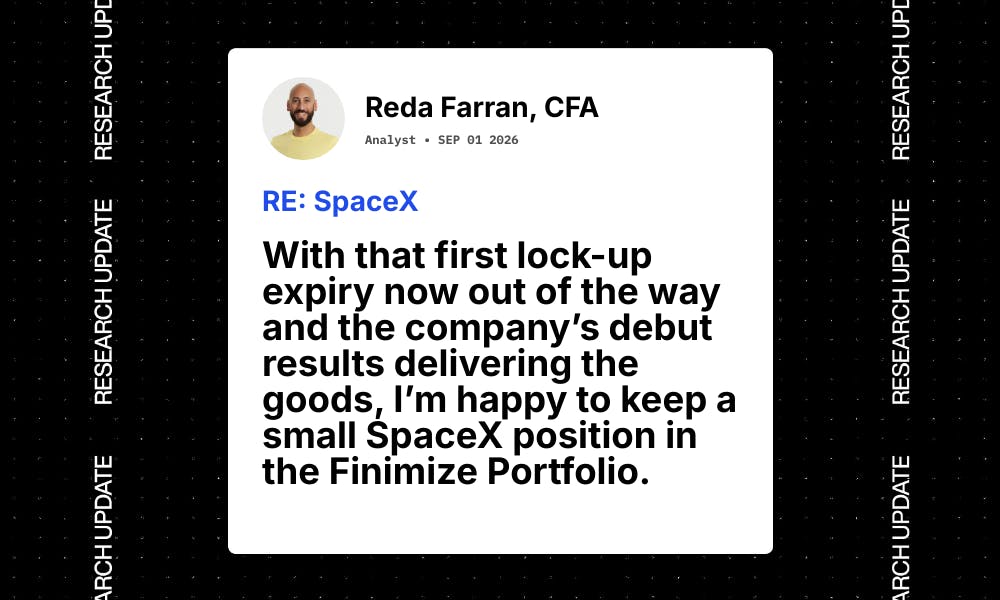
This is why the editor is sticking with a half-position in SpaceX. A half-position means they've allocated only a portion of their portfolio to this stock, acknowledging both the potential and the risk. It's a balanced approach that allows you to benefit from the upside while limiting your exposure to the downside.
If you're considering investing in SpaceX, it's important to understand that this is a long-term play. The company is building infrastructure that could dominate space for decades, but the path there will be bumpy. You need to be comfortable with volatility and the possibility that the spending might not pay off as quickly as hoped.
The broader context
SpaceX's debut as a public company comes at a time when the broader market is grappling with similar issues. Mixed US data shows factory activity cooling, but GDPNow still sees 4.8% Q3 growth. This suggests the economy is still expanding, but at a slower pace, which could affect demand for SpaceX's services.
Also, the spending jitters are not unique to SpaceX. US factory growth cooled in August but price pressures stayed hot, indicating that inflation is still a concern. This could lead to higher interest rates, which would make it more expensive for companies like SpaceX to borrow money for their ambitious projects.
What to watch next
Investors will be watching SpaceX's next earnings report closely to see if the spending is translating into even faster revenue growth. They'll also be looking at the company's cash flow and debt levels to gauge whether the spending is sustainable.
Another thing to watch is how SpaceX's spending compares to its competitors. If other space companies are spending less and growing slower, that might be a sign that SpaceX is over-investing. But if SpaceX is outspending everyone and still growing faster, that's a good sign.
The bottom line
SpaceX's first public results were a mixed bag: stellar revenue growth, but daunting spending plans. For investors, the question is whether the growth will eventually outpace the spending. The editor's half-position suggests a cautious optimism – enough confidence to stay onboard, but not so much that they're all in.
As with any high-growth stock, the key is to do your own research, understand the risks, and decide how much you're willing to bet on the future. SpaceX is a bet on the future of space, and that future looks bright, but it's also expensive.