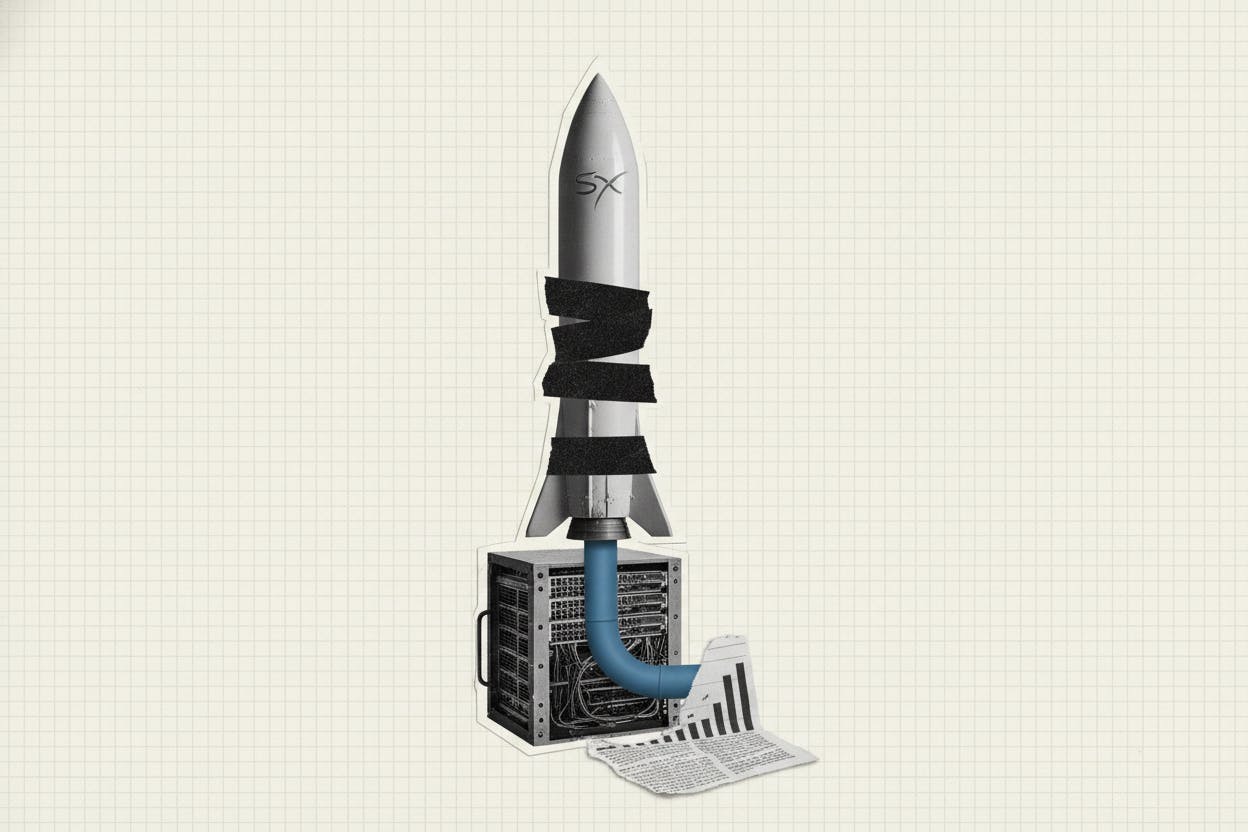
Space Exploration Technologies (SpaceX) delivered better-than-expected second-quarter results, but investors punished the stock anyway. Shares fell 8.6% after CEO Elon Musk announced that the company's new AI services will run exclusively on Nvidia systems.
The drop came despite SpaceX beating Wall Street's estimates for both revenue and losses in the quarter. Normally, an earnings beat is a reason for a stock to rally. But in this case, the market's attention was fixed on the strategic decision behind the numbers.
Why an earnings beat didn't help
When a company beats estimates, it usually signals that the business is performing better than expected. But investors also care about the long-term implications of management's choices. Here, the choice to standardize AI infrastructure on a single supplier—Nvidia—raised questions about cost, flexibility, and competitive positioning.
Exclusivity can simplify development and speed up product launches, especially in AI, where software tools are tightly tied to specific chips. By standardizing on Nvidia, SpaceX may be able to bring AI services to market faster and with fewer compatibility headaches. That's a potential advantage.
However, it also creates a dependency. If Nvidia's prices rise or its technology falls behind, SpaceX would have limited alternatives. Investors may worry about the long-term cost and strategic risk of putting all eggs in one basket.
Nvidia gains as SpaceX slides
While SpaceX shares fell, Nvidia's stock rose 3.4% on the news. That's a clear sign that the market sees the deal as a win for Nvidia, which continues to dominate the AI chip market. The announcement reinforces Nvidia's position as the go-to provider for AI infrastructure, even for a company as high-profile as SpaceX.
For Nvidia, this is another validation of its platform. For SpaceX, it's a bet that Nvidia's ecosystem will deliver the performance and tools needed to compete in AI services.
What it means for investors
For everyday investors, this episode highlights a key lesson: earnings beats aren't everything. The market often looks beyond the quarter to the strategy that will shape future growth. A single-supplier deal can be a double-edged sword—it may boost efficiency now but create risk later.
If you own SpaceX stock, the drop might feel unsettling, but it's worth remembering that the company still beat expectations. The market's reaction is about the future, not the past. If you're considering buying the dip, note that retail traders bought the post-earnings dip in the first hour, suggesting some see opportunity.
For Nvidia shareholders, the news is a positive signal. It shows that demand for its AI chips remains strong, even from companies that could theoretically build their own. But it also means Nvidia's fortunes are increasingly tied to the success of AI services like those SpaceX plans to launch.
Broader market context
The AI trade has been a major driver of market gains in recent years. Companies that supply AI infrastructure, like Nvidia, have seen their valuations soar. Meanwhile, companies that use AI to offer new services are under pressure to show they can monetize those investments.
SpaceX's move to partner exclusively with Nvidia is part of a broader trend of companies locking in AI supply chains. Similar dynamics are playing out across the tech sector, as firms race to secure the chips and software needed to stay competitive.
Investors should watch how this exclusivity affects SpaceX's margins and product roadmap in coming quarters. If the AI services generate strong revenue, the decision will look smart. If they struggle, the lack of alternatives could be a problem.
What to watch next
In the near term, investors will be listening for more details about SpaceX's AI services—what they will offer, when they will launch, and how they will be priced. They'll also be watching Nvidia's earnings to see if the demand from companies like SpaceX is translating into revenue.
For a broader view of how AI is reshaping markets, consider the launch of East Africa's first AI ETF, which shows how the theme is spreading globally.
Ultimately, this story is a reminder that in today's markets, technology choices can move stock prices as much as financial results. For investors, understanding the strategic rationale behind such decisions is just as important as the numbers on the income statement.