SpaceX's long-awaited stock market debut was everything investors hoped for — at first. Shares priced at $135 jumped 11% when trading opened on June 12, closing their first day at $160. The momentum carried through the week, with the stock hitting an intraday high of $226 on June 16. Since then, however, the rocket company's shares have lost altitude, changing hands at around $145 as of this writing.
The retreat comes as broader cracks emerge in the artificial intelligence trade, which has powered much of the market's gains over the past year. When AI-linked names wobble, richly valued growth stocks across the board tend to feel the ripple — and SpaceX, despite being a space and satellite company, is not immune to that sentiment shift.
A debut that followed the classic IPO playbook
SpaceX's first-day pop was textbook for a hotly anticipated listing. Companies with strong brand recognition and limited share supply often see their stock spike when public trading begins, as demand from retail and institutional investors overwhelms the initial float. That dynamic can create a sharp run-up followed by a cooling-off period once the initial frenzy fades.
Days before the IPO, the case for buying at the offer price — rather than chasing the first-day surge — was straightforward. Investors who received allocations at $135 were sitting on gains almost immediately. Those who bought near the $226 peak, by contrast, are now looking at a meaningful paper loss. It's a reminder that the most exciting moment of an IPO is rarely the most profitable entry point.
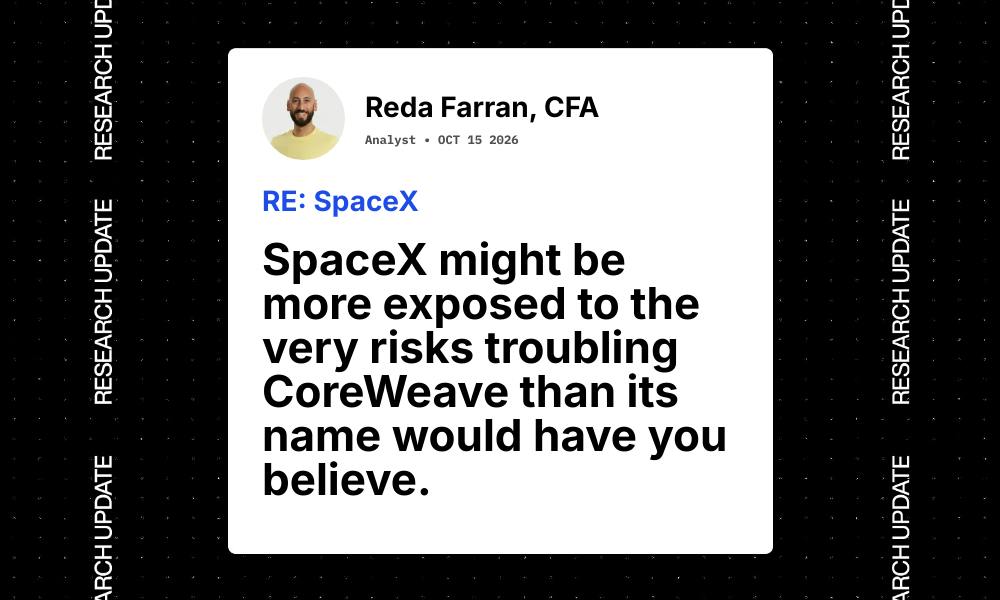
The broader market backdrop hasn't helped. Concerns about AI infrastructure spending, rising costs, and stretched valuations have pressured technology and growth stocks in recent weeks. Global chip stocks have slid as rate fears and AI funding worries mount, and CoreWeave's debt troubles have made AI's big build-out look pricier. When the market's most crowded trade stumbles, investors often take profits in other high-flying names to raise cash or reduce risk.
Why SpaceX is caught in the AI downdraft
SpaceX isn't an AI company in the purest sense, but it sits at the intersection of several themes that have driven the growth-stock complex: satellite broadband, government contracts, and long-duration innovation. Its Starlink constellation, for instance, is a capital-intensive bet on global connectivity that shares characteristics with the data-center build-out powering the AI boom — heavy upfront spending, long payback periods, and a reliance on continued investor appetite for risk.
That means when sentiment toward speculative, capital-hungry growth stories sours, SpaceX can get lumped in with the rest. The stock's slide from its June peak reflects that reassessment as much as anything company-specific.
It's also worth remembering that newly public companies often trade erratically for months. Lock-up agreements that prevent early investors and employees from selling typically expire within three to six months, which can add selling pressure. Index inclusion decisions, analyst initiations, and the first few quarterly reports as a public company all introduce new information that can swing the share price.
What it means for investors
For everyday investors, the SpaceX episode offers a few practical lessons:
- IPO pops are not free money. The gap between the offer price and the first-day close is captured by those who got shares early — often institutions and well-connected clients. Retail investors buying in the open market are typically paying the marked-up price.
- Volatility is normal after a debut. A stock that surges then retreats isn't necessarily broken. It's finding its level as the initial supply-demand imbalance resolves.
- Macro matters more than headlines. SpaceX's pullback has less to do with rockets than with a broader rotation away from risk. Stocks have rotated from tech to defensives as producer prices jumped, a sign that inflation and rate concerns are still steering the market.
The decision to sell, hold, or wait for a better entry point is a personal one that depends on your time horizon, risk tolerance, and how the position fits into your overall portfolio. What's clear is that the easy money from SpaceX's debut has already been made. From here, the stock will trade on fundamentals — execution on Starlink, launch cadence, government contracts, and profitability — rather than on the excitement of finally being public.
Investors watching the space sector more broadly will want to keep an eye on how the AI trade evolves. If the recent wobble deepens, high-multiple growth names could face further pressure. If it stabilizes, SpaceX and its peers may find firmer footing. Either way, the coming months will offer a clearer picture of whether the company's lofty valuation is justified by its business, or whether the post-IPO stumble is a sign that expectations ran ahead of reality.