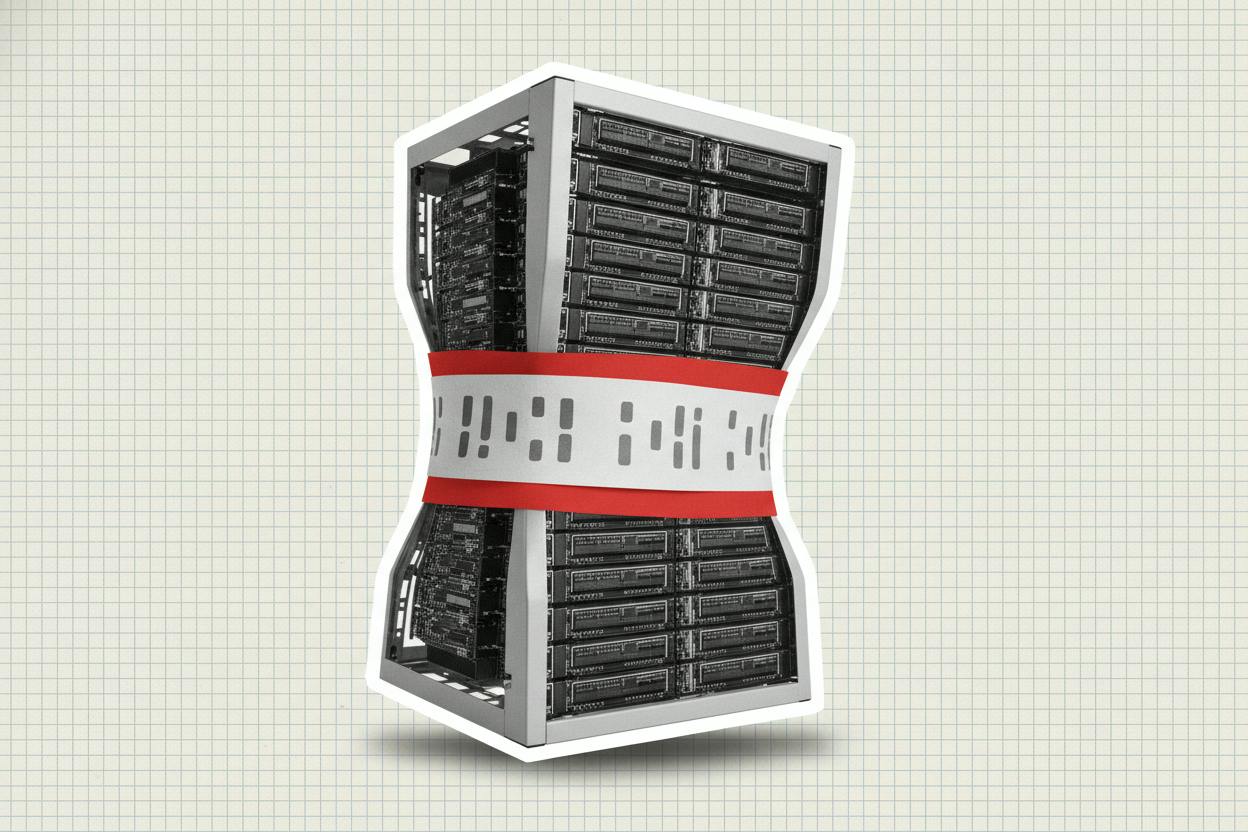
CoreWeave, an AI-focused cloud provider backed by Nvidia, is drawing fresh scrutiny after its bonds sank into distressed territory, raising questions about how much of the data-center boom is being financed with debt.
The company's April-issued 2031 bonds were recently trading around 79 cents on the dollar and yielding close to 16%, according to reports. That's a level that credit investors typically associate with serious financial stress. Meanwhile, Nvidia CEO Jensen Huang has publicly argued that CoreWeave's cost of capital is actually falling—a claim that stands in sharp contrast to what bond prices are signaling.
What is CoreWeave?
CoreWeave is part of a new wave of so-called “neoclouds”—companies that borrow heavily to buy Nvidia's high-end chips and then rent that computing power to AI startups and enterprises. Unlike traditional cloud giants like Amazon or Microsoft, which built their own data centers over decades, neoclouds like CoreWeave have grown at breakneck speed by taking on massive debt to acquire the latest GPUs.
Reuters reported that CoreWeave has accumulated roughly $50 billion in debt while still losing money. That debt load is now at the center of investor anxiety. Credit markets are demanding much higher compensation for the risk of lending to the company, and the cost to insure its debt through credit default swaps has also spiked.
The tension is simple: CoreWeave's business model depends on borrowing cheaply to buy expensive chips, then earning enough from renting them out to cover interest payments and eventually turn a profit. If borrowing costs rise or demand for AI compute softens, that math gets much harder.
Why this matters for the AI trade
CoreWeave is not just any company—it's a bellwether for the broader AI infrastructure build-out. The entire AI boom has been powered by enormous capital spending on data centers, chips, and power. Much of that spending is being financed with debt, not just by CoreWeave but by other neoclouds and even some of the biggest tech companies.
If credit markets start to balk at that debt, it could raise the cost of capital for the whole sector. That's why CoreWeave's bond troubles have rippled through AI stocks, contributing to recent market jitters. As we've seen, hot inflation data and CoreWeave debt worries have pressured AI stocks, and the fallout has even spread to global markets, with Japan's Nikkei plunging nearly 5% on related fears.
The concern is not that AI is a fad—most analysts agree the technology has transformative potential. The question is whether the industry is building too much capacity too quickly, and whether the debt taken on to fund that build-out will prove sustainable if growth slows or interest rates stay higher for longer.
What it means for investors
For everyday investors, CoreWeave's bond troubles are a reminder that the AI boom carries real financial risks. When a key player in the AI infrastructure chain shows signs of distress, it can affect the entire ecosystem—from chipmakers like Nvidia to data-center operators and even the broader stock market.
It's also a lesson in how different parts of the market can tell different stories. Jensen Huang's upbeat comments about falling costs reflect the optimism of a company selling the picks and shovels of the AI gold rush. But bond investors, who are first in line to lose money if a company fails, are voting with their wallets—and they're demanding much higher yields to hold CoreWeave's debt.
That divergence is worth watching. If credit markets continue to price in distress, it could force CoreWeave and other neoclouds to pay more for future borrowing, squeezing their margins and potentially slowing the pace of AI infrastructure spending. That would be a headwind for the entire AI trade.
For now, CoreWeave's bonds are a warning sign, not a death knell. The company still has access to capital, and its revenue is growing as AI demand remains strong. But the days of cheap, easy debt for AI build-outs may be ending, and that could make the whole sector look pricier.
As always, investors should focus on the fundamentals of the companies they own, and be aware that high-growth sectors like AI can be sensitive to changes in financing conditions. The CoreWeave story is a good reminder that even the most exciting technologies are ultimately subject to the discipline of the credit markets.