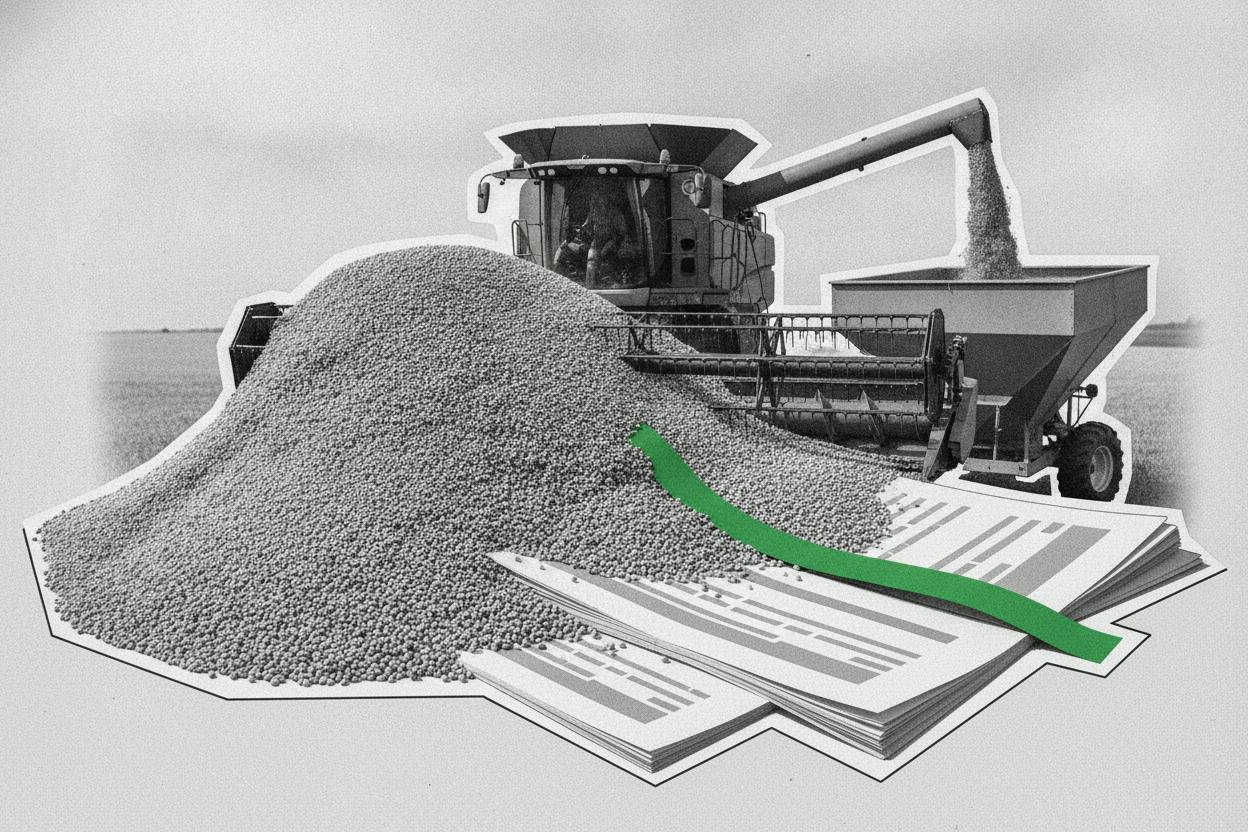
US soybean futures extended their slide for a fourth straight session, touching a seven-week low as a faster-than-expected harvest of a record-sized crop outweighed continued buying from China, the world's top importer.
Chicago Board of Trade (CBOT) November soybeans fell to about $12.69 a bushel, pressured by a rush of newly harvested supplies reaching elevators at once. Dry weather across the Midwest has sped up combines, meaning more beans are hitting the market in a short window.
Why a faster harvest pressures prices
When harvest speeds up, the immediate supply of soybeans jumps. That tends to weaken nearby futures relative to later months, because traders factor in the cost of storing the crop until it's needed. This “carry” means buyers don't have to pay a premium for immediate delivery, so near-dated contracts often fall faster than those further out.
The market's structure is often the first place pressure shows up. With more beans available now, calendar spreads—the difference between prices for different delivery months—can widen as storage becomes the bridge between “now” and “later.”
At the same time, the record crop outlook means there's plenty of supply to meet demand, even as China remains an active buyer. Analysts noted ongoing Chinese purchases, but the market seemed underwhelmed because buying from the top importer hasn't been as strong as some traders expected after US officials said China agreed to purchase 25 million metric tons a year. Government data suggests China has met roughly half of that so far.
Weak domestic processing adds to the drag
Demand signals at home were also soft. The National Oilseed Processors Association (NOPA), an industry group, reported that September soybean processing—known as “crush,” the process of turning beans into soymeal and soyoil—fell to a 13-month low of 196.3 million bushels.
A slower crush means fewer processors are competing for beans, removing a key source of spot demand right when harvest deliveries are rising. That can dull support from the crush margin, the gap between the value of soymeal and soyoil versus the cost of soybeans. When that margin narrows, processors have less incentive to buy beans aggressively.
Put together, the weak crush print and the fast harvest create a setup where spreads and processing economics do more of the adjusting than the outright futures price, even with China still in the market.
What it means for investors
For everyday investors, the move in soybean futures is a reminder that commodity prices are driven by the balance of supply and demand, and that timing matters. A record crop and a quick harvest mean more supply is available now, which typically pushes prices down in the short term.
But the picture isn't one-sided. China's ongoing purchases—even if slower than some hoped—show that demand from the world's biggest buyer remains a supportive force. If buying picks up or the harvest slows, prices could find a floor.
For those with exposure to agricultural commodities through ETFs or futures, the key is to watch the weekly harvest progress reports and the pace of Chinese purchases. Also keep an eye on the crush data, as it signals how much demand processors are willing to provide.
In the broader context, this story fits into a market where investors are also watching inflation and interest rate signals, as well as shifts in stock market leadership. Commodity prices like soybeans can influence inflation readings, so they matter beyond just the farm sector.
For now, the soybean market is adjusting to a simple reality: there's a lot of crop coming in, and the market needs to find a price that encourages storage and balances demand. That process can take time, and volatility is likely to continue until the harvest is done and the demand picture becomes clearer.