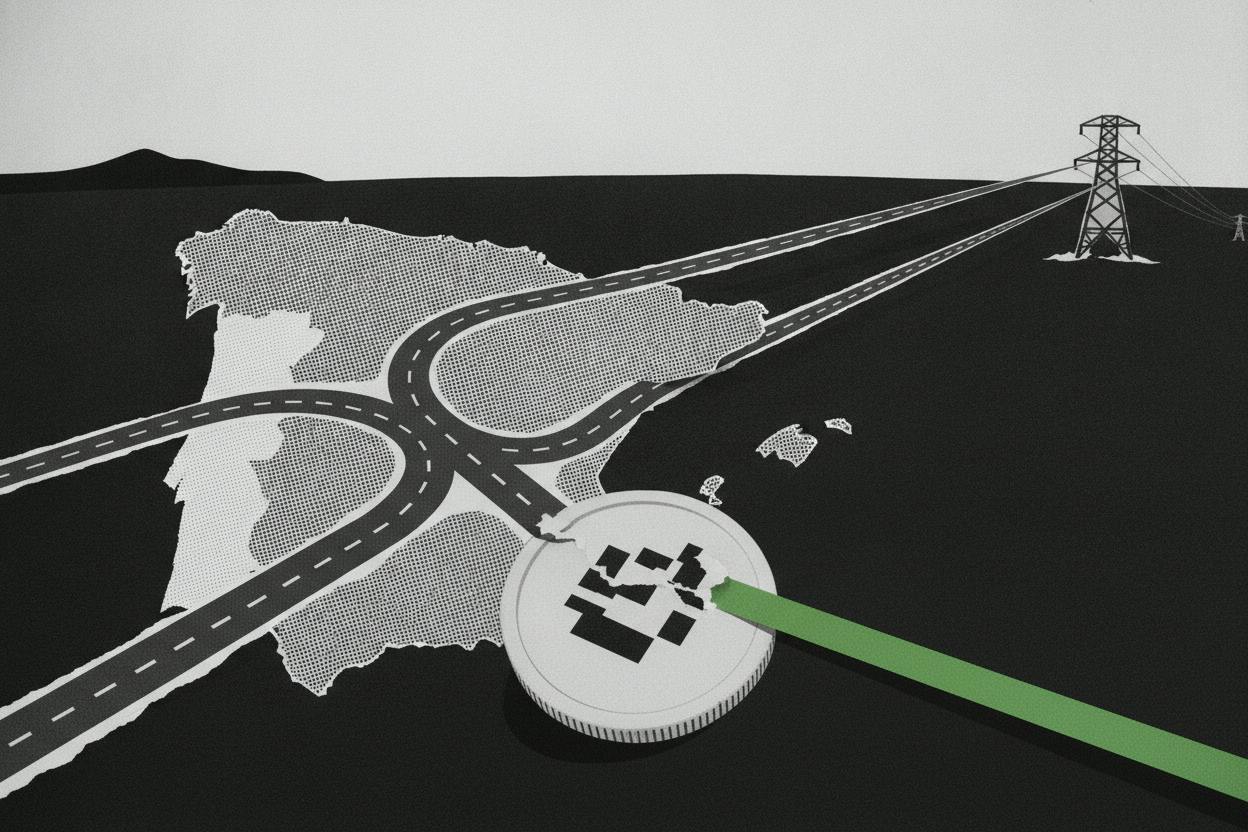
Spain's largest companies are making a coordinated push on two fronts: building long-life infrastructure overseas and sharpening their capital-return stories for investors back home. In a single 24-hour stretch this week, four of the country's corporate heavyweights — Iberdrola, BBVA, Ferrovial and Telefonica España — each moved to lock in steadier, longer-dated cash flows or simplify how they present themselves to shareholders.
Iberdrola deepens its Brazil grid bet with GIC
Iberdrola, Spain's biggest power utility, said Thursday it expanded its partnership with GIC, Singapore's sovereign wealth fund, in Brazil's electricity transmission network. The tie-up underscores why regulated grids have become a magnet for infrastructure capital: they tend to generate steadier, inflation-linked returns because their revenue is set by regulators rather than by volatile wholesale power prices. Bringing in a deep-pocketed partner like GIC also helps bankroll multi-year buildouts without straining the utility's own balance sheet.
For investors, the appeal of regulated transmission assets is their predictability. Unlike generation, where profits swing with commodity prices, transmission operators earn a regulated return on the capital they invest in wires and substations. That makes them attractive to pension funds and sovereign wealth funds seeking long-duration, bond-like cash flows. Iberdrola has been pursuing this model across its international footprint, and Brazil — one of Latin America's largest power markets — is a key part of that strategy. The move also fits a broader trend of European utilities recycling capital into lower-risk, regulated businesses while partnering with institutional investors to share the cost.
BBVA pre-commits to a 2026 interim dividend
Also on Thursday, BBVA, one of Spain's largest banks, approved a 2026 interim dividend of €0.37 gross per share. Setting an interim payout that far ahead is unusual and reads as a statement of confidence in the bank's capital position. An interim dividend is not just a cash handout — it is a public signal that management expects to have enough distributable profits and regulatory capital to send money back to shareholders before the year's final payout.
In banking, where investors constantly weigh dividends against share buybacks and balance-sheet growth, that kind of forward marker can reduce uncertainty and support an "income stock" valuation. The trade-off is sensitivity. Once a number is out there, the stock can become quicker to react to anything that threatens "capital headroom" — the spare buffer above regulatory minimums — because part of the future cash return is already baked into investors' models. BBVA's move also narrows the debate over how the bank will use excess capital, effectively pre-committing a slice of it to shareholders.
Ferrovial closes a Nashville road project
Late Wednesday, Ferrovial, the infrastructure group, said its DriveTN consortium reached commercial close on a Nashville, Tennessee road project — the I-24 Southeast Choice Lanes. The deal includes building the asset and then operating it for years, a model known as a public-private partnership (PPP). In these arrangements, a private consortium finances, builds and maintains public infrastructure in exchange for long-term operating rights, often collecting tolls or availability payments.
For Ferrovial, which has a long history in toll roads and infrastructure concessions, the project adds to a portfolio of assets designed to produce predictable, inflation-linked cash flows over decades. Such projects are typically underpinned by contracts with government agencies, which reduces demand risk compared with purely merchant infrastructure. The Nashville deal also highlights the ongoing appetite among US states to use private capital to upgrade ageing transport networks without upfront taxpayer funding.
Telefonica España splits into three units
Meanwhile, Telefonica España said it will split into three standalone business units. The restructuring is part of a broader effort by Spanish blue chips to tighten the story they tell investors — simplifying complex conglomerates into more focused, easier-to-value pieces. By separating its operations into distinct units, Telefonica aims to give shareholders clearer visibility into each business's performance and potentially unlock value by making it easier to compare each division with pure-play peers.
Corporate breakups and unit separations have become a popular tool in Europe as management teams look to close valuation gaps. When a conglomerate trades at a discount to the sum of its parts, splitting can help the market recognise the value of each business. For Telefonica, which has faced pressure in its home market, the move may also pave the way for future partnerships or asset sales.
What it means for investors
The common thread across these four announcements is a push for durability. Iberdrola and Ferrovial are locking in long-duration, often regulated or contracted cash flows that appeal to income-focused investors. BBVA is pre-committing to a capital return, reducing uncertainty for shareholders who rely on dividends. Telefonica is simplifying its structure to make its earnings easier to understand and value.
For everyday investors, the takeaway is that Spanish blue chips are increasingly positioning themselves as steady, cash-generative businesses rather than cyclical plays. That can make them attractive to those seeking income and lower volatility, but it also means their shares may become more sensitive to changes in interest rates, regulation and capital rules. As these companies execute on their plans, investors will be watching whether the promised cash flows materialise and whether the market rewards the simplified stories.