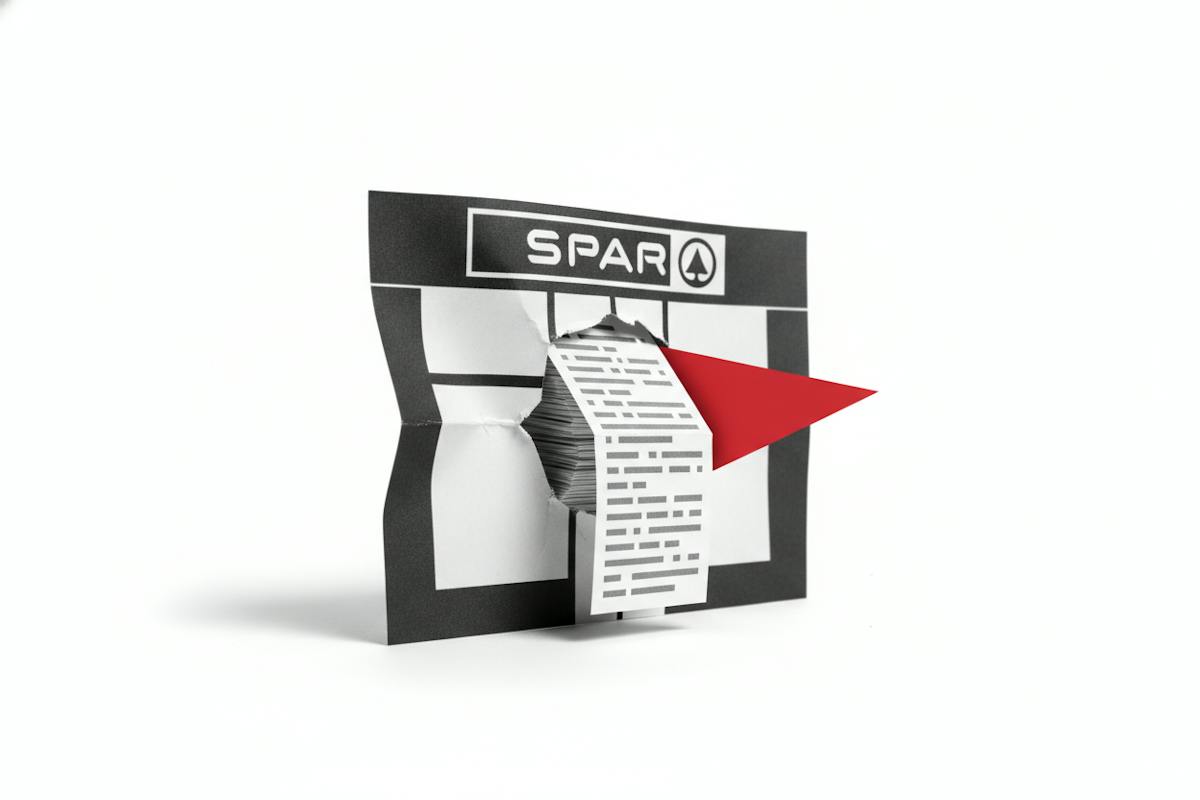
South African retailer SPAR has issued a stark profit warning, saying its headline earnings per share from continuing operations could fall by as much as 49.5% for the 52 weeks ended September 25. The company blamed a combination of operational missteps and rising credit losses from franchisees that are struggling to stay afloat.
Even though revenue was broadly flat, the bottom line took a heavy hit. The pain was most acute in the first half of the year, when heavy discounting during Black Friday and ongoing problems at its KwaZulu-Natal distribution center squeezed margins. A troubled SAP software rollout had earlier disrupted service levels for independently owned stores, and the fallout continued to weigh on results.
What went wrong?
SPAR operates a franchise model, where independent store owners use the SPAR brand and buy stock from the company. That model depends on healthy, well-run stores. But when franchisees struggle, SPAR often extends credit to help them keep shelves stocked. Now, some of that credit is not being repaid.
The company said expected credit losses on its debt from franchisees have increased, adding another layer of pressure on profits. This is a double blow: not only are sales weaker, but SPAR is also setting aside money to cover loans that may not be recovered.
The operational issues trace back to the SAP software rollout, which disrupted supply chains and left stores with empty shelves and frustrated customers. Fixing those problems has taken time and money, and the effects lingered well into the year.
Black Friday, typically a sales bonanza for retailers, also proved costly. SPAR engaged in heavy discounting to compete, but that ate into margins. The month-long price war that has become common in retail is squeezing profits across the sector, and SPAR was no exception.
Signs of improvement
Despite the grim full-year outlook, SPAR said its second-half performance improved. That suggests the operational fixes are starting to take effect and that the worst may be behind the company. However, the improvement was not enough to offset the earlier damage.
Investors will be watching to see whether the recovery continues into the new fiscal year. The company's ability to stabilise its franchise network and reduce credit losses will be key to restoring profitability.
What it means for investors
For everyday investors, this profit warning is a reminder that retail stocks can be volatile, especially when a company relies on a network of independent operators. Franchise models can amplify problems: when store owners struggle, the parent company often feels the pain twice — once through lower sales and again through bad debts.
The news also highlights the risks of operational disruptions, such as IT system failures. A botched software rollout can have long-lasting financial consequences, as SPAR has discovered.
Looking ahead, investors will likely focus on SPAR's next earnings report to see if the second-half improvement is sustainable. They will also watch for any signs that credit losses are stabilising. For now, the company's own guidance points to a challenging year, and the market will be bracing for the final numbers.
Retailers across the globe are facing similar pressures, from uneven consumer demand to rising costs. SPAR's experience is a case study in how operational missteps and financial stress at the franchisee level can quickly erode shareholder value.
As always, past performance is not a guide to the future, and this profit warning does not necessarily mean the company is in long-term trouble. But it does underscore the importance of understanding the business model and the risks that come with it.