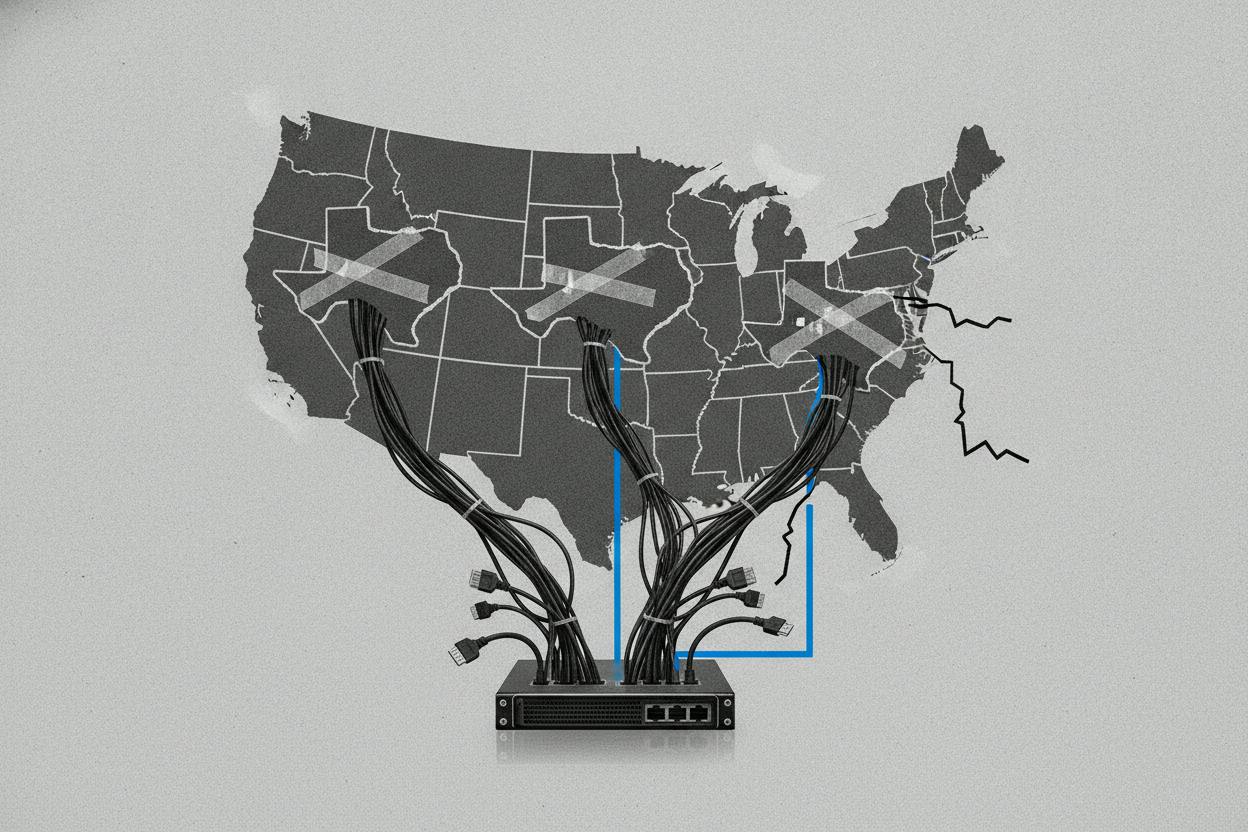
Investors focused on Washington for the next big market catalyst may be looking in the wrong place. According to a note from Danske Bank, the statehouse races in Texas, Georgia, and Ohio could have a more direct impact on one of the economy's hottest sectors: the data center buildout.
The bank's analysts argue that Democrats appear on track to flip the governor's mansions in all three states. While that would not dramatically alter the federal fiscal picture—gridlock in DC tends to keep tax-and-spend plans in check—it could reshape how and where data centers get built.
Why governors matter for data centers
Data centers are the physical backbone of cloud computing, artificial intelligence, and streaming services. They require enormous amounts of electricity and land, and their construction depends heavily on state and local decisions. Governors influence who gets appointed to regulatory boards, how quickly permits are approved, where facilities can be sited, and how fast transmission lines and roads can be built.
Danske's note highlights that the bottleneck for many data center projects is not money but procedure. Even with ample capital, a project can stall for years waiting for environmental reviews, zoning approvals, or grid interconnection studies. A change in political leadership can shift those priorities—speeding up some projects while slowing others.
Texas, Georgia, and Ohio are particularly important because they have become hubs for data center development, thanks to cheap land, relatively low energy costs, and business-friendly policies. If new governors bring different regulatory philosophies, the pace of construction in those states could change.
What it means for investors
For market participants, the implications are less about broad fiscal policy and more about pinpointing which companies benefit first. Utilities that plan grid upgrades, industrial firms that supply cooling systems and construction services, and local infrastructure plays tied to siting and permitting could see demand shift depending on the election outcomes.
Danske's note suggests that traders may move away from generic "growth trades" and instead focus on regional supply chains. For example, a utility in a state with a new governor who prioritizes fast-track permitting might see its capital expenditure plans accelerate, while a utility in a state where approvals become more contentious could face delays.
The key risk, the bank says, is not a sudden change in US deficits but a reshuffling of which regional contractors and suppliers see demand sooner—and which ones have to wait. This is a reminder that politics can affect markets in unexpected ways, often at the state and local level rather than in Washington.
Broader context
The data center boom has been a major driver of corporate spending and electricity demand. Tech giants and cloud providers have announced billions of dollars in new facilities, and the trend shows no sign of slowing. Oracle's recent $20 billion capital raise to fund AI infrastructure is just one example of the scale involved.
At the same time, projects like the planned 1-GW AI data center at a UK power station illustrate how these facilities are being paired with energy sources to meet demand. The intersection of politics, energy, and data centers is becoming a key theme for investors.
For those watching the midterm elections, the focus on statehouse races is a useful reminder that not all political risk is federal. Copper prices have already slipped as markets weigh election uncertainty, and similar jitters could affect other commodities and regional stocks.
What to watch next
As election night approaches, investors will be tracking not just the winners but also their stated priorities on energy, infrastructure, and economic development. Statements about renewable energy mandates, grid reliability, or permitting reform could offer early clues about which projects might move faster.
For everyday investors, the takeaway is that political changes can have very specific, localized effects. Rather than trying to predict the entire market, it may be more useful to consider how a shift in a single state could affect the companies that operate there. Utilities, construction firms, and equipment makers with heavy exposure to Texas, Georgia, or Ohio could be the ones to watch.
Danske's analysis underscores that the data center buildout is as much a political story as a technological one. The next few months could determine not just who governs these states, but also where the next wave of digital infrastructure gets built.