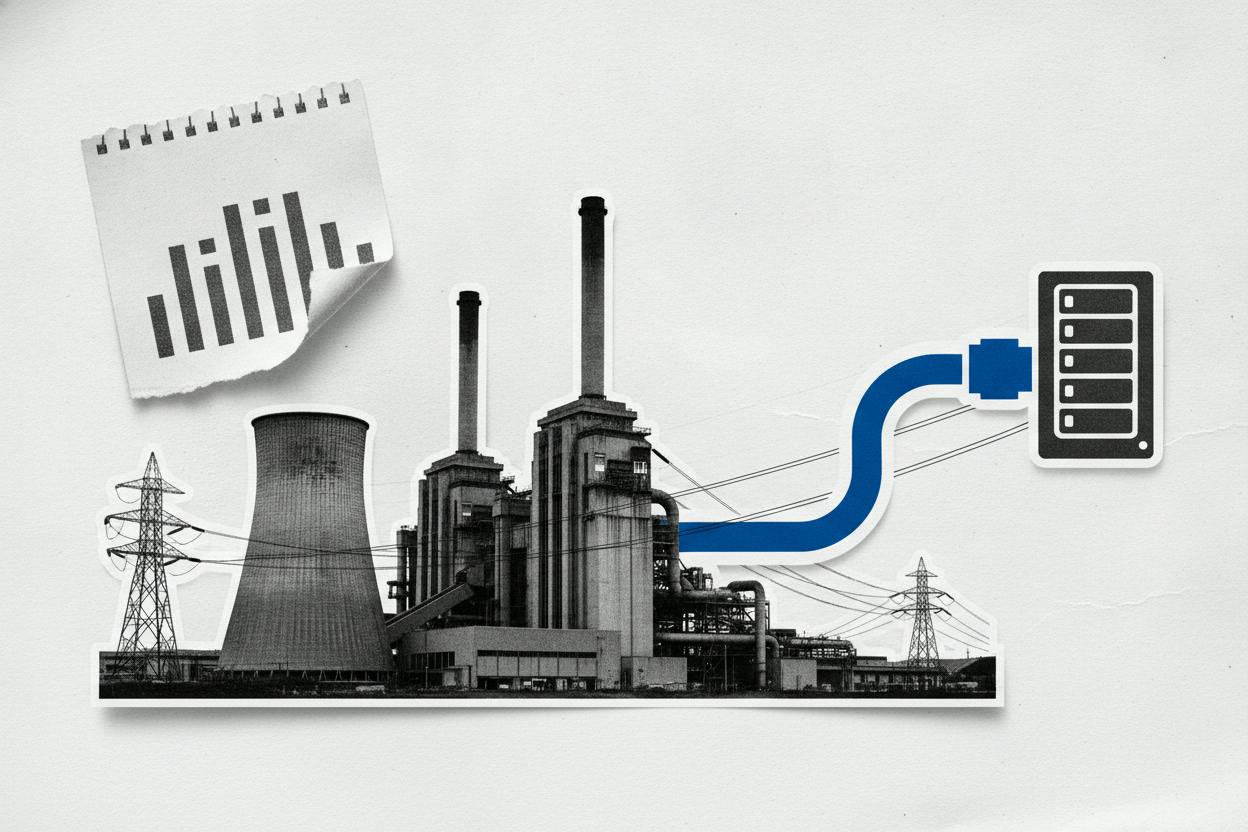
UK power company Drax has announced plans to develop a massive artificial intelligence data center at its power station in northern England, in partnership with Brookfield, a global alternative asset manager, and Radiant, an AI infrastructure developer. The project, which could exceed 1 gigawatt (GW) of capacity, is one of the largest of its kind proposed in the UK and highlights the growing intersection between energy generation and the booming demand for computing power.
The first phase is slated to come online in early 2028, according to the company. While the total investment figure was not disclosed, the scale of the project—more than 1 GW—would make it one of the biggest data center developments in Europe. For context, a typical large data center might use 100 megawatts (MW), so 1 GW is roughly ten times that size.
Why a power station?
Data centers, especially those built to train and run AI models, consume enormous amounts of electricity. They also need reliable, round-the-clock power. That makes a location like Drax Power Station—which already has grid connections and generating capacity—an attractive site. Rather than building new transmission lines, developers can tap into existing infrastructure.
Drax Power Station is one of the largest power plants in the UK, historically coal-fired but now largely converted to burning biomass (wood pellets). The company has been under pressure from environmental groups over its biomass operations, but it remains a key part of the UK's energy mix. The data center project could give the plant a new revenue stream and a reason to keep operating.
JPMorgan analysts noted that the data center deal could extend the plant's life beyond its current scheduled closure in March 2031. That's significant because Drax had previously indicated the plant might close when its current subsidy arrangements end. A long-term power purchase agreement with a data center tenant could change that calculus.
The partnership structure is also notable. Brookfield is a major investor in renewable energy and infrastructure, and it already has a stake in Drax. Radiant specializes in building AI-ready data centers, often co-located with power sources. This kind of collaboration—power company plus asset manager plus tech developer—is becoming more common as AI demand strains electricity grids.
What it means for investors
For Drax shareholders, the deal is a potential positive. It could provide a stable, long-term revenue stream and delay the plant's retirement, which would otherwise remove a large chunk of the company's earnings. However, the project is still in early stages, and there are risks: construction delays, regulatory approvals, and the possibility that AI demand growth slows.
For the broader market, this is another sign that the AI boom is not just about chipmakers and cloud providers. It's also about power. Utilities and power generators are increasingly seen as beneficiaries of the AI buildout, as data centers need vast amounts of electricity. This has already boosted stocks of some utilities and power equipment makers. For a look at how other companies are capitalizing on this trend, see Alliant Energy's similar 1-GW data center demand.
The deal also underscores the growing importance of data center infrastructure. As AI models become more complex, the physical infrastructure—power, cooling, and networking—becomes a bottleneck. That's why we're seeing deals like Marvell's acquisition of Lumentum, which targets the optical networking needed to move data within and between data centers.
For everyday investors, the key takeaway is that AI's impact is spreading beyond tech stocks. Energy companies, real estate investment trusts (REITs) that own data centers, and even cybersecurity firms are all being reshaped by the AI wave. As AI-powered hacking threats grow, so does the need for security. And as data centers proliferate, so does the need for power.
Still, it's important to be cautious. Projects like this can face delays and cost overruns. The timeline for early 2028 is ambitious, and regulatory hurdles in the UK could slow things down. Investors should watch for updates on financing, construction milestones, and any changes to the plant's subsidy status.
In the meantime, the Drax project is a clear signal that the AI data center boom is reaching Europe's shores, and that power stations—once seen as relics of the fossil fuel era—may have a new role to play in the digital economy.