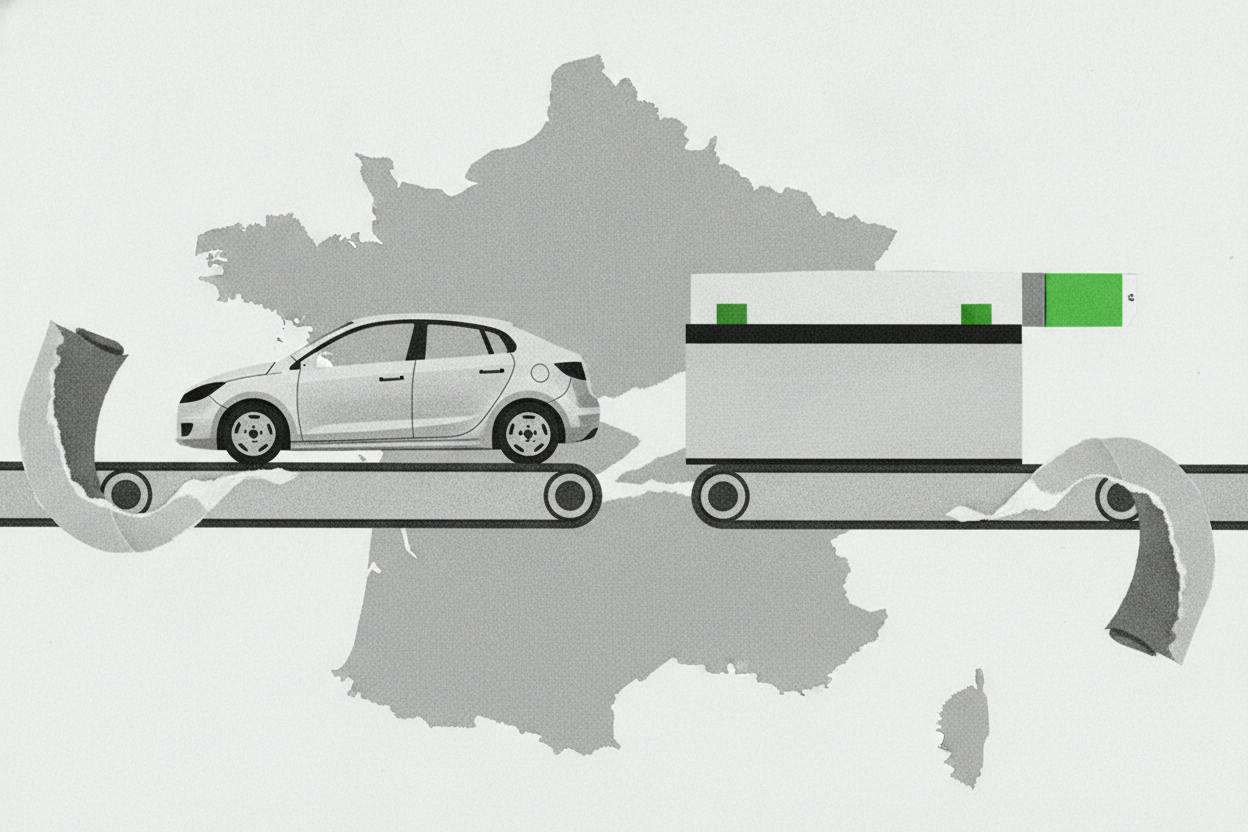
Stellantis, the automaker behind brands like Peugeot, Citroën, and Opel, is temporarily halting production at three French factories because it has run short of batteries for its longer-range electric vehicles (EVs). The company says the problem isn't a lack of buyers—demand, especially from corporate fleets, remains strong—but rather that battery supplies can't keep pace with orders.
The affected plants are in Sochaux, Rennes, and Mulhouse. According to the company, Mulhouse will be idle from October 15 to 30, Rennes from October 22 to 30, and Sochaux from October 23 to 30. The Citroën C5 Aircross is among the models most affected. The pause is expected to last at least a week, though the exact duration could change depending on how quickly battery supplies recover.
Why is this happening?
This is a classic supply-chain bottleneck. Automakers have been racing to build EVs to meet tightening emissions rules and growing consumer interest, but the batteries that power them—especially the larger packs used in long-range versions—are still in short supply globally. Battery production involves raw materials like lithium, nickel, and cobalt, and scaling up that supply chain takes time.
Stellantis's decision to idle plants rather than build cars it can't fully equip is a deliberate move to avoid piling up unfinished inventory. In the auto industry, building cars that sit incomplete in lots is costly and inefficient. By pausing production, the company can align what it builds with what it can actually sell.
This isn't the first time a major automaker has had to slow down because of parts shortages. Ford recently halted F-150 output for nearly a week due to a parts shortage, and the broader industry has been grappling with supply chain disruptions since the pandemic. The EV transition has added a new layer of complexity, as automakers compete for a limited pool of batteries and raw materials.
What does this mean for investors?
For everyday investors, this news is a reminder that the shift to electric vehicles isn't a smooth, straight line. Even when demand is strong, production can be held back by factors outside a company's control—in this case, the availability of batteries. That can affect quarterly earnings, delivery numbers, and ultimately the stock price.
Stellantis is not alone in facing these challenges. Automakers across the globe are investing heavily in battery supply chains, often through partnerships with battery makers. Volkswagen recently deepened its battery tie-up with China's Gotion in a €1.1 billion deal, and NIO opened its battery-swap network to Geely in a 16 billion yuan deal. These moves show how critical securing battery supply has become.
For Stellantis, the immediate impact is likely to be a temporary dip in production volumes, which could weigh on its European sales figures for October. But the company's decision to prioritize building cars that customers actually want—rather than pushing out incomplete vehicles—could be seen as a prudent move. It also highlights the growing importance of long-range EVs, which are increasingly popular with fleet buyers who need vehicles that can cover long distances on a single charge.
What to watch next
Investors will be watching how quickly Stellantis can resolve the battery shortage and whether other automakers face similar issues. The broader EV market is still growing, but supply constraints like this could temper growth in the short term. Thailand's car output jumped 10.9% in August, but exports slipped, a sign that even in regions with strong production, demand and supply aren't always in sync.
For now, the key takeaway is that the EV revolution is as much about supply chains as it is about consumer demand. Companies that can secure reliable battery supplies will be better positioned to meet the growing appetite for electric vehicles. Those that can't may face periodic production halts, which can ripple through their financial results.
As always, it's worth remembering that short-term production pauses don't necessarily signal a long-term problem. Stellantis has said demand is strong, and the company is likely working to secure more battery capacity. But for investors, it's a reminder to keep an eye on the supply side of the EV story, not just the sales numbers.