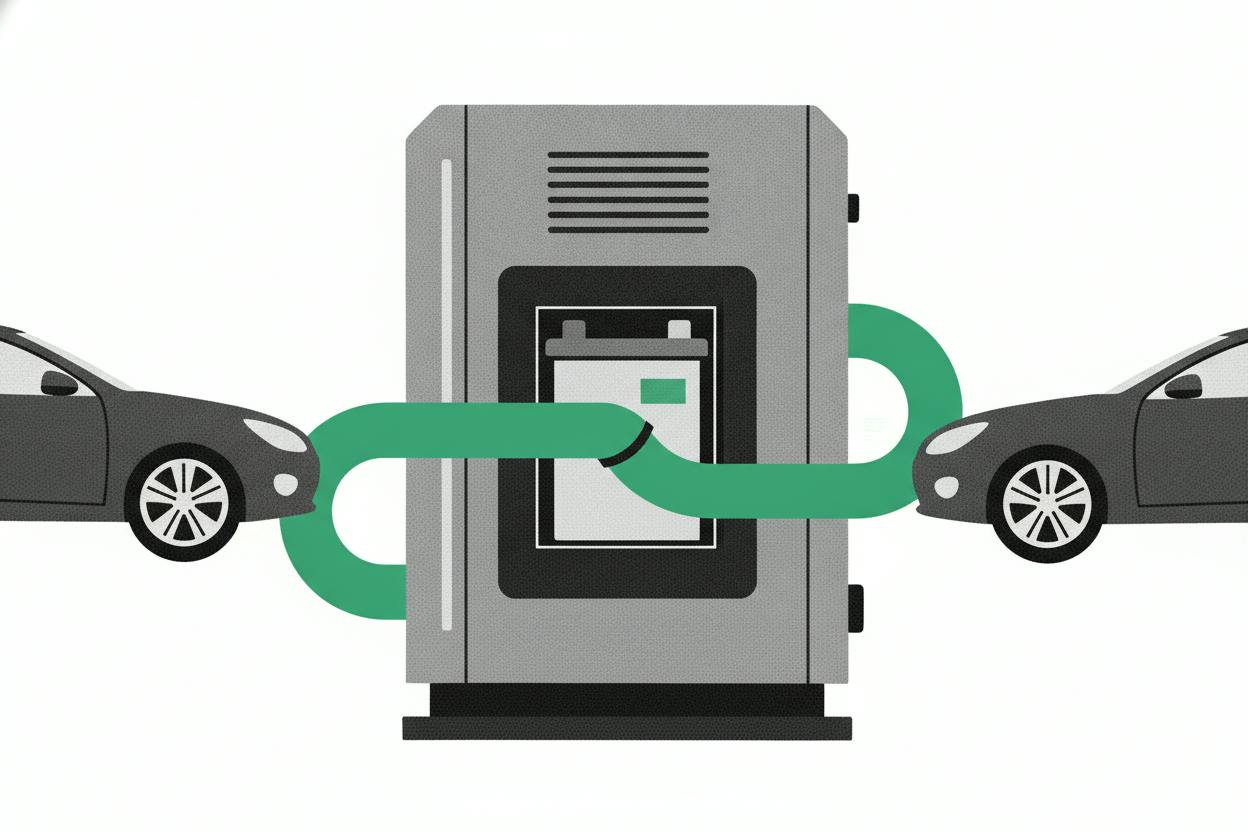
Chinese electric vehicle makers NIO and Geely are joining forces on battery swapping, a move that could reshape how EV owners charge their cars in China. Under the deal, Geely will take a 30% stake in NIO Energy Investment (Hubei), the unit that runs NIO's network of battery-swap stations and charging points. The transaction values that business at roughly 16 billion yuan (about $2.2 billion).
What the deal involves
The agreement, disclosed in a filing to the Hong Kong stock exchange, is a mix of cash, assets, and shared infrastructure. Geely will initially buy a 30% stake, and can increase it to 34% by injecting another 640 million yuan. NIO Holding will keep a controlling stake of about 63.6%, so NIO remains in charge of its energy business.
Battery swapping is a system where drivers pull into a station and have their depleted battery replaced with a fully charged one in a few minutes, rather than plugging in and waiting. It's a model NIO has championed in China, but building enough stations to make it convenient has been expensive. By bringing Geely in, NIO gets a partner to share those costs and a larger pool of vehicles that can use the network.
Why it matters for EV adoption
For everyday drivers, the biggest barrier to going electric is often charging time and range anxiety. Battery swapping addresses both: it's faster than most public chargers and means you don't have to worry about battery degradation over time, since you're always getting a fresh pack. But the economics only work if enough cars use the stations. Geely, which owns brands like Volvo and Polestar, sells a wide range of EVs in China, so this partnership could significantly boost the number of compatible vehicles.
The deal also reflects a broader trend in China's EV market: companies are increasingly sharing infrastructure rather than building competing, duplicative networks. That's similar to how rising energy costs are pushing European consumers to think harder about efficiency, though in this case the pressure is on automakers to make EVs more practical.
What it means for investors
For NIO shareholders, the deal brings in a deep-pocketed partner and validates the value of the energy unit. The 16 billion yuan valuation is a signal that investors see real worth in the swap-station network, which has been a costly bet for NIO. By selling a stake, NIO raises cash without giving up control, which could ease some of the financial strain from its heavy spending on infrastructure.
For Geely, the investment is a way to accelerate its own EV strategy without having to build a swap network from scratch. It also gives Geely a foothold in a service business that could generate recurring revenue, much like how cloud infrastructure deals create long-term revenue streams for tech companies.
But investors should note that battery swapping is still a niche approach. Most EV charging worldwide relies on plug-in chargers, and swapping requires standardized battery designs across different brands. While this partnership helps, it doesn't guarantee that swapping will become the industry standard. The success of the deal will depend on how many Geely vehicles actually use the network and whether the economics work at scale.
Looking ahead
Both companies will likely face scrutiny on how quickly they integrate their systems and whether the partnership leads to cost savings. NIO has been expanding its swap stations aggressively, and this deal could help it reach more cities and serve more drivers. Geely, meanwhile, gets a chance to offer its customers a faster charging option, which could make its EVs more attractive.
For the broader market, this is another sign that China's EV industry is maturing. Instead of each automaker going it alone, we're seeing more collaboration on the expensive parts of the business. That could be good news for consumers, who may get better infrastructure sooner, and for investors who want to see companies focus on profitability rather than endless capital spending.
As with any deal, there are risks. The valuation could prove too high if the network doesn't grow as expected, and integrating two large companies' operations is never easy. But for now, the partnership looks like a pragmatic move that could benefit both sides—and maybe even speed up the transition to electric vehicles in the world's largest car market.