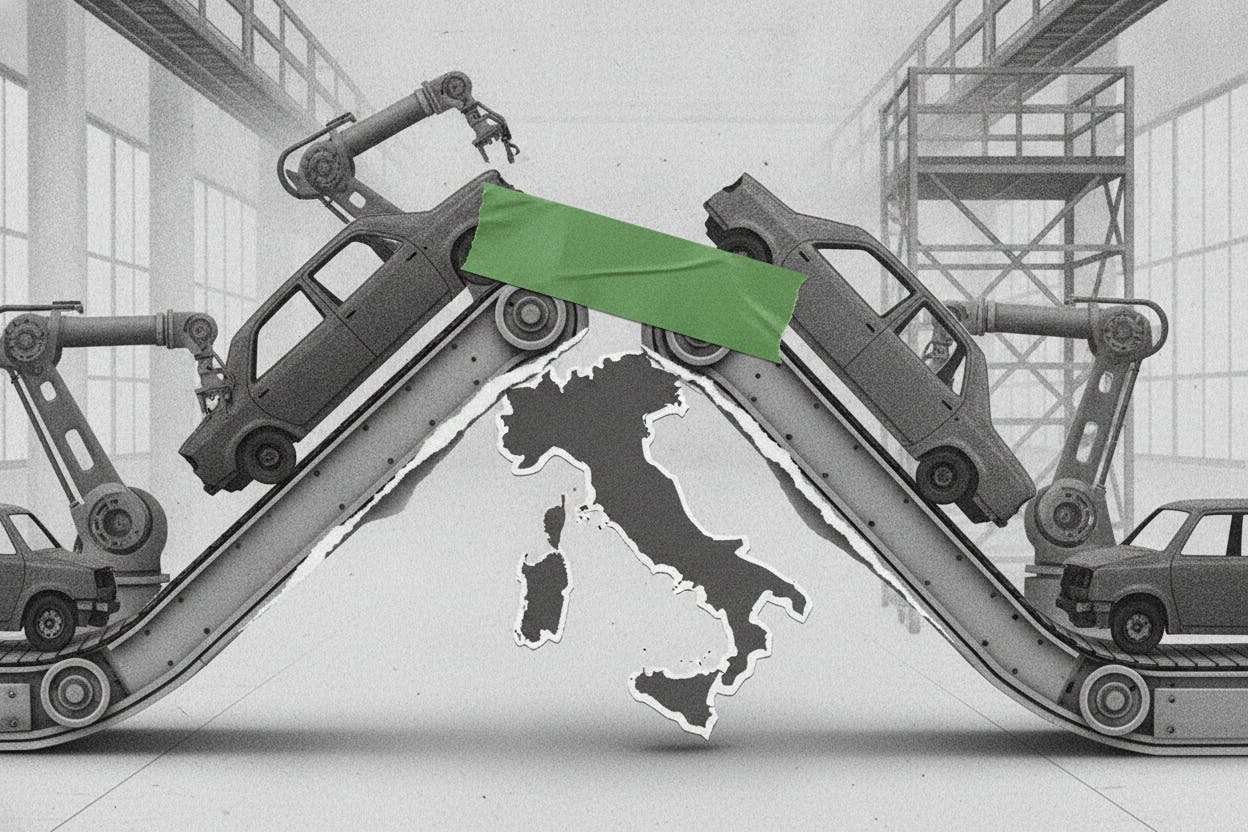
Stellantis, the automaker behind brands like Jeep, Fiat, and Peugeot, saw its vehicle production in Italy climb 13.7% in the first half of the year to 252,223 units. But the Italian metalworkers' union FIM CISL, which closely tracks the company, warns that the country's only major carmaker is still far from returning to its recent production pace.
Passenger-car production rose 27.7% to 158,193 vehicles in January-June, helped by new production lines for the Jeep Compass and the Fiat 500 hybrid. However, the Cassino plant saw volumes fall 36.2%, highlighting an uneven recovery across Stellantis' Italian factories.
What's behind the numbers?
FIM CISL says Stellantis is stabilizing after output hit its lowest level since 1954 last year. The first-half bounce is a welcome sign, but the union expects full-year production to land around 500,000 vehicles — well below the roughly 750,000 produced in 2023. That gap underscores the structural challenges facing Stellantis in Italy, including shifting consumer demand, the transition to electric vehicles, and global supply chain pressures.
The broader Italian economy has shown some resilience, with Italy's jobless rate hitting a record low of 5.0% and car sales data signaling consumer health. Yet Stellantis' production struggles suggest the auto sector is not fully benefiting from the recovery.
What it means for investors
For everyday investors, Stellantis' Italy output is a window into the company's operational health and its ability to navigate a rapidly changing industry. Production volumes directly affect revenue and profitability, and a persistent gap versus 2023 levels could weigh on earnings. The company is investing heavily in electrification, but the slow ramp-up in Italy suggests that transition is not without pain.
Investors should watch for Stellantis' next earnings report and any updates on production targets. The company's global footprint — including operations in North America and Europe — means Italy is just one piece of the puzzle, but it is a significant one. If Stellantis can close the output gap, it could signal stronger demand and better cost absorption. If not, it may point to deeper issues in the European auto market.
Also worth noting: the union's data is a key indicator for labor relations. Stellantis has been in talks with Italian unions over production plans and job guarantees, and any disruption could affect output further. For now, the first-half improvement is a step in the right direction, but the road back to pre-2023 levels looks long.