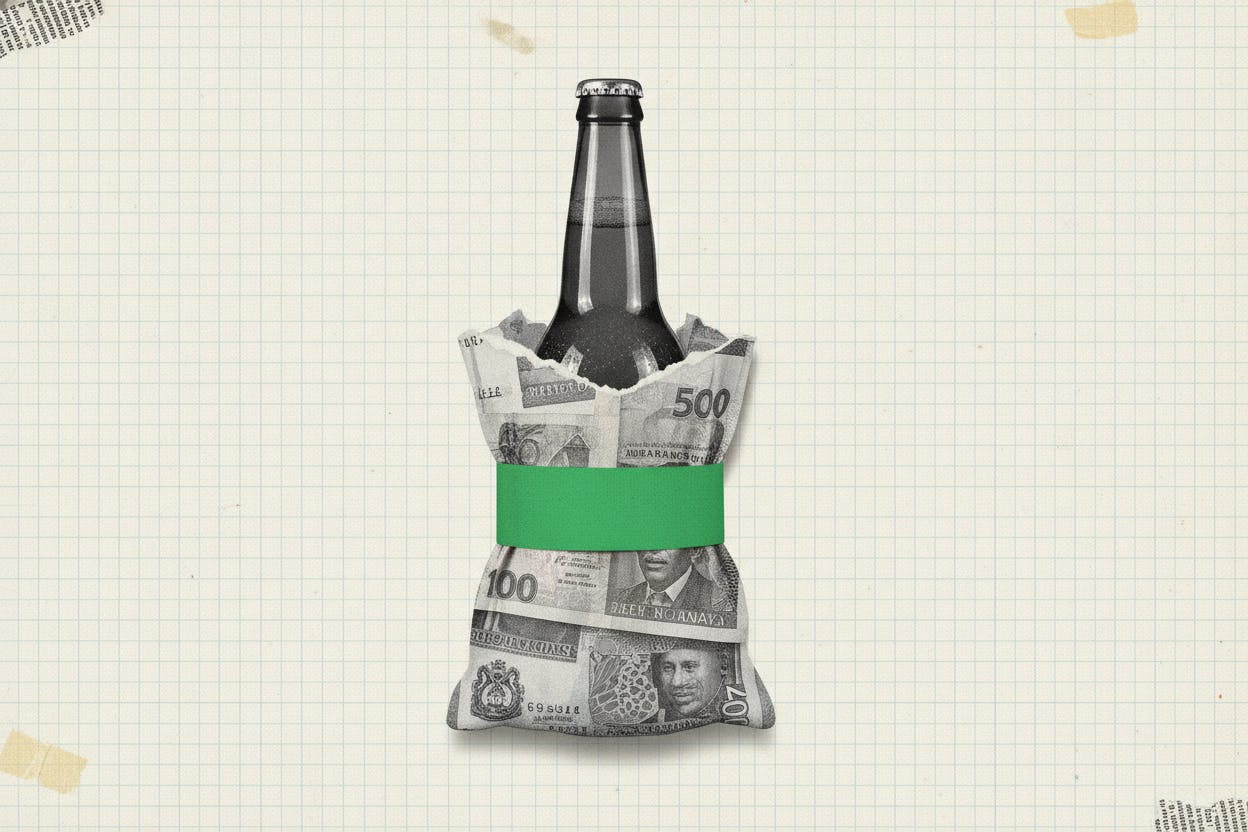
Kenya's competition watchdog is throwing a potential roadblock in front of one of the country's biggest corporate deals. The Competition Authority of Kenya (CAK) has proposed that East African Breweries (EABL) set aside a cash reserve of 15 billion Kenyan shillings (roughly $115 million) before it gives the green light to Diageo's planned $2.3 billion sale of its 65% stake in the brewer to Japan's Asahi, according to a Business Daily report on Monday.
The proposed reserve is meant to act as a safety net, covering any future liabilities or third-party claims that could arise from the transaction. In effect, the regulator wants to ensure that if something goes wrong after the deal closes, there is money set aside to address it, rather than leaving creditors or other parties exposed.
Diageo, the London-based spirits giant that owns brands like Johnnie Walker and Guinness, has pushed back against the condition, calling it baseless and unlawful. The company said it and Asahi are still engaging with the authority, suggesting the deal is not dead but rather in a negotiation phase.
Why the regulator is stepping in
Competition authorities in Kenya, like in many countries, have a mandate to review large mergers and acquisitions to ensure they don't harm competition or the public interest. But they also have a broader role in protecting stakeholders, including employees, suppliers, and creditors, especially when a major foreign investor is exiting a key local company.
The CAK's proposal appears to be an attempt to ring-fence EABL's financial position during the transition. By requiring a reserve, the regulator is essentially asking for a guarantee that the company can meet any obligations that might surface after the ownership change. This is not a standard condition in every deal, but it is not unheard of in cases where a sale involves a significant change in control or where there are concerns about the target's financial health.
EABL is one of Kenya's most prominent companies, a major brewer and distributor of beers, spirits, and non-alcoholic beverages across East Africa. Its products are household names in the region, and its performance is closely watched as a barometer for consumer spending in Kenya. The company recently reported a 43% jump in profit, as noted in our earlier coverage of EABL's strong results, which underscores its importance to the local economy.
What this means for investors
For everyday investors, this news is a reminder that big cross-border deals are rarely straightforward. The proposed reserve could delay the completion of the sale, which in turn could affect the timeline for when Asahi takes control. Delays can create uncertainty, and uncertainty often shows up in stock prices.
If you hold shares in Diageo, either directly or through a fund, this development is worth watching. The sale is part of Diageo's broader strategy to streamline its portfolio and focus on higher-growth areas. The company has been under pressure from cooling spirits demand and has announced $1 billion in cost cuts to shore up margins. The EABL sale is a key piece of that plan, and any hiccup could affect Diageo's ability to redeploy capital.
For investors in Kenyan markets, the situation is more nuanced. EABL is a heavyweight on the Nairobi Securities Exchange, and its ownership structure matters. A change from Diageo to Asahi could bring new strategies, new investment, or even changes in how the company operates. The regulator's insistence on a reserve suggests it is being cautious about the transition, which could be seen as protective of minority shareholders and other stakeholders.
It's also worth noting that Kenya's broader economic environment is shifting. The central bank has been cutting interest rates, which has helped revive loan demand, as Stanbic Kenya recently reported. A stable and well-regulated corporate sector is important for attracting foreign investment, and how this deal is handled could send signals to other potential acquirers.
What happens next
The ball is now in the court of Diageo, Asahi, and the CAK. Diageo has called the condition baseless and unlawful, which suggests it may be prepared to challenge it legally if necessary. However, the company also said it is still engaging with the authority, indicating a willingness to find a compromise.
It's possible the reserve amount could be reduced, or the condition could be modified to address the regulator's concerns without derailing the deal. Alternatively, if Diageo and Asahi refuse to accept the condition, the CAK could block the sale entirely, though that would be a drastic step given the size and profile of the transaction.
For now, investors should keep an eye on any updates from the CAK or the companies involved. The outcome will not only determine the fate of EABL but also set a precedent for how Kenya handles large foreign exits in the future. As always, it's wise to stay informed and consider how such regulatory decisions might affect your portfolio, but avoid making hasty moves based on a single headline.