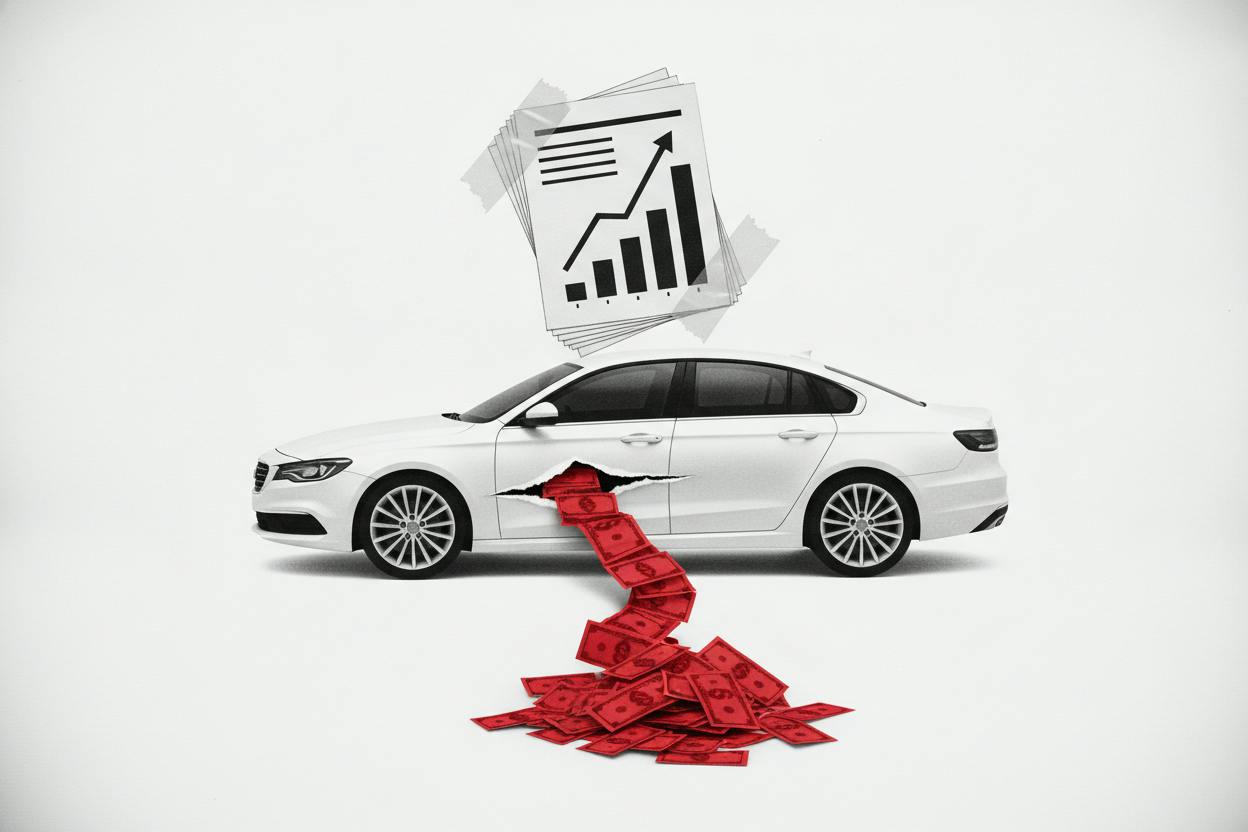
Stellantis, the automaker behind brands like Jeep, Peugeot, and Fiat, reported a modest profit for the third quarter, but the numbers tell a more complicated story. Adjusted operating profit (EBIT) came in at €256 million, a sign that the company's turnaround efforts are starting to show up on the income statement. However, a roughly €4 billion industrial cash outflow has left investors cautious, waiting for proof that the plan is working on a broader scale.
What the numbers say
Adjusted EBIT is a measure of a company's operating profitability, stripping out one-time items and certain non-cash charges. The €256 million figure is a positive sign, but it's a relatively small number for a company of Stellantis's size. More concerning is the industrial cash outflow, which represents the cash used in the company's core operations, including manufacturing, inventory, and capital spending. A €4 billion outflow means Stellantis is burning through cash, which can be a red flag for investors, especially during a turnaround.
Cash flow is often seen as a more reliable indicator of a company's health than accounting profit, because it reflects actual money moving in and out. A company can report a profit on paper while still struggling to generate cash, and that's exactly what's happening here. The gap between the €256 million profit and the €4 billion cash outflow suggests that while the company is making progress on profitability, it hasn't yet translated into cash generation.
Why cash flow matters
For an automaker, industrial cash flow is a key metric. It covers everything from paying suppliers to investing in new models and factories. A large outflow can mean the company is spending heavily to fund its turnaround, whether that's on new product launches, restructuring costs, or clearing out excess inventory. But it can also signal underlying problems, like weak demand or inefficiencies in production.
Investors are likely watching to see whether this cash drain is a temporary phase or a longer-term issue. In many turnaround situations, companies initially spend more cash as they invest in the future, and the payoff comes later. But if the outflow persists, it could strain the company's balance sheet and limit its ability to return money to shareholders through dividends or buybacks.
What it means for investors
For everyday investors, the key takeaway is that Stellantis is making progress on one front but not yet on another. The profit improvement is encouraging, but the cash outflow is a reminder that the turnaround is still a work in progress. Investors often look for both profitability and cash generation as signs that a company is truly turning around. When one lags behind the other, it can be a reason for caution.
This situation is not unique to Stellantis. Other companies have faced similar challenges during their own turnaround efforts. For example, Verizon's turnaround has been showing up in lower customer churn, but the real test is whether it can sustain that momentum. Similarly, PayPal's turnaround plan is starting to show up in profit forecasts, but investors are watching to see if that translates into long-term growth.
In the auto industry, cash flow is particularly important because of the heavy capital requirements. Automakers need to invest in new models, electric vehicle technology, and manufacturing capacity. A company that can't generate cash from its operations may have to borrow more or cut back on investments, which could hurt its competitiveness.
What to watch next
Investors will be looking at Stellantis's next earnings report to see if the cash outflow narrows. They'll also be watching for any signs that the company's profit improvement is sustainable. Key factors include vehicle sales volumes, pricing power, and the success of new product launches. The company's ability to manage its inventory and working capital will also be critical.
Stellantis is not alone in facing these challenges. The broader auto industry is dealing with a shift to electric vehicles, changing consumer preferences, and supply chain disruptions. Companies that can navigate these headwinds while improving their financials are likely to be rewarded by investors. But as Stellantis shows, progress can be uneven.
For now, the market is taking a wait-and-see approach. The €256 million profit is a step in the right direction, but the €4 billion cash outflow is a reminder that the turnaround is far from complete. Investors will be hoping that the next quarter brings not just higher profits, but also a smaller cash drain.
In the meantime, it's worth remembering that turnarounds take time. Companies like Boeing's turnaround has stalled due to ongoing issues, while others like L&T's overseas orders have driven a big profit jump. The key is to focus on the underlying trends, not just the headline numbers.
Stellantis's next earnings report will be a crucial test. If the company can show that the cash outflow is shrinking while profits continue to grow, investors may become more confident that the turnaround is real. Until then, the market is likely to remain cautious.