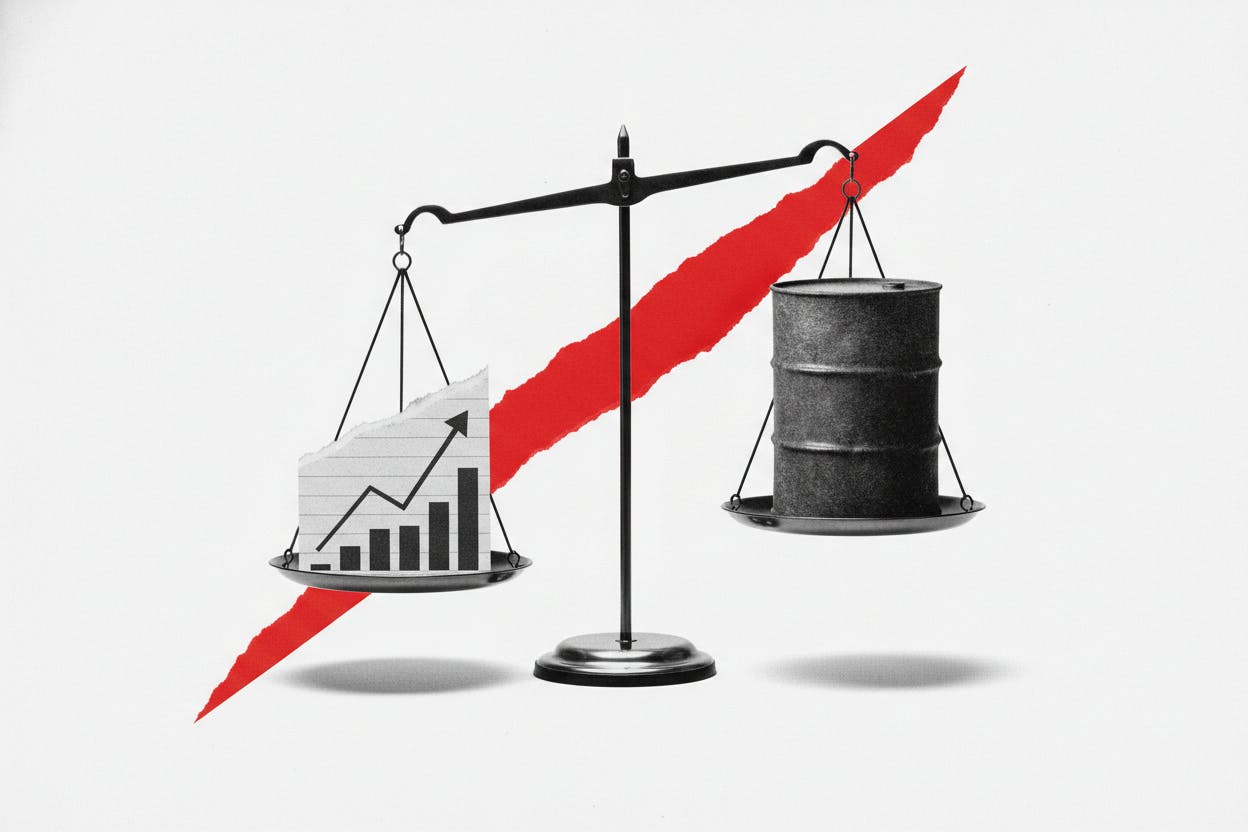
US stocks managed to close higher on Wednesday even as oil prices surged on escalating tensions in the Middle East. The S&P 500 added 0.4%, while West Texas Intermediate (WTI) crude climbed to $90.70 a barrel after fresh US strikes on Iranian targets and reports that two tankers exploded after hitting a mine.
The session highlighted the delicate balancing act investors are performing: weighing geopolitical risk that pushes energy prices up against economic data that suggests the US economy may be cooling. That tension was visible across markets, with stocks grinding higher even as crude oil hit levels not seen in weeks.
Oil climbs on Middle East worries
Oil prices have been on a steady climb as the conflict between the US and Iran escalates. The latest jump came after reports of new strikes and the tanker explosions, which raised concerns about the safety of shipping routes in the region. Brent crude, the international benchmark, rose to $95.29 a barrel, while WTI, the US benchmark, settled at $90.70.
For everyday investors, higher oil prices often translate into higher costs at the pump and can feed into broader inflation. That is why markets watch crude closely: sustained increases in energy prices can ripple through the economy, affecting everything from shipping costs to consumer spending.
The geopolitical backdrop remains fluid, and any further escalation could push oil even higher. But so far, the market reaction has been relatively contained, with equities managing to hold onto gains. That suggests investors are still betting that the conflict will not spiral into a full-blown disruption of global oil supplies.
Cooling jobs data keeps yields in check
While oil grabbed headlines, the bond market was focused on a softer-than-expected jobs report. ADP's estimate showed just 38,000 private jobs were added in August, well below expectations, and manufacturing payrolls actually declined. That reading suggests the labor market is losing some momentum, which could give the Federal Reserve reason to pause its interest rate hikes.
The reaction in Treasury yields was immediate: the two-year yield, which is sensitive to Fed policy expectations, fell to 4.39%. Lower short-term yields can be a double-edged sword for stocks. On one hand, they reduce the appeal of holding cash and bonds, making equities relatively more attractive. On the other, they signal that the economy may be slowing, which could hurt corporate earnings down the road.
This mix of higher oil and softer jobs data is a familiar challenge for investors. It creates a tug-of-war between inflation fears and growth concerns. In recent sessions, the market has often swung based on which force seems to be winning at any given moment.
What it means for investors
For the average investor, the key takeaway is that markets are navigating a complex environment. Oil prices are a reminder that geopolitical events can have a direct impact on portfolios, even if the effect is sometimes indirect. Energy stocks tend to benefit from higher crude prices, while airlines, shipping companies, and consumer goods firms may see their margins squeezed.
At the same time, the jobs data offers a glimpse into the Fed's next move. If hiring continues to cool, the central bank may be less inclined to raise rates further, which could support stock valuations. But if inflation remains sticky due to higher energy costs, the Fed could be forced to keep rates higher for longer.
Investors should also keep an eye on the broader market context. Recent sessions have seen global stocks steady as Middle East tensions and higher yields collide, and the Dow climbed 246 points as AI optimism outweighed US-Iran tensions just a day earlier. That shows how quickly sentiment can shift.
For those with a long-term perspective, the current volatility is a reminder to stay diversified. Energy exposure can provide a hedge against geopolitical shocks, but it also comes with its own risks. Similarly, bonds can offer stability when stocks wobble, but their returns depend heavily on the path of interest rates.
As the situation in the Middle East evolves and more economic data rolls in, expect continued swings in both oil and equities. The next major test will be the official jobs report, which will give a clearer picture of the labor market's health. Until then, investors should brace for more of the same: oil climbing on headlines, and stocks trying to find their footing in a world of competing forces.



