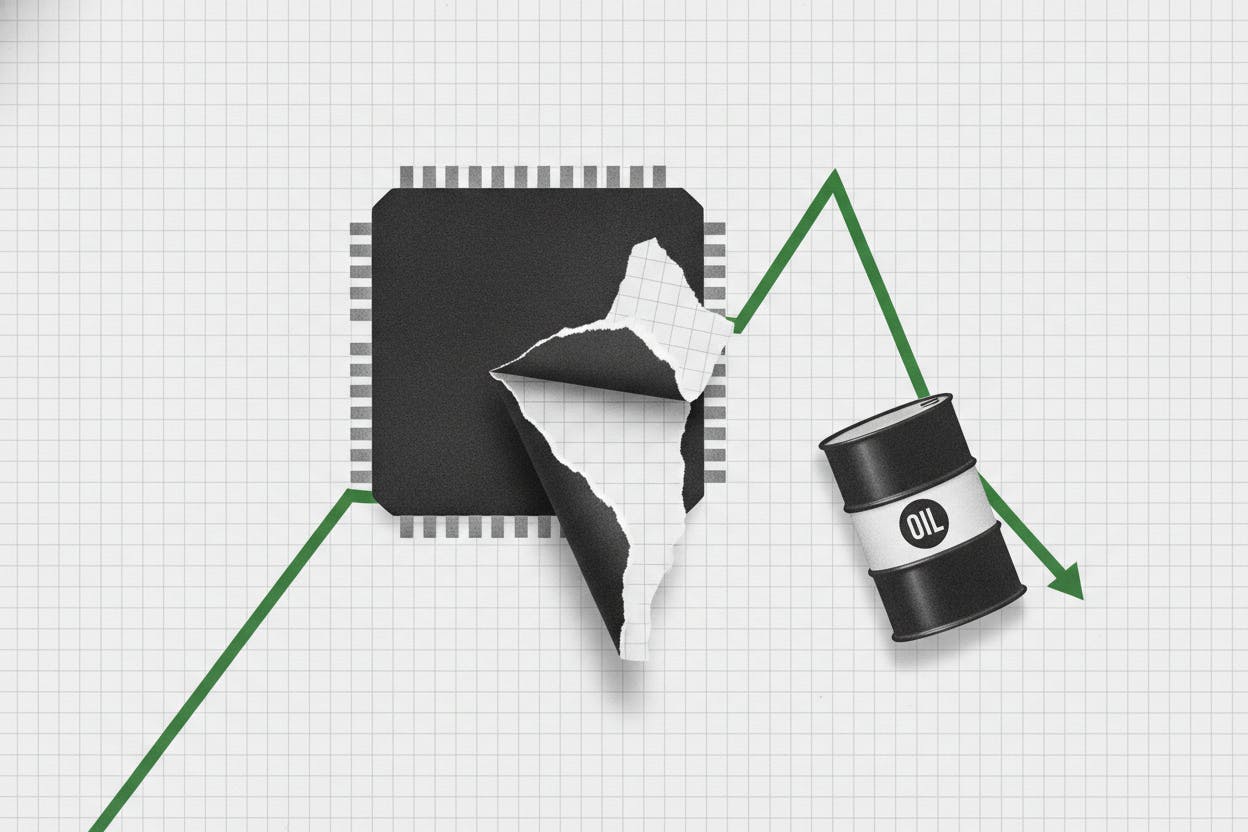
US stocks climbed in midday trading on Friday, with all major sectors in the green, as crude oil prices dropped sharply and bond yields eased. But the rally was not universal: semiconductor-focused exchange-traded funds (ETFs) fell more than 3%, signaling a rotation beneath the surface.
Broad market ETFs tracking large and small US stocks, such as the iShares Core S&P 500 (IVV) and iShares Russell 2000 (IWM), were higher. Every major sector gained ground, even as the tech-heavy Invesco QQQ Trust (QQQ) slipped 0.2%.
Oil slides, lifting sentiment
Crude oil fell 4.3% on Friday, a sharp move that helped ease inflation fears and supported a broad market rally. Lower oil prices reduce costs for businesses and consumers, which can boost corporate profits and spending power. The drop also helped push bond yields lower, as investors dialed back expectations for further interest rate hikes tied to energy-driven inflation.
This decline comes after a period of elevated oil prices, partly driven by geopolitical tensions. For context, oil prices have been volatile recently, with crude posting an 11% weekly gain just last week amid Middle East concerns. Friday's move suggests some of those fears are receding, at least for now.
Chip ETFs slide despite broader gains
While most stocks rose, semiconductor ETFs—the SPDR S&P Semiconductor (XSD) and iShares Semiconductor (SOXX)—each fell more than 3%. This divergence highlights a shift in market leadership away from the tech sector, which had driven much of the year's gains.
The weakness in chip stocks comes amid growing doubts about the pace of AI-related spending. Investors are questioning whether the massive investments in artificial intelligence infrastructure will pay off as quickly as hoped. These concerns have weighed on chipmakers ahead of a busy period of big tech earnings reports, as noted in recent coverage of the Nasdaq's dip.
Semiconductor stocks are often seen as a bellwether for the broader tech industry and the economy, since chips are used in everything from smartphones to cars to data centers. A sustained drop in these stocks could signal caution about future demand.
What it means for investors
Friday's market action tells a story of rotation. Investors are moving money out of the high-flying tech sector and into other areas of the market, such as small-cap stocks and energy, which have lagged this year. The iShares Russell 2000 (IWM) was higher, reflecting interest in smaller companies that tend to benefit from a stronger economy and lower interest rates.
This kind of shift can be healthy for the market over the long term, as it broadens the rally beyond just a handful of big tech names. But it also means that investors who are heavily concentrated in semiconductor or tech ETFs may see short-term volatility.
Bond yields easing alongside lower oil prices is another positive signal. When yields fall, it reduces borrowing costs for companies and makes stocks more attractive relative to bonds. However, the drop in chip ETFs suggests that not all sectors are benefiting equally.
For everyday investors, the key takeaway is to watch for continued rotation. If oil stays low and yields remain subdued, sectors like small caps, financials, and industrials could continue to gain ground. Meanwhile, the tech sector—especially semiconductors—may face headwinds if AI spending doubts persist.
As always, diversification remains important. A portfolio that is too heavily weighted in one sector can be vulnerable to sudden shifts in market sentiment. Friday's mixed picture is a reminder that even on a good day for the overall market, some areas can still struggle.



