Oil prices took a step back on Friday, but the retreat looks more like a breather after a rapid rally than a sign that geopolitical risks are fading. Brent crude fell 2.77% to $97.90 a barrel, while US benchmark West Texas Intermediate (WTI) also declined. Yet both benchmarks are on track for substantial weekly gains, with Brent set to rise about 11% for the week.
The pullback comes after Brent briefly topped $100 a barrel in the prior session for the first time since May, driven by escalating tensions in the Middle East. The region accounts for roughly a third of the world's seaborne oil trade, making any disruption a major concern for global energy markets.
What's driving the supply fears?
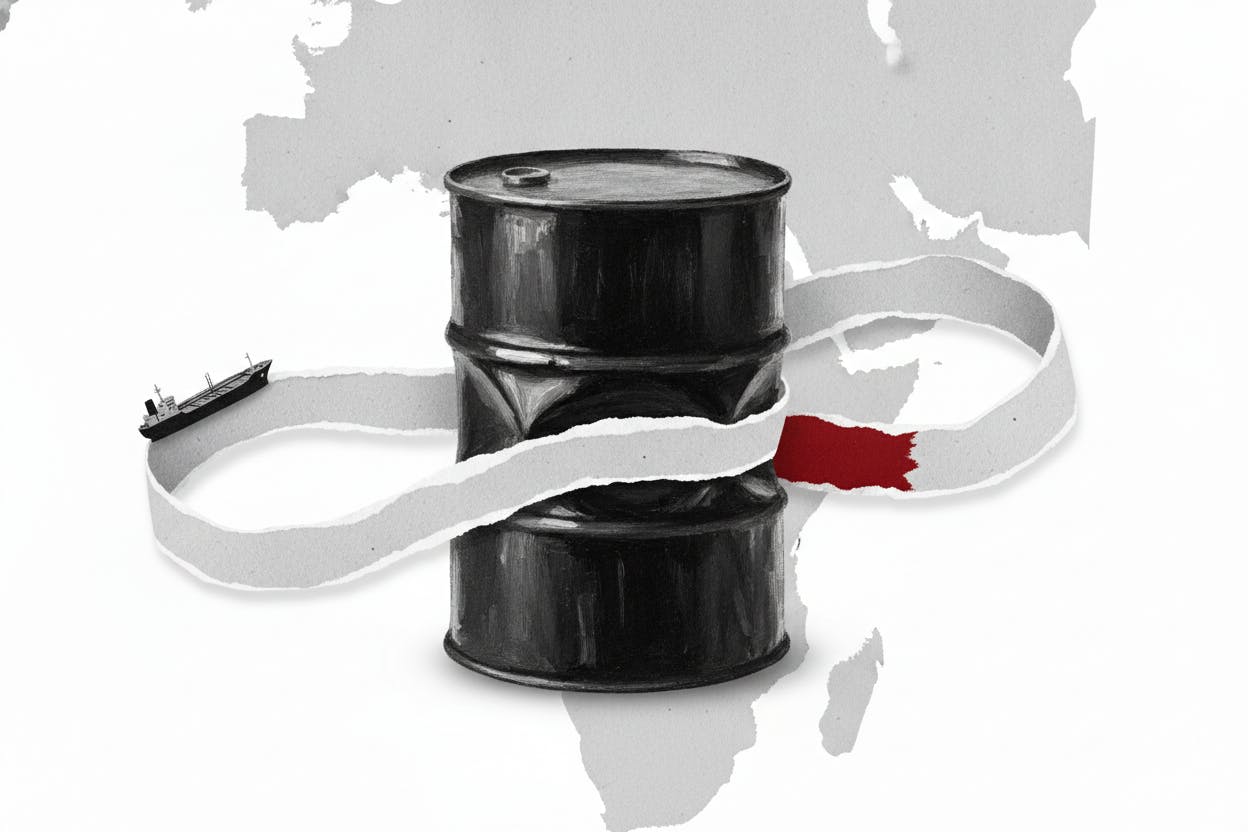
The latest spike in oil prices stems from a series of attacks near the Red Sea, a critical shipping route for oil and other goods. Iran-aligned Houthi rebels said they struck two Saudi oil tankers in the area, raising fears that the conflict could disrupt supply lines. The Red Sea connects to the Suez Canal, a key chokepoint for oil shipments from the Middle East to Europe and North America.
Beyond the Red Sea, investors are also watching the Strait of Hormuz, a narrow waterway between Iran and Oman through which about 20% of the world's oil passes. Any escalation there could have far-reaching consequences for global supply. As one analyst put it, the market is pricing in a risk premium that reflects the possibility of a broader regional conflict.
These concerns have been building for weeks. In a related development, oil prices were already set for a 13% weekly gain as risks around both the Strait of Hormuz and the Red Sea mounted. The current situation has only intensified those fears.
What does this mean for investors?
For everyday investors, the surge in oil prices is a double-edged sword. On one hand, it can boost the value of energy stocks and commodities-focused funds. On the other, higher oil prices feed into inflation, which could prompt central banks to keep interest rates higher for longer. That dynamic was evident earlier this week when Brent crude topped $102, reviving rate-hike fears and pushing long-term bond yields higher.
Higher energy costs also ripple through the economy. They raise the price of gasoline, heating oil, and the cost of transporting goods, which can squeeze consumer budgets and corporate profit margins. Companies in sectors like airlines, shipping, and manufacturing are particularly sensitive to oil price swings.
In Asia, the impact is already visible. New Zealand's NZX 50 index was flat as Brent surged past $100, with investors worried about inflation. Similarly, India's central bank stepped in to support the rupee as the currency neared a record low, a direct consequence of higher oil import costs.
What to watch next
The key question for investors is whether the current supply fears will translate into actual disruptions. So far, the attacks have not caused a major shutdown of oil production or shipping, but the risk remains. Traders will be watching for any escalation in the Red Sea or around the Strait of Hormuz, as well as any diplomatic efforts to de-escalate tensions.
Another factor to consider is the response from major oil producers. The Organization of the Petroleum Exporting Countries and its allies (OPEC+) have been cutting output to support prices, but a sustained rally above $100 could prompt them to reconsider. Higher prices also encourage US shale producers to ramp up drilling, though that takes time.
For now, the market remains on edge. Friday's dip may offer some relief, but the underlying risks are far from resolved. As one energy analyst put it, "The geopolitical premium is here to stay until we see a clear de-escalation."
Investors should keep an eye on energy sector exposure in their portfolios, but also consider the broader implications for inflation and interest rates. Diversification remains a key strategy in times of uncertainty.