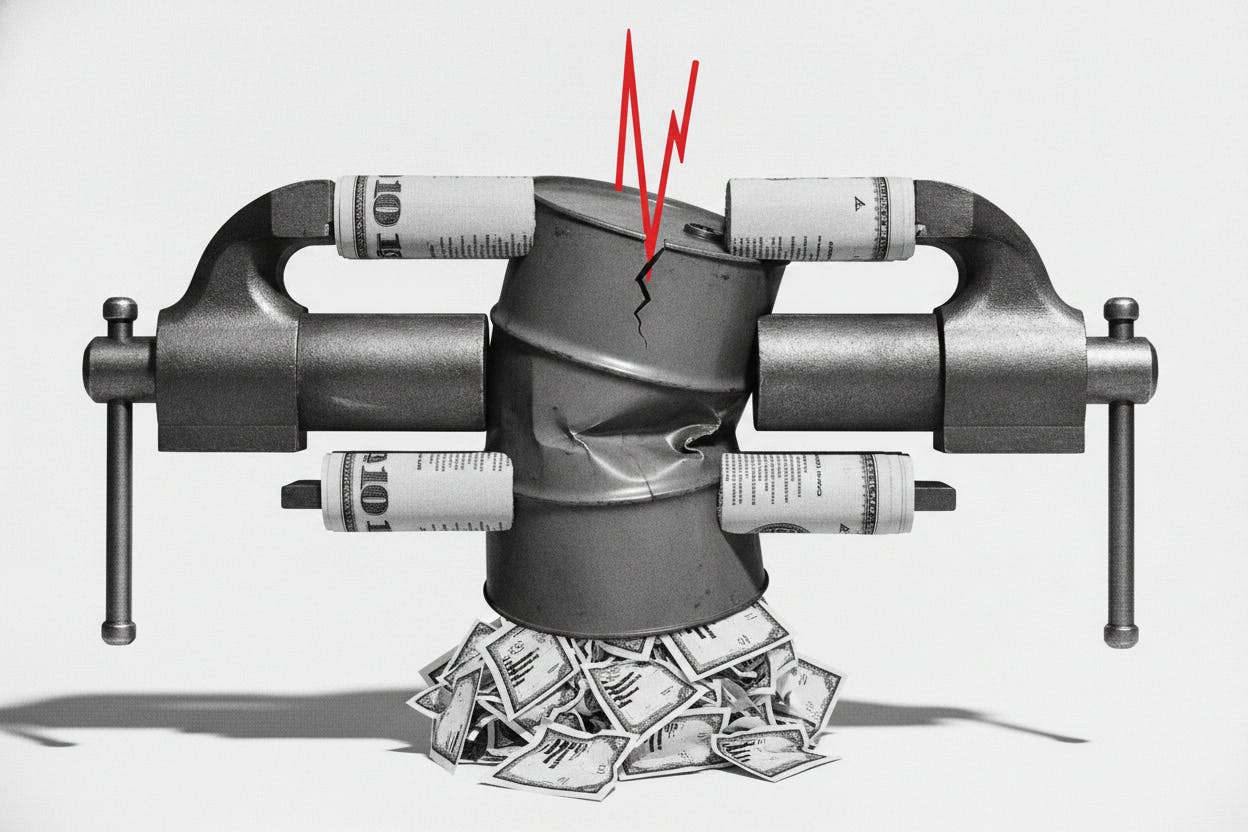
Oil prices surged again, with Brent crude briefly topping $102 a barrel, sending a fresh wave of anxiety through global markets. The jump reignited fears that inflation may not cool as quickly as hoped, prompting investors to reassess the path of interest rates. Long-term US Treasury yields, already near multi-decade highs, stayed elevated as traders braced for the possibility that central banks might need to keep borrowing costs higher for longer.
What happened with oil?
Brent crude, the international benchmark for oil prices, briefly crossed the $102 mark before pulling back. By the end of the session, it had slipped about 2% to roughly $98.70 a barrel. The move was driven by ongoing concerns about supply disruptions in the Middle East and the potential for shipping bottlenecks to make fuel more expensive again. Even with the intraday retreat, oil remains at levels that historically have acted as a headwind for the global economy.
Higher energy prices feed directly into inflation, as they raise costs for transport, manufacturing, and heating. That makes it harder for central banks to declare victory over inflation and start cutting interest rates. For everyday investors, this means the timeline for rate cuts—which many had hoped would arrive this year—could be pushed further out.
Bonds signal higher-for-longer rates
The oil spike showed up most clearly in bond markets. When investors expect future inflation to run hotter, they typically demand extra yield to lend money for longer periods. That dynamic pushed long-term US Treasury yields to remain near levels not seen in decades. The 10-year Treasury yield, a benchmark for global borrowing costs, hovered at elevated levels, reflecting the market's expectation that the Federal Reserve may need to keep rates higher for longer.
This shift in bond market expectations has ripple effects across asset classes. Higher yields make bonds more attractive relative to stocks, potentially pulling money out of equities. They also raise borrowing costs for companies and households, which can slow economic growth. For investors, the message is clear: the era of cheap money is not returning anytime soon.
Global markets feel the heat
The oil-driven uncertainty weighed on stock markets around the world. In Asia, indices like the NZX 50 and South Korea's KOSPI faced pressure as investors grappled with the twin threats of higher energy costs and persistent inflation. The Nikkei also tumbled, with tech stocks particularly vulnerable to rising rates.
Emerging markets felt the pinch too. The Indian rupee came under pressure, prompting the Reserve Bank of India to step in and support the currency as Brent crude breached $100. Latin American markets also sank, with the Chilean peso hitting a 2025 low as oil above $100 soured investor sentiment.
What it means for investors
For everyday investors, the key takeaway is that oil prices remain a wildcard for the inflation outlook and, by extension, for interest rates. While the brief spike above $102 didn't last, the underlying supply risks are real. Any further escalation in Middle East tensions or shipping disruptions could push oil higher again, keeping inflation sticky and central banks on hold.
This environment favors a cautious approach. Bonds, especially longer-dated ones, may continue to offer higher yields, but they also carry price risk if rates rise further. Stocks, particularly those in rate-sensitive sectors like technology and real estate, could remain volatile. Energy stocks, on the other hand, often benefit from higher oil prices, but that's not a recommendation—just a reflection of how different sectors react.
Investors should also watch currency markets. A stronger US dollar, driven by higher yields, can pressure emerging market currencies and assets. For those with international exposure, currency fluctuations can add another layer of risk or opportunity.
The bottom line
Oil's jump above $102 was a reminder that the inflation fight is not over. Markets are now pricing in a higher probability of further rate hikes, and long-term yields are reflecting that reality. While the immediate spike faded, the broader trend of elevated energy prices and tight monetary policy is likely to persist. For investors, staying diversified and keeping an eye on inflation-sensitive assets remains prudent.



