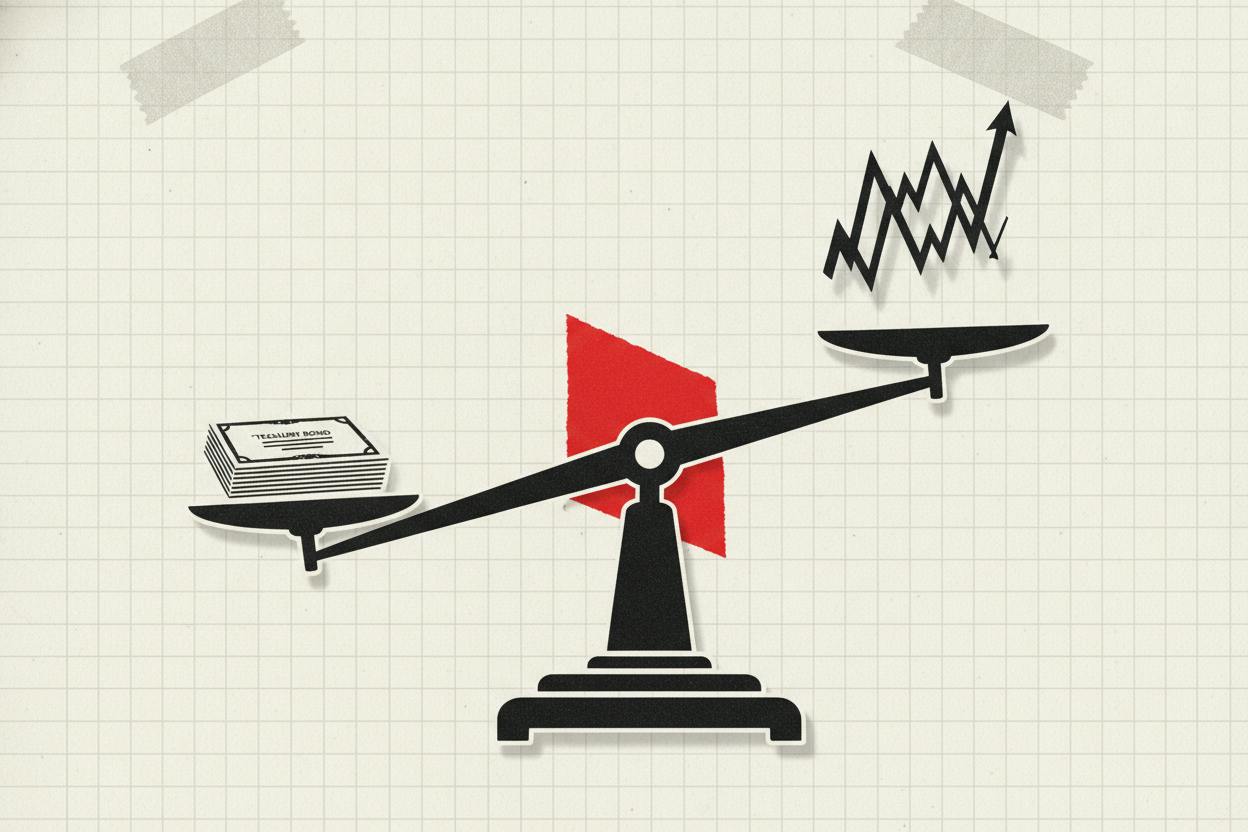
Stocks slipped on Wednesday as a key measure of borrowing costs climbed and a closely watched survey showed American consumers turning more pessimistic about the economy. The moves highlight the twin pressures weighing on equity markets: rising Treasury yields and fading confidence in the outlook.
The 10-year Treasury yield rose to 5.29%, its highest level in years, while the 30-year yield climbed to 5.61%. At the same time, the Conference Board, a business research group, reported that its consumer confidence index fell to 81.9 in September, down from 88.6 in August. The decline was sharper than many economists had expected and reflected weaker views of both current conditions and future expectations.
Why higher yields hurt stocks
For everyday investors, the move in Treasury yields matters because these bonds are considered the “risk-free” baseline for returns. When the 10-year yield rises, investors can earn more from holding government debt without taking on the volatility of stocks. That makes equities relatively less attractive, especially for companies whose profits are expected to come far in the future.
Higher yields also raise the discount rate used to value future earnings. In simple terms, a dollar of profit expected years from now is worth less in today’s money when interest rates are higher. So even if a company’s business is unchanged, its stock price can fall simply because the broader rate environment has shifted. This dynamic has been a persistent drag on equity markets as yields have climbed over the past year.
The rise in yields comes amid a stretch of elevated borrowing costs across the economy. Mortgage rates, auto loans, and corporate debt all tend to move with Treasury yields, so the increase has broad implications for households and businesses. For investors, it means the bar for stock returns is higher, and companies with heavy debt loads or long-dated growth expectations may feel more pressure.
Consumer confidence: a warning sign
The Conference Board’s consumer confidence index is a widely followed gauge of how Americans feel about the economy and their own financial situation. A reading below 90 is generally seen as a sign of caution, and the drop to 81.9 suggests households are growing more worried about the path ahead.
Consumer spending drives roughly two-thirds of U.S. economic activity, so a sustained decline in confidence can foreshadow softer demand for goods and services. That, in turn, could weigh on corporate revenues and profits. While confidence surveys are not always a perfect predictor of actual spending, they are a useful signal for investors trying to gauge the health of the consumer.
The September reading also showed that expectations for the next six months deteriorated, which may reflect concerns about inflation, interest rates, and the labor market. If consumers pull back, retailers, restaurants, and other discretionary businesses could feel the pinch. On the other hand, some analysts note that confidence can be volatile and that spending has remained resilient in recent months despite similar dips.
What it means for investors
For ordinary investors, the combination of higher yields and weaker confidence suggests a more cautious backdrop for stocks. The immediate takeaway is that the “risk-free” return on cash and bonds has become more competitive, which can lead to a rotation out of equities and into fixed income. That doesn’t mean stocks are doomed, but it does mean the bar for growth and earnings is higher.
Investors should also keep an eye on upcoming economic data, particularly inflation reports and jobs numbers, which could influence the Federal Reserve’s next moves. If inflation remains sticky, the Fed may keep rates higher for longer, keeping upward pressure on yields. Conversely, softer data could ease those concerns and give stocks some breathing room.
For those with diversified portfolios, the key is to remember that market moves like this are normal. Bonds and stocks often move in opposite directions, and having a mix of both can help cushion the impact. The recent rise in yields also means that new bond purchases offer more attractive income than they did a year ago, which can be a positive for savers and income-focused investors.
As always, it’s wise to focus on long-term goals rather than reacting to daily swings. The current environment is a reminder that markets are driven by a complex interplay of interest rates, sentiment, and economic data, and that no single day’s move tells the whole story.