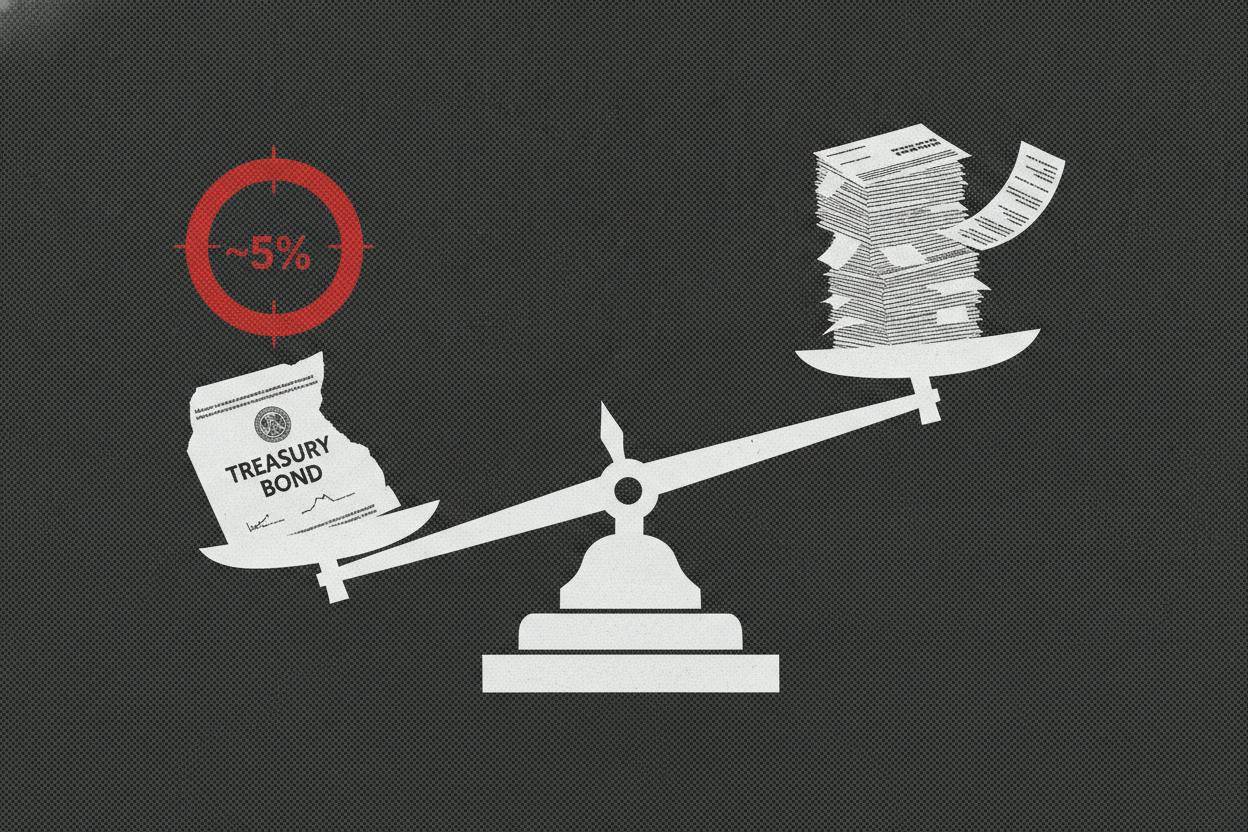
US stocks slipped Friday afternoon as Treasury yields climbed back toward 5%, a level that last appeared in 2007. The move added fresh pressure on equity valuations, which are built on expectations of future profits.
After midday, the 10-year Treasury yield rose to around 5%, while the two-year yield climbed to about 4.74%. The fact that both short- and long-term yields moved higher suggests the jump wasn't confined to one corner of the bond market. When investors sell Treasuries, prices fall and yields rise, effectively lifting the 'risk-free' return available without taking stock risk.
Why higher yields hurt stocks
Stock prices are essentially the sum of expected future profits, discounted back to today's dollars. A higher yield on safe assets like Treasuries raises the discount rate, making those future dollars worth less in present terms. That's why rising yields often weigh on stock prices, particularly for growth companies whose profits are expected far in the future.
The 10-year yield moving back toward 5% is a psychological milestone. It's a level that investors haven't seen in over 15 years, and it signals that the bond market is demanding higher compensation for lending to the US government. This can ripple through the economy, affecting mortgage rates, corporate borrowing costs, and consumer loans.
Friday's move wasn't isolated. It comes amid a broader backdrop of elevated yields and market uncertainty. As we've noted, stocks have already slipped as yields near 5%, and the current session adds to that trend. The yield climb also echoes concerns about inflation and the Federal Reserve's policy path, which have kept bond markets on edge.
Nucor's earnings miss adds to the gloom
Adding to the downbeat tone, steelmaker Nucor slid 6% after its third-quarter earnings forecast missed expectations. The company, a major US steel producer, saw its shares drop as investors reacted to the weaker outlook. While the brief doesn't specify the exact figures, a miss of this magnitude suggests demand or pricing pressures in the steel market, which can be sensitive to economic cycles.
Nucor's performance is often seen as a bellwether for industrial activity, so its forecast miss could signal broader concerns about the economy. However, it's important to remember that one company's earnings miss doesn't necessarily predict a downturn. Still, it adds to the cautious mood on Wall Street.
What it means for investors
For everyday investors, the key takeaway is that rising yields can make stocks less attractive relative to bonds. When you can earn nearly 5% on a 10-year Treasury with virtually no risk, the risk premium demanded from stocks increases. That doesn't mean stocks will crash, but it does mean valuations may face headwinds.
Investors should also watch how the Fed responds. If yields continue to climb, the Fed might feel pressure to adjust its policy, though it has been focused on fighting inflation. The triple test of yields, oil prices, and AI debate remains a key theme in markets.
For those with diversified portfolios, the impact of rising yields can be mixed. Bonds become more attractive, but existing bondholders see prices fall. Stocks, especially growth-oriented ones, may see more volatility. It's a reminder that markets are interconnected, and what happens in the bond market often sets the tone for equities.
As always, it's wise to focus on long-term goals rather than short-term market moves. While a 5% yield is notable, it's still below the historical average of around 6% for the 10-year Treasury. The current environment is unusual, but not unprecedented.
Investors will likely keep a close eye on upcoming economic data and Fed communications for clues about where yields head next. If yields stabilize or fall, stocks could find some relief. If they keep climbing, the pressure on valuations may persist.