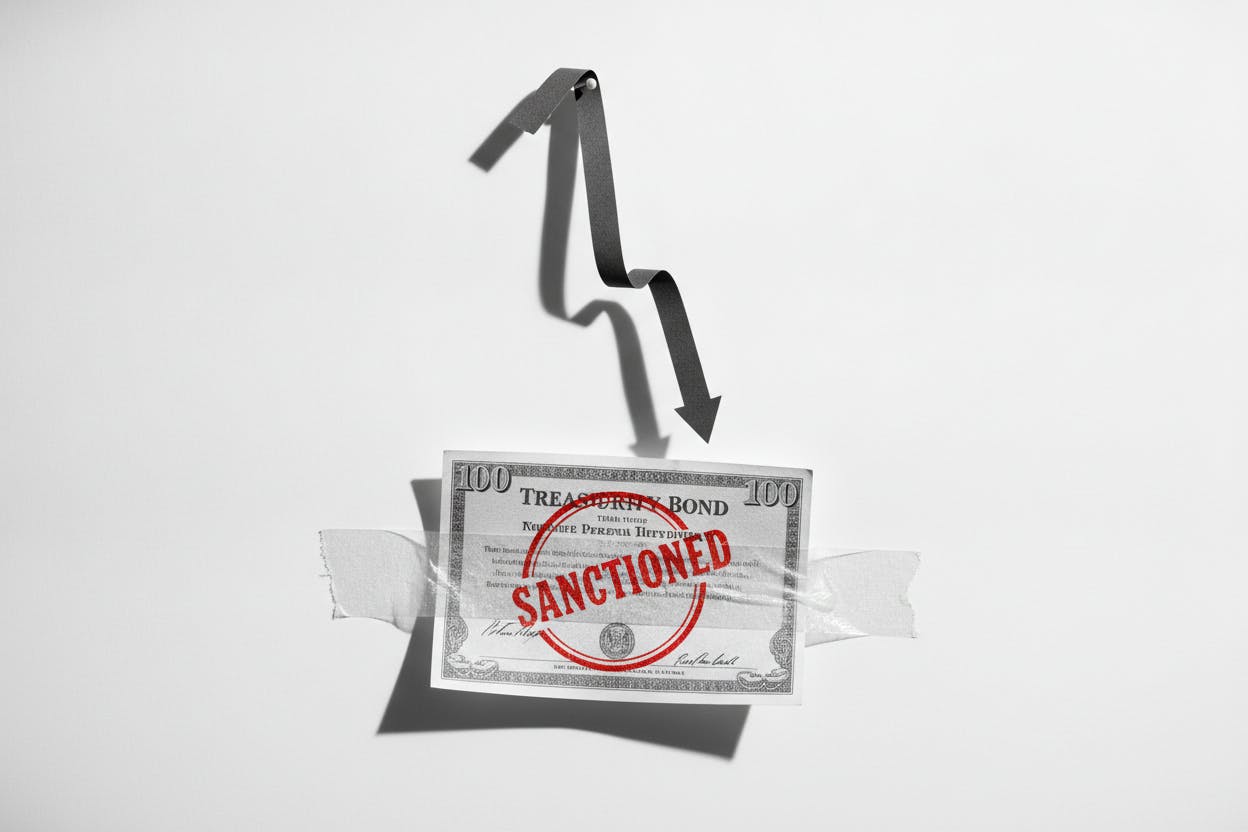
Stocks slipped over the past week as investors weighed a fresh geopolitical flashpoint: President Donald Trump's threat of “extreme” new sanctions on Iran and on any country that does business with it. The warning added to an already cautious mood on Wall Street, where Treasury yields were climbing and the Federal Reserve signaled it is comfortable keeping interest rates where they are.
The S&P 500 eased over the week, giving back some of the gains from earlier in the month. The move wasn't a crash, but it reflected a market that is struggling to find direction as it juggles geopolitical risk, rising borrowing costs, and a central bank that appears in no hurry to cut rates.
What's driving the pullback?
The immediate trigger was Trump's comments about Iran. Speaking to reporters, the president said he was considering “extreme” sanctions on Iran and on any country that continues to trade with it. The threat comes amid ongoing tensions in the Middle East, including disruptions to shipping through the Strait of Hormuz, a critical chokepoint for global oil supplies. Shipping slowdowns in the region have already rattled markets, and the prospect of broader sanctions adds another layer of uncertainty.
But geopolitics wasn't the only factor weighing on stocks. Treasury yields have been climbing steadily, with the 30-year yield recently touching levels not seen since 2007. Higher yields make bonds more attractive relative to stocks, and they also raise borrowing costs for companies and consumers, which can squeeze corporate profits and dampen economic growth. The 30-year yield hovering near that multi-decade high has been a persistent headache for equity investors.
At the same time, the Federal Reserve has signaled it is comfortable keeping its benchmark interest rate in the 3.50% to 3.75% range. That's the level the central bank has settled on after a series of cuts, and officials appear to see no need to move again soon. For investors hoping for more aggressive easing to support stock prices, that's a disappointment.
What does the Fed's stance mean?
The Fed's message is essentially: we're okay here. The central bank seems to believe that the current rate level is appropriate given the balance of inflation and employment risks. That means borrowing costs for mortgages, auto loans, and business credit are likely to stay elevated for a while.
For everyday investors, this translates into a few things. First, cash and short-term bonds continue to offer decent yields, which can be a safe haven when stocks are choppy. Second, companies with heavy debt loads may feel more pressure, as their interest expenses stay high. Third, growth stocks, which are more sensitive to interest rates because their value depends on future earnings, may remain volatile.
The Fed's comfort with current rates also suggests that any future moves will depend on incoming data. If inflation stays sticky, rates could stay higher for longer. If the economy weakens, the Fed might be forced to cut. For now, the central bank is in a wait-and-see mode.
What about the Treasury's bond repurchases?
In a related development, the US Treasury Department has been increasing its repurchases of long-dated government bonds. Treasury Secretary Scott Bessent told CNBC that individual operations could exceed $4 billion. These buybacks are part of the Treasury's effort to manage the maturity profile of its debt and support liquidity in the bond market.
While the amounts are relatively small compared to the overall Treasury market, the move is notable because it comes at a time when yields are rising. By buying back longer-dated bonds, the Treasury can help support prices and potentially ease some upward pressure on yields. Stocks have rebounded in the past when yields pulled back, so any relief on that front could be a positive for equities.
What it means for investors
For the average investor, the key takeaway is that the market is navigating a tricky environment. Geopolitical shocks like the Iran sanctions threat can cause short-term volatility, especially in energy prices and sectors with international exposure. But the bigger, more persistent factor is the level of interest rates.
When Treasury yields climb, it's a signal that the market expects either higher inflation or stronger economic growth, or both. That can be good for some sectors, like financials, which benefit from higher interest margins. But it can be tough for technology and other growth stocks, which are valued on the promise of future profits that get discounted more heavily when rates rise.
Investors should also keep an eye on the oil market. Sanctions on Iran could tighten global supply, pushing prices higher. That would feed into inflation and could make the Fed even less inclined to cut rates. When yields and oil prices take a breather, stocks tend to find some footing.
Diversification remains a sensible strategy. Having a mix of stocks, bonds, and cash can help cushion against the kind of crosscurrents we're seeing now. And while it's tempting to react to every headline, history shows that trying to time the market based on geopolitical events is rarely a winning strategy.
As the week ahead unfolds, investors will be watching for any further developments on the Iran front, as well as economic data that could influence the Fed's next move. Until then, expect more of the same: a market that's trying to find its footing in a world of higher rates and heightened uncertainty.