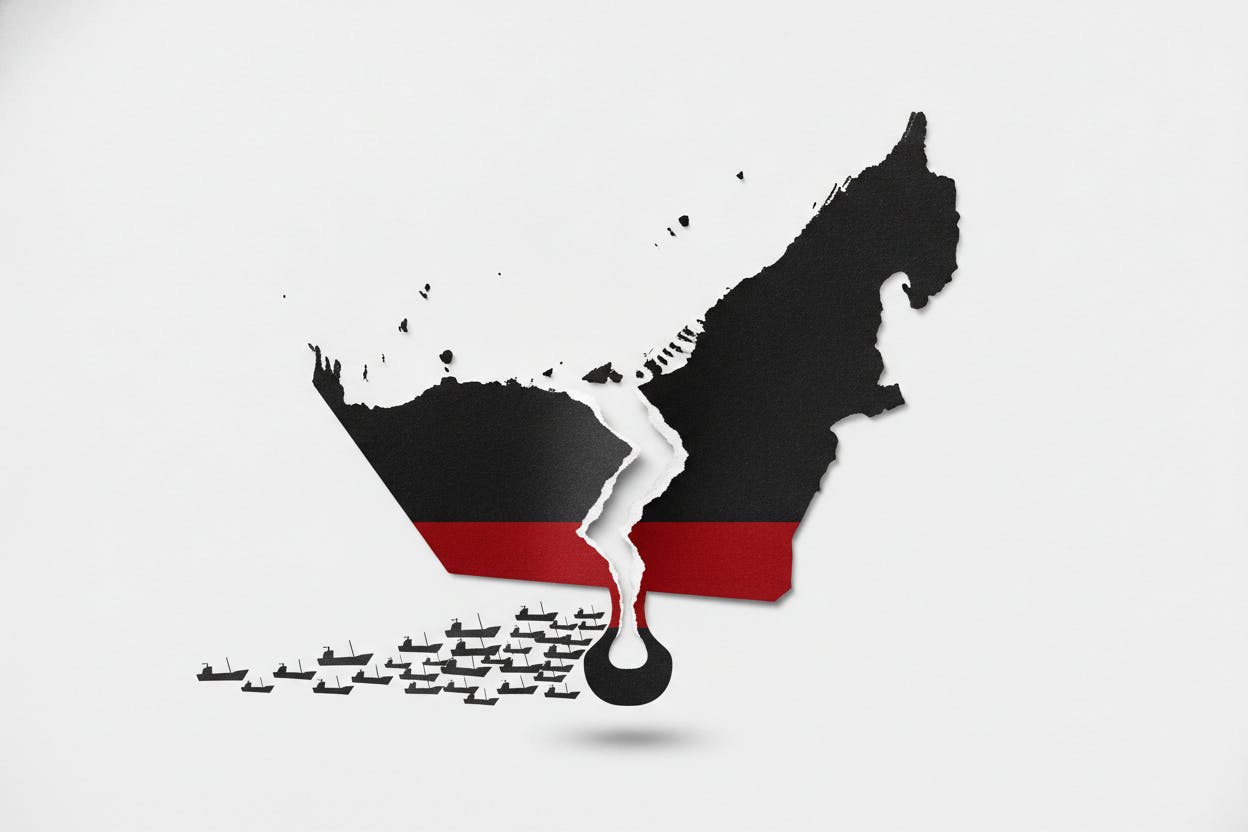
UAE stocks finished the week on a split note, with Abu Dhabi's main index falling 0.7% while Dubai's benchmark managed a 0.3% gain. The divergence came as investors weighed a sudden slowdown in shipping through the Strait of Hormuz and signals from Washington that it plans to tighten sanctions on Iran.
What's driving the moves
The two emirates' markets were reacting to the same geopolitical backdrop, but their indexes are built differently, so the mood showed up in different places. Abu Dhabi's index is heavily weighted toward large energy and banking names, which tend to be more sensitive to oil price swings and regional tensions. Dubai's market, by contrast, has a bigger tilt toward real estate, tourism and consumer stocks, which can sometimes benefit from a weaker oil price or a shift in investor sentiment.
Shipping tracker Kpler counted just seven commodity ships passing through the Strait of Hormuz on Thursday, roughly half the number from the prior day. The strait is a critical chokepoint for global oil supplies, with a large share of the world's crude and liquefied natural gas moving through it daily. Any disruption there has outsized implications for energy prices and supply chains.
Even with the shipping slowdown, crude oil slipped 0.5% to $93.30 a barrel. That modest decline suggests traders are not yet pricing in a full-blown supply disruption, but the uncertainty is enough to keep markets on edge.
US-Iran tensions in focus
The United States has signaled it will take a tougher line on Iran, which could mean stricter enforcement of existing sanctions or new measures targeting Iranian oil exports. Iran has long been a major oil producer, and any reduction in its exports could tighten global supply. At the same time, Iran has previously threatened to disrupt shipping in the Strait of Hormuz in response to pressure, which is why the drop in vessel traffic is being watched closely.
This is not the first time this year that geopolitical worries have rattled markets. UAE stocks have diverged before when the US prepared new Iran pressure measures, and the pattern is familiar: energy-heavy Abu Dhabi tends to react more sharply to headlines about the strait, while Dubai's more diversified index often holds up better.
What it means for investors
For everyday investors, the key takeaway is that geopolitical events can move markets in unexpected ways, and not all markets react the same way to the same news. The split between Abu Dhabi and Dubai is a reminder that index composition matters. If you hold a fund that tracks one of these indexes, your exposure to oil and regional politics is different from someone holding the other.
Oil prices remain a central driver for the region. Oil near $95 has been pressuring stocks globally, and any sustained rise in crude could feed into inflation and influence central bank policy. For now, the market seems to be taking a wait-and-see approach, with the drop in Hormuz traffic being monitored for signs of a longer-term disruption.
Investors should also keep an eye on broader market conditions. Stocks have been steady as Treasury yields and oil prices take a breather, but that calm could be tested if tensions escalate. The situation in the Gulf is fluid, and any major development could quickly shift sentiment.
The bigger picture
The Strait of Hormuz is one of the world's most important oil transit routes, and its vulnerability is a recurring theme in energy markets. Even a temporary slowdown in shipping can cause jitters, as it raises the risk of supply bottlenecks. The fact that oil only slipped slightly suggests traders are not yet convinced of a serious disruption, but the potential for escalation remains.
For those with exposure to UAE equities, the takeaway is to understand what you own. Abu Dhabi's index is more sensitive to oil and geopolitics, while Dubai's is more tied to domestic sectors like real estate and tourism. That difference can lead to very different outcomes on days like this.
As always, it's wise to keep a long-term perspective. Short-term geopolitical noise can cause volatility, but markets often recover once the immediate threat fades. The key is to stay informed and avoid making impulsive decisions based on a single day's move.