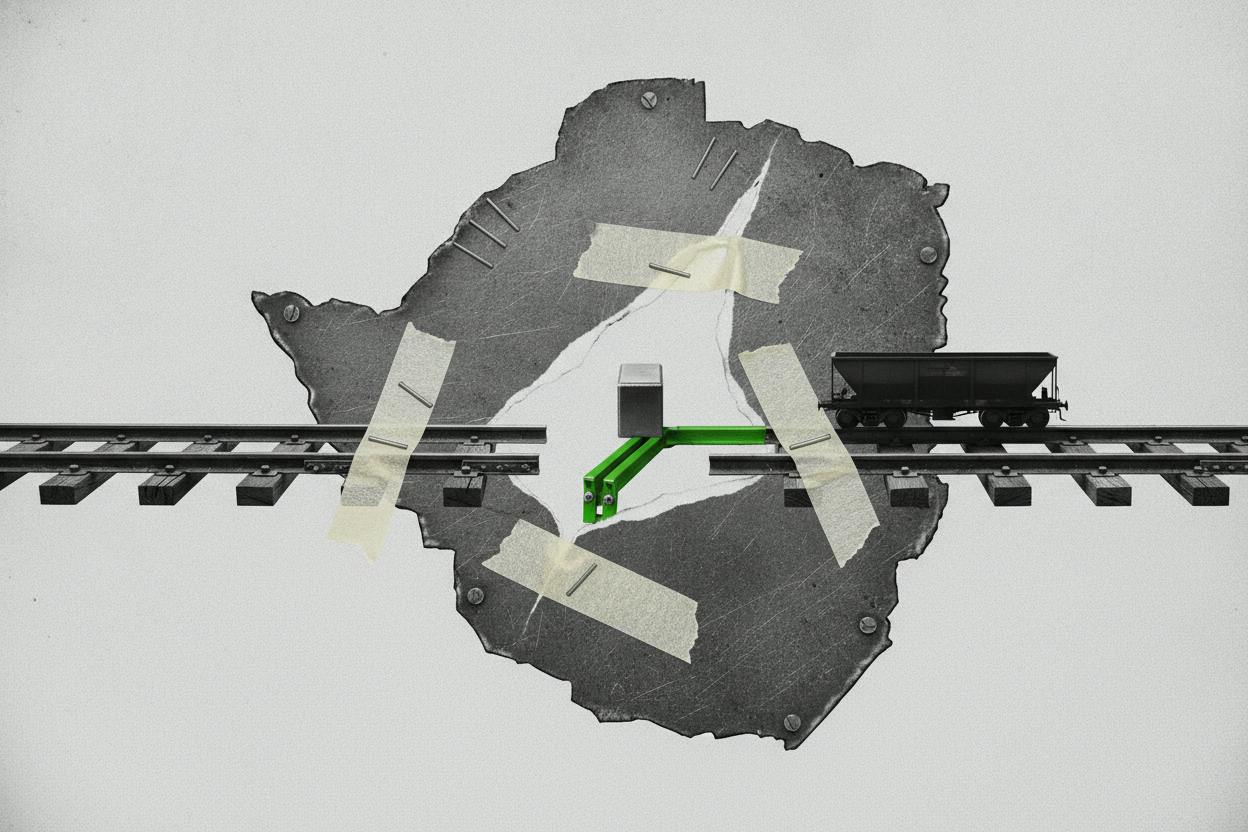
Zimbabwe's steel industry is getting a logistical overhaul. Dinson Steel, the local arm of Chinese conglomerate Tsingshan Holding Group, has struck a deal with National Railways of Zimbabwe (NRZ) to move coal and steel by rail, backed by a $27 million track upgrade and a new spur line to its plant.
The agreement is a practical response to a simple problem: steelmaking is a heavy, volume-driven business, and trucks are an expensive way to move that weight. Under the plan, Dinson expects to haul about 1.1 million metric tons of coal from Hwange and 600,000 tons of steel products each year by rail, replacing long stretches of trucking.
How the deal works
The arrangement is structured to share the burden. Grand Railway Solutions, a Dinson subsidiary, will supply locomotives, wagons, and fuel, while NRZ provides crews and infrastructure. That includes upgrades on the Gweru–Mvuma section and a 50-kilometer link from Mvuma to the plant, built under a build-operate-transfer model—meaning Dinson's rail arm builds and operates the line before eventually handing it over.
For NRZ, this is more than just a maintenance project. The state operator has seen freight volumes collapse from around 12 million tons in the 1990s to roughly 2 million tons recently. A large, predictable customer like Dinson can help fill trains and spread fixed costs across more freight, which in turn can improve service reliability over time.
Rail is a fixed-cost business: tracks, crews, and locomotives cost money whether trains are full or empty. That makes bulk contracts like coal and steel especially valuable, because higher utilization can quickly lower the cost per ton moved. The deal essentially pairs an upgraded corridor with a privately funded last-mile link, shifting some upfront spending and execution risk onto Dinson's rail arm. For a cash-strapped state operator, that's a practical way to add capacity without waiting for a large government check.
What it means for investors
For investors, the key number is the $27 million upgrade, which leans on 1.7 million tons of committed freight. That's a bet that the volumes will show up and that rail can become a reliable, cost-effective alternative to trucking.
If that happens, the bigger prize is competitive pressure on long-haul trucking. Cheaper, more reliable rail could reshape freight economics for other shippers that depend on moving heavy goods across Zimbabwe and into the region. That could have ripple effects for industries like mining and agriculture, which rely on efficient transport to get products to market.
The deal also highlights a broader trend in African infrastructure: private companies stepping in where state budgets fall short. Similar dynamics are playing out elsewhere, as seen in Dangote's planned Kenya refinery, which also involves state and public stakes. And for steelmakers, logistics are often a make-or-break factor—just as ArcelorMittal weighs a $1B Brazil mill expansion to boost finished steel, the ability to move raw materials and finished goods efficiently is central to profitability.
For everyday investors, this is a reminder that infrastructure deals can be a leading indicator for industrial growth. When a major producer like Tsingshan commits to a rail link, it signals confidence in the plant's long-term output. It also shows how public-private partnerships can unlock value in markets where state resources are limited.
Still, there are risks. The plan depends on Dinson's plant operating at scale, which is not guaranteed. Zimbabwe's economic challenges—currency volatility, power shortages, and regulatory uncertainty—could affect the timeline. And while the build-operate-transfer structure reduces NRZ's upfront costs, it also means the state operator will eventually need to take over a line it didn't build.
For now, the deal is a positive sign for Zimbabwe's rail network and for the steel industry's logistics. If the volumes materialize and reliability improves, it could be a template for other heavy industries looking to cut costs and boost competitiveness.