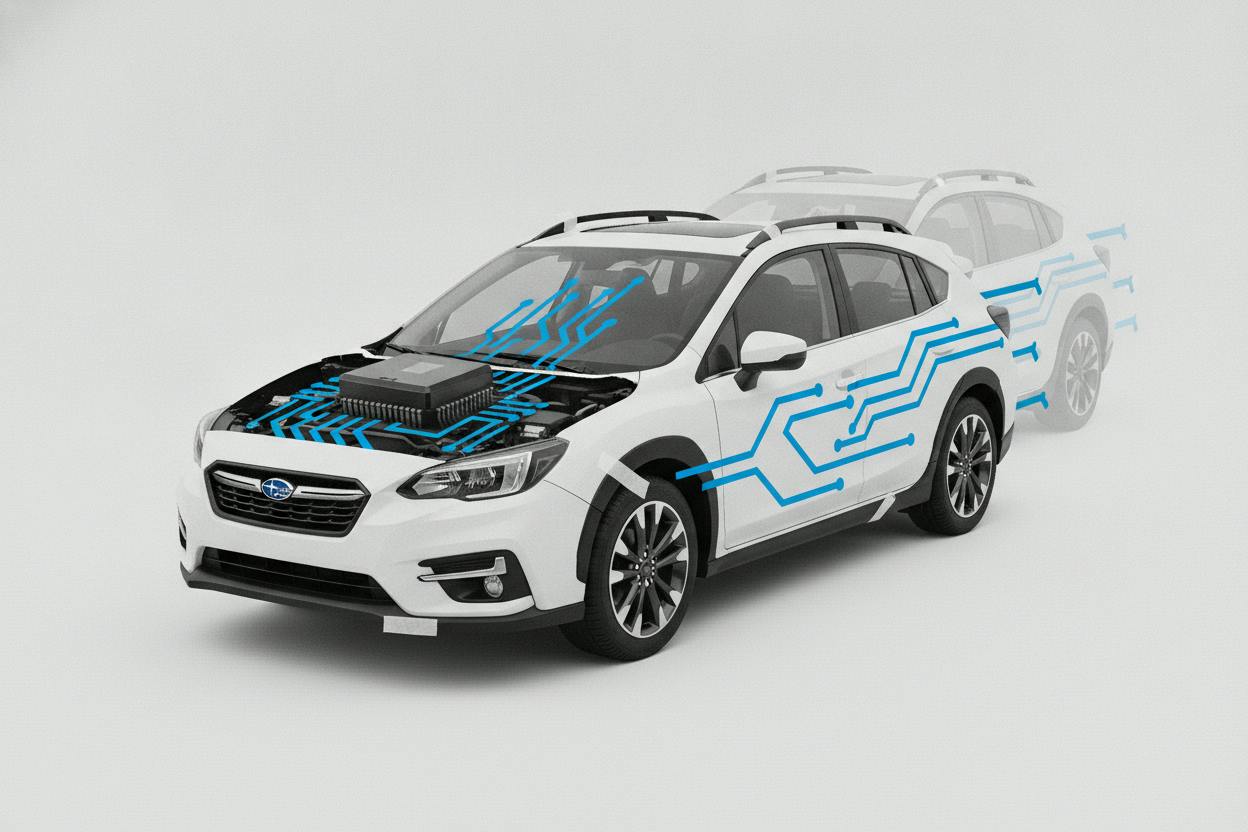
Subaru is betting that it can bring "software-defined" vehicles to market in the second half of this decade, and it thinks a fresh approach to engineering can get it there about 40% faster. At a strategy briefing near Tokyo, the Japanese automaker outlined plans to overhaul the electronics that run its cars, leaning on digital simulations and a new centralized control unit developed with chipmaker AMD.
The goal is to make cars more like smartphones: able to receive over-the-air updates that add or improve features after purchase, without waiting for a full redesign. Subaru says it will roll out the integrated control unit across its electric, hybrid, and gasoline models, standardizing hardware and simplifying software development.
What is a software-defined car?
Traditionally, a car's functions are controlled by dozens of separate electronic control units (ECUs), each dedicated to a specific task like braking, engine management, or infotainment. Updating or adding features often requires physical changes or a visit to a dealer. A software-defined vehicle consolidates many of these functions into a central computer, allowing automakers to update capabilities remotely, much like a phone app update.
Subaru's plan is to move more prototyping into digital simulations and run design, testing, and production preparation in parallel rather than sequentially. If successful, this could cut development time by roughly 40%, according to the company. That would let Subaru refresh driver-assistance systems and performance features more quickly, a key advantage as software becomes a bigger part of what buyers value.
The Toyota twist
The notable twist is that Subaru says it won't adopt Toyota's Arene software platform, even though Toyota owns a 21% stake in the company. Toyota, the world's largest automaker, has said it expects Arene to be in 10 million new vehicles a year by 2030, and later expand to alliance partners' cars by 2035.
By going its own way, Subaru keeps more control over its software stack and engineering, but it also takes on more risk. Building a proprietary platform involves significant fixed costs: core software development, testing and validation, cybersecurity, and the infrastructure for over-the-air updates. The more vehicles you spread those costs across, the cheaper each one becomes. Toyota's scale gives it a natural advantage in that math.
Subaru's decision to skip Arene means it won't benefit from that shared scale. Instead, it's betting that its AMD-based control unit and parallel engineering approach will deliver enough efficiency to make the in-house route worthwhile.
What it means for investors
For shareholders, the key question is execution. Subaru's claimed 40% time savings and its update plan need to translate into lower per-model engineering costs and faster vehicle refreshes. If the strategy works, Subaru could stay competitive without relying on Toyota's platform. If it doesn't, the company could face higher costs and slower innovation than rivals with more scale.
Software-defined vehicles are becoming a central theme across the auto industry, as companies race to offer features that can be updated over time. Apple's recent move to trim iPhone orders highlights how even tech giants are adjusting to shifting demand, and automakers are watching similar trends in consumer expectations.
Subaru's approach is a bet on independence. By building its own stack, it avoids dependency on a partner's platform, but it also forgoes the cost-sharing that comes with alliance-wide adoption. The company is essentially choosing the harder math, as other firms have done when deciding whether to build or buy critical technology.
Investors will be watching for signs that Subaru can deliver on its promises. The company hasn't given specific dates for when the first software-defined models will hit showrooms, only saying it expects them in the second half of this decade. The coming years will show whether the 40% development-time reduction is realistic and whether the AMD-based control unit can truly standardize hardware across different powertrains.
For now, Subaru's announcement is a clear signal that it intends to stay in the software race on its own terms. Whether that pays off will depend on execution, and on whether the company can match the scale advantages of rivals like Toyota without sharing their platforms.



