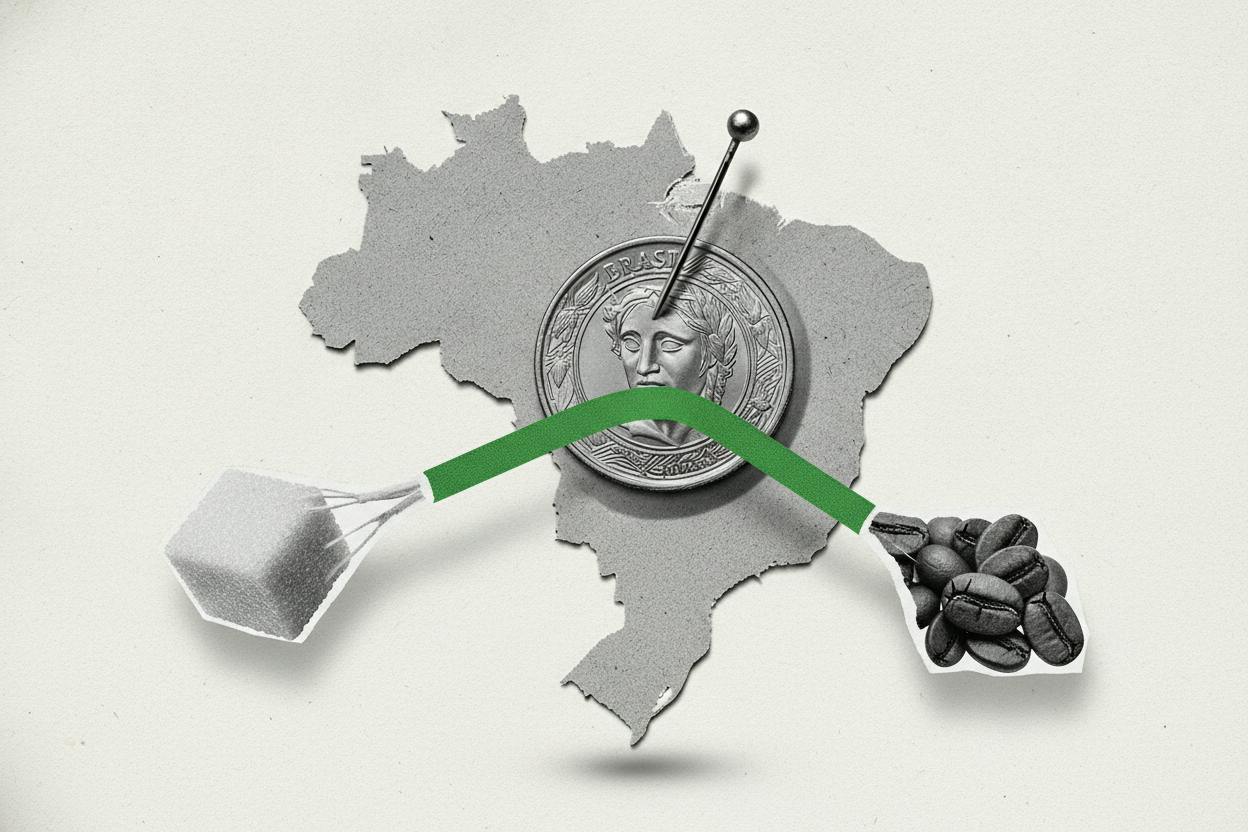
Commodity markets are settling back into their own rhythms after a brief political shock. Sugar prices rebounded while arabica coffee continued to slide, as Brazil's currency stabilized following an initial wobble after Luiz Inacio Lula da Silva's election victory.
Raw sugar rose 0.8% to 19.27 cents per pound, while ICE arabica coffee fell 2.2% to $2.9440 per pound, according to Reuters. The moves came after a volatile session on Monday, when a weaker Brazilian real dragged both contracts lower.
Why Brazil's currency matters for sugar and coffee
Brazil is the world's largest producer and exporter of both sugar and coffee. That means the value of its currency, the real, plays an outsized role in global prices for these crops.
When the real falls, Brazilian producers often step up selling in dollar-priced futures markets. Here's the logic: each dollar they earn from exports converts into more reais, so locking in that better local-currency revenue by hedging becomes more attractive. That wave of selling can push futures prices down, even if the underlying supply-and-demand picture hasn't changed.
That dynamic was on full display after Lula's win initially sent the real lower. But once the currency steadied, the two crops quickly started trading on their own fundamentals again.
Sugar's supply worries
For sugar, the near-term story is about tightness. Physical broker Deepcore pointed to rain in Brazil that has cost sugarcane crushing days, slowing the pace of processing. Meanwhile, India—another major producer—is heading into a period of stronger festive demand with thin inventories.
That combination of weather delays and low stocks is giving sugar prices a floor, even as the currency shock fades. For context, sugar prices have been volatile this year, with traders also keeping an eye on El Niño risks and oil prices, which can influence how much cane goes to sugar versus ethanol.
Coffee's improving outlook
Coffee, on the other hand, is seeing a more comfortable supply picture. Broker Michael J Nugent pointed to improving crop prospects in Brazil, helped by wet but favorable weather that supports flowering and early development of coffee trees.
That's a contrast to recent years, when drought and frosts in Brazil squeezed global coffee supplies and sent prices soaring. Now, with more favorable conditions, the market is pricing in a better harvest ahead.
What it means for investors
For anyone following soft commodities, the key takeaway is that politics and foreign exchange can move prices fast, but they don't always change the underlying story.
When Brazil's real makes a big move, sugar and coffee can trade like one macro bet for a day or two. But once the currency stabilizes, the link between the two contracts tends to loosen. That's exactly what we're seeing now: sugar is supported by tighter near-term signals, while coffee is reacting to more comfortable supply expectations.
That means the main risk for these markets going forward is less about Brazil headlines and more about each crop's own outlook—weather, inventories, and demand.
For everyday investors, this is a reminder that commodity prices can be whipsawed by events that have little to do with the actual product. A political shift in a major producer country can cause a one-day spike or drop, but fundamentals usually reassert themselves.
If you're invested in companies that depend on these crops—or just watching inflation, since food prices feed into consumer costs—it's worth distinguishing between temporary currency effects and lasting supply changes.
As always, no single move should drive a portfolio decision. But understanding why prices move can help you avoid overreacting to headlines.