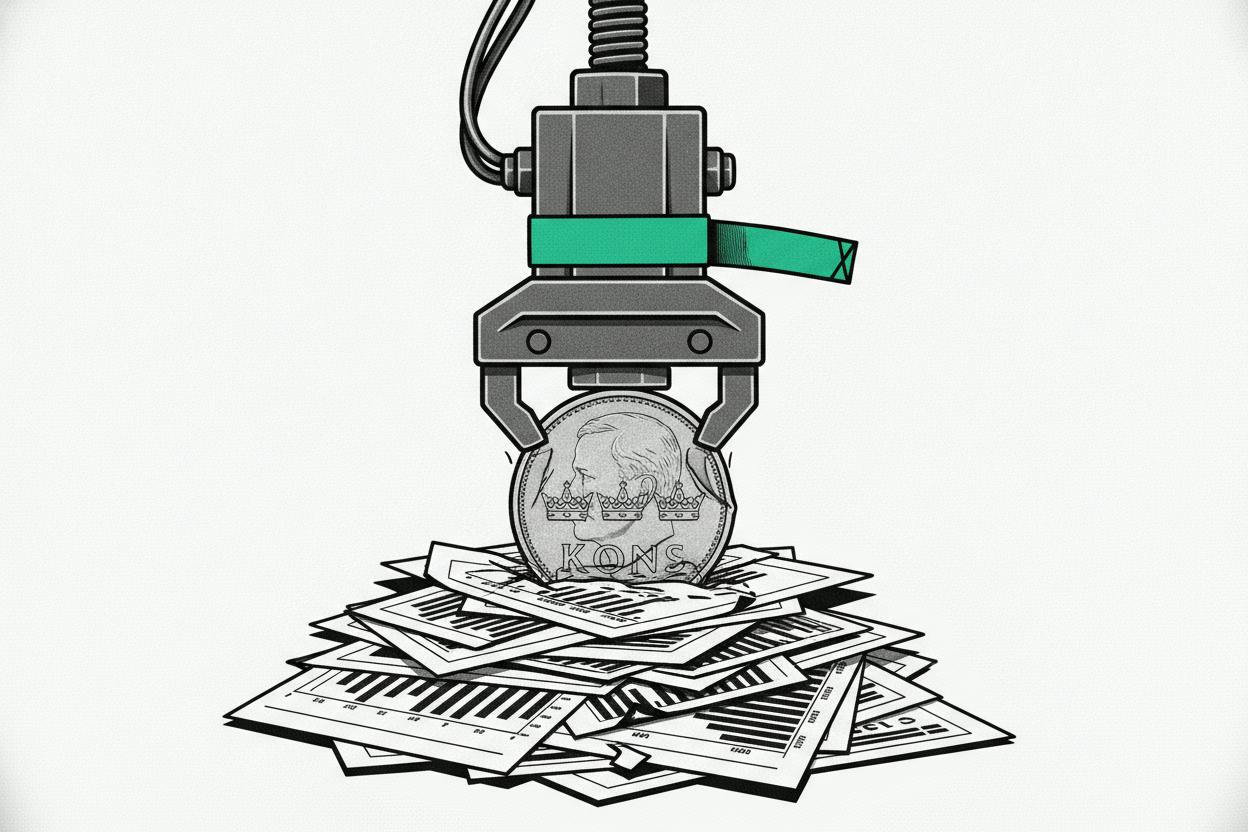
Sweden's financial watchdog has ordered SEB, one of the country's largest banks, to set aside roughly 10 billion Swedish crowns (about $950 million) in additional capital after uncovering serious deficiencies in the bank's internal models for measuring credit risk. The move, announced by Finansinspektionen (FI), Sweden's financial regulator, will temporarily raise SEB's core tier one capital requirement until the models are corrected and approved.
The decision stems from a review of SEB's Internal Ratings-Based (IRB) models — the sophisticated in-house systems banks use to estimate how likely borrowers are to default on loans. These models help determine how much capital a bank must hold to absorb potential losses. When regulators find flaws in these models, they often impose a capital add-on to ensure the bank remains resilient while the issues are addressed.
What the regulator found
Finansinspektionen said the deficiencies in SEB's IRB models are "more extensive" than previously understood. While the regulator did not specify the exact nature of the flaws, such issues typically involve underestimating the riskiness of certain loan portfolios, which would lead the bank to hold less capital than prudent.
The temporary capital add-on will lift SEB's core tier one capital requirement by approximately 10 billion Swedish crowns. This is on top of a separate 10 billion crown add-on that was already in place, according to the regulator. Core tier one capital is the highest-quality capital a bank holds, primarily composed of common shares and retained earnings, and acts as a buffer against unexpected losses.
SEB, headquartered in Stockholm, is a major Nordic financial group with significant operations in corporate banking, wealth management, and retail banking across Sweden, the Baltics, and Germany. The bank is considered systemically important in Sweden, meaning its stability is crucial to the broader financial system.
Why this matters for investors
For everyday investors, this news is a reminder that banks operate under strict regulatory oversight, and even large, well-established institutions can face capital requirements that change quickly. When a regulator imposes a capital add-on, it can affect a bank's profitability in several ways.
First, holding extra capital means the bank has less money available to lend or invest, which can reduce its return on equity — a key measure of profitability. Second, it may prompt the bank to adjust its dividend policy or share buyback plans to preserve capital, which could impact shareholders' income. Third, the uncertainty surrounding the model fixes could weigh on the bank's stock price in the short term.
However, it's important to note that this is a temporary measure. Once SEB addresses the deficiencies and its models are re-approved, the add-on could be lifted, potentially freeing up capital for other uses. Investors should watch for SEB's response, including any timeline for fixing the models and any changes to its capital return plans.
Broader context
The move by Finansinspektionen is part of a wider trend among European regulators to scrutinize banks' internal risk models. After the 2008 financial crisis, regulators pushed banks to hold more and better-quality capital, and they have increasingly questioned the reliability of IRB models, which can vary significantly between banks. The European Banking Authority has been working to harmonize these models across the EU, and Sweden's action reflects that ongoing effort.
For investors in European banks, this episode underscores the importance of regulatory risk. Even when a bank appears financially healthy, regulatory actions can introduce unexpected costs and constraints. It's a reminder to look beyond headline earnings and consider the quality of a bank's risk management and its relationship with regulators.
SEB's shares may react negatively in the near term as investors digest the news. But the long-term impact will depend on how quickly the bank can rectify the issues and whether the capital add-on is lifted. For now, the bank's core tier one capital ratio remains above regulatory minimums, but the add-on will pressure its capital position.
Investors should also keep an eye on how other Swedish banks, such as Handelsbanken and Swedbank, are faring in similar regulatory reviews, as this could signal broader industry challenges. The banking sector is a key part of the Swedish economy, and any regulatory tightening can have ripple effects.
In the meantime, SEB's management will likely provide more details in its next earnings report, including the expected timeline for fixing the models and any impact on its capital return strategy. For now, the message from Sweden's regulator is clear: banks must ensure their risk models are accurate, and when they aren't, they must pay the price.