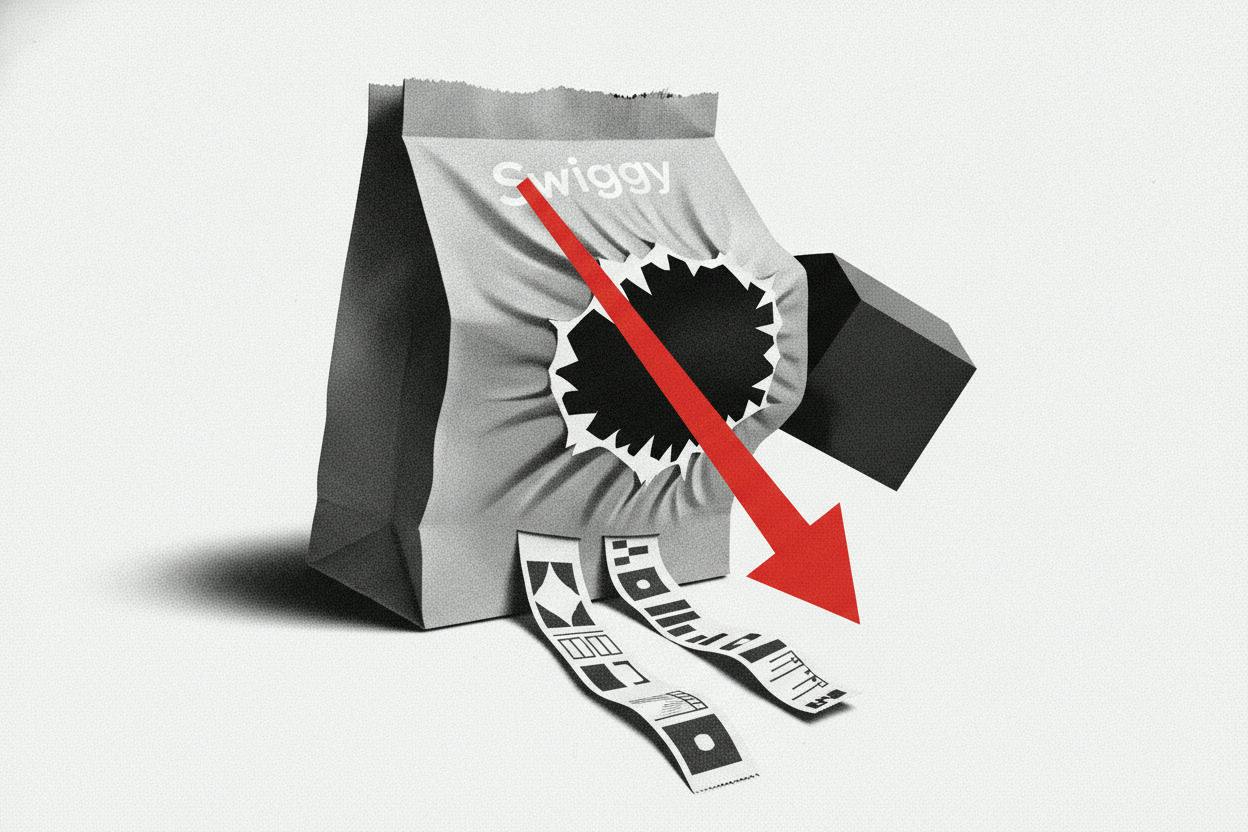
Swiggy, one of India's largest food delivery platforms, saw its shares tumble to a record low on Wednesday after Reuters reported that its quick-commerce arm, Instamart, widened its losses. The news has put the spotlight back on when the fast-delivery business will finally turn profitable.
The company's adjusted core loss—a measure that strips out certain one-time costs—grew to 8.95 billion rupees (roughly $107 million) in the latest quarter. That's a significant jump from the previous period, and it comes as Swiggy continues to pour money into expanding its network of dark stores, the small warehouses that enable deliveries in minutes.
What is quick commerce and why does it matter?
Quick commerce, often called q-commerce, is the business of delivering groceries and everyday essentials in 10 to 30 minutes. Companies like Swiggy's Instamart, Zomato's Blinkit, and Zepto have made this a fiercely competitive space in India, promising speed as their main selling point.
To deliver that fast, these companies need a dense network of dark stores—mini-fulfillment centers located close to customers. Each new store costs money to set up and operate, which is why expansion often leads to wider losses in the short term. The bet is that once the network is large enough, order volumes will rise and the economics will improve.
But investors are getting impatient. The widening loss at Instamart has reignited concerns that the path to profitability is longer and more expensive than initially hoped. Swiggy's stock has been under pressure for months, and this latest report pushed it to a new all-time low.
The bigger picture: food delivery vs. quick commerce
Swiggy's core food delivery business has been performing relatively well, with the company narrowing its overall losses in recent quarters. But the quick-commerce segment is dragging down the bottom line. This is a common story across the industry: food delivery is maturing and becoming more profitable, while quick commerce is still in a heavy investment phase.
Investors are now asking a simple question: when will the spending on dark stores start paying off? The answer depends on whether order volumes can grow fast enough to cover the fixed costs of running those stores. In a market as competitive as India's, where rivals are also expanding aggressively, that's not guaranteed.
For context, Swiggy's situation is not unique. Other players in the space have also faced scrutiny over their cash burn. The difference is that Swiggy is a publicly traded company, so its losses are under the microscope of the stock market every quarter.
What it means for investors
For everyday investors, the key takeaway is that Swiggy's stock is now pricing in a lot of uncertainty. The record low reflects fears that the company's quick-commerce ambitions could keep eating into profits for a while longer.
That doesn't mean the business is doomed—many companies in high-growth sectors go through periods of heavy investment before becoming profitable. But it does mean that investors need to be patient and comfortable with volatility. If you're considering Swiggy as an investment, you're essentially betting that the company can eventually make its quick-commerce model work at scale.
It's also worth noting that the broader market context matters. Indian stocks have been volatile recently, with concerns about oil prices and global tech sentiment weighing on investor confidence. As we've seen with other growth stocks, a single piece of bad news can trigger sharp sell-offs.
Looking ahead, all eyes will be on Swiggy's next earnings report. Investors will be watching for signs that the loss is narrowing, or at least that the company is getting more efficient with its spending. Until then, the stock is likely to remain sensitive to any news about the quick-commerce segment.
For those who already own Swiggy shares, the key is to focus on the long-term fundamentals rather than daily price swings. For those considering an entry, it might be wise to wait for more clarity on the profitability timeline.
In the meantime, the quick-commerce race in India shows no signs of slowing down. With deep-pocketed rivals and changing consumer habits, the battle for dominance is far from over. Whether Swiggy's investments will pay off remains to be seen, but one thing is certain: investors will be watching closely.



