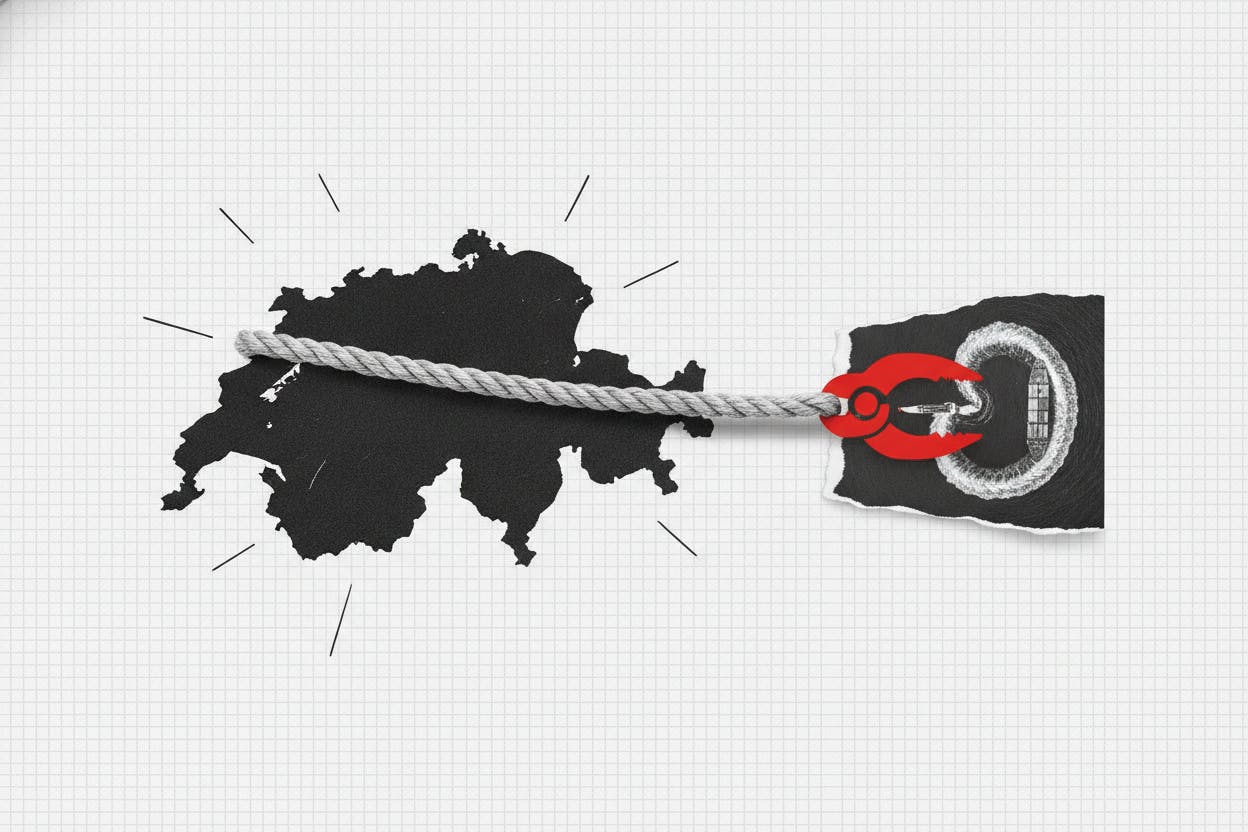
Swiss stocks ended a four-day winning streak on Wednesday, with the Swiss Market Index (SMI) closing 0.42% lower as renewed tensions in the Strait of Hormuz rattled European markets. The dip came after reports that a cargo ship was struck by an unknown projectile in the strategic waterway, with some vessels reportedly turning around mid-crossing.
While no broader shutdown has been confirmed, the incident revived fears of disruptions to one of the world's most critical energy chokepoints. Deutsche Bank Research flagged the reports, noting that even isolated events can raise the perceived risk of transiting the strait, pushing up war-risk insurance costs and encouraging longer, costlier routes for shippers.
ABB Slips on Høglund Acquisition
Among individual stocks, ABB, the Swiss industrial automation and robotics firm, fell 2.54% after announcing it would acquire Høglund, a Norway-based marine automation specialist. The deal, for an undisclosed sum, will fold Høglund into ABB's marine and ports unit and is expected to close in the third quarter. Investors appeared cautious about the acquisition, though ABB did not disclose financial terms.
Høglund provides automation and digital solutions for the maritime industry, a sector that has been under pressure from shifting trade routes and rising insurance costs tied to geopolitical risks. The acquisition is part of ABB's strategy to strengthen its position in marine automation, but the lack of deal details may have left some investors wanting more clarity.
Novartis Gets EU Regulatory Boost
On the positive side, Novartis shares edged up 0.22% after the European Medicines Agency's Committee for Medicinal Products for Human Use (CHMP) recommended expanding the label for Leqvio, the company's cholesterol-lowering drug. The recommendation covers use in patients aged 12 and up with heterozygous familial hypercholesterolemia, a genetic form of high cholesterol that can lead to early heart disease.
While the move is a modest regulatory win, it broadens the potential patient pool for Leqvio, which is already approved for adults. The final decision from the European Commission typically follows the CHMP's recommendation, and if approved, the expanded label could support Novartis's revenue in the cardiovascular space.
Why the Strait of Hormuz Matters for Investors
The Strait of Hormuz is a narrow waterway between Oman and Iran through which about one-fifth of the world's oil and liquefied natural gas passes. Any disruption there can quickly ripple through global energy markets and shipping costs. Even a single incident can raise insurance premiums for vessels transiting the strait and prompt some shippers to avoid it altogether, forcing them to take longer routes around Africa.
Those higher transport costs can feed into near-term inflation readings, even if underlying demand is cooling. That's why investors are now paying closer attention to upcoming Swiss economic data, including June inflation, the June purchasing managers' index (PMI), the KOF leading indicators, and May retail sales. If price pressures come in hotter than expected, markets may be slower to price in easier interest rates from the Swiss National Bank, which could weigh on rate-sensitive stocks in the SMI.
For context, the Strait of Hormuz has been a flashpoint before. Earlier this year, tanker traffic resumed after a brief disruption, helping oil prices hit a four-month low. But the latest incident shows how quickly those fears can return. In recent weeks, Dubai stocks dipped as oil retreated on eased supply fears, highlighting the region's sensitivity to the strait's status.
What It Means for Everyday Investors
For ordinary investors, the key takeaway is that geopolitical risks in the Middle East can have a direct impact on their portfolios, even if they don't own oil stocks. Higher shipping costs can push up prices for a wide range of imported goods, from electronics to clothing, and can complicate central banks' efforts to control inflation.
The SMI's 0.42% decline may seem small, but it reflects a broader unease. If the situation escalates, energy prices could spike, as seen in past episodes. For now, the market is watching for more clarity on the Hormuz incident and the upcoming Swiss data releases. Investors with exposure to Swiss stocks or European markets should keep an eye on inflation prints and shipping news in the days ahead.
While no one can predict the next headline, understanding how these events connect to your investments—through transport costs, inflation, and interest rate expectations—can help you make more informed decisions. As always, diversification across sectors and geographies remains a prudent strategy for navigating such uncertainties.