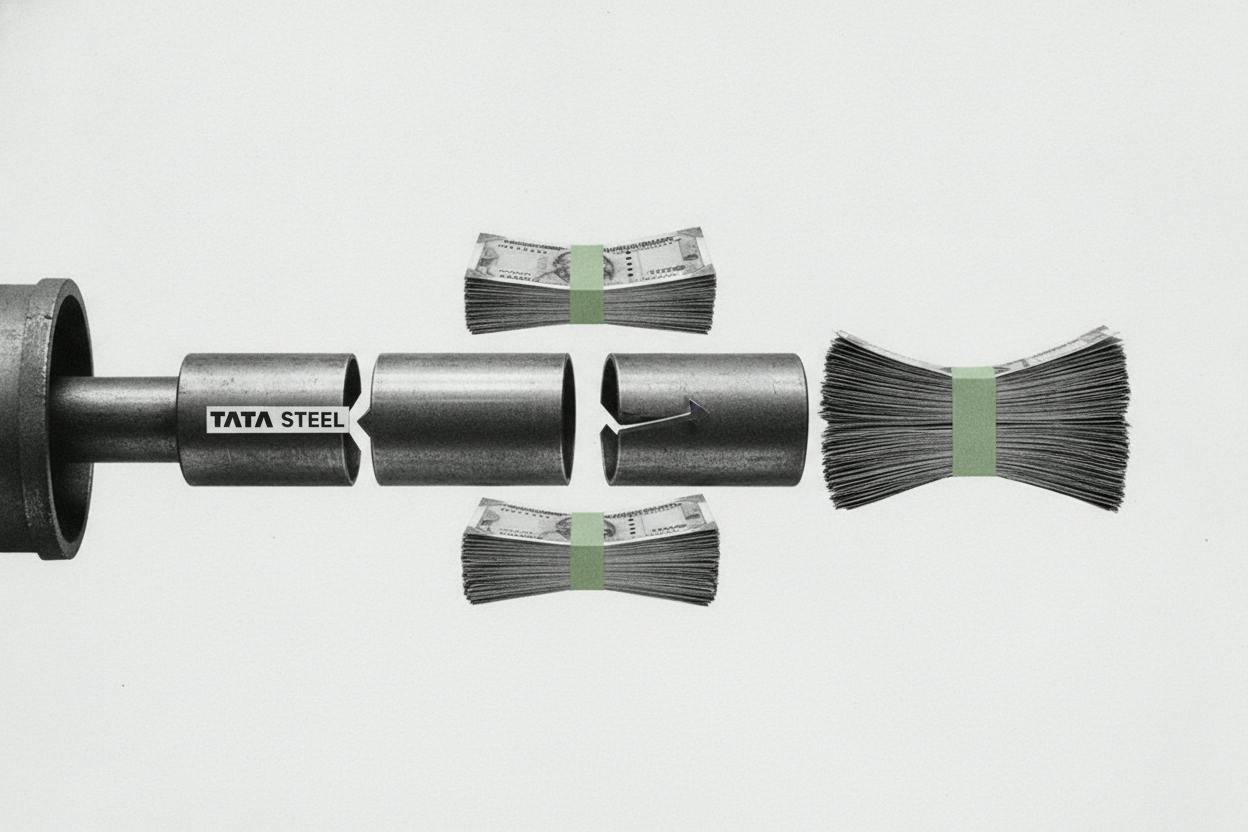
Tata Steel has agreed to sell its tubes business and its entire stake in Tata Steel Colors to APL Apollo Tubes, a leading Indian steel tube manufacturer, in a cash deal valued at up to 280 billion rupees (about $3.02 billion). The transaction marks a significant step in Tata Steel's strategy to streamline its portfolio and reduce debt.
Deal structure and valuation
The deal is structured as two interconnected transactions. APL Apollo will acquire Tata Steel's tubes unit on a 'slump sale' basis, meaning it is buying the business as a going concern rather than individual assets. This part of the deal is valued at up to 117 billion rupees. In a separate but tied transaction, APL Apollo will acquire 100% of Tata Steel Colors, which is valued at 163 billion rupees. Both transactions are set to close together, subject to regulatory and shareholder approvals.
The tubes unit is a material part of Tata Steel's operations. In fiscal 2026, it generated approximately 113.75 billion rupees in turnover, accounting for about 4.9% of Tata Steel's consolidated turnover. This indicates that the divestment is not a marginal move but a significant reshaping of the company's business.
Why is Tata Steel selling?
Steel companies often sell non-core assets to focus on their primary operations and to strengthen their balance sheets. Tata Steel has been under pressure to reduce debt, especially given the cyclical nature of the steel industry and the need for capital to fund expansion and modernization. By selling its tubes business, Tata Steel can unlock cash and potentially improve its financial metrics.
The move also aligns with a broader trend in the Indian steel sector, where companies are consolidating and focusing on high-margin products. APL Apollo, on the other hand, is a major player in the tubes and pipes segment, and this acquisition would significantly expand its market share and product offerings.
What it means for investors
For Tata Steel shareholders, the sale provides a clear source of cash, which could be used to pay down debt, fund capital expenditure, or return value to shareholders. The deal also removes a business that may have been less profitable or less strategic, potentially improving the overall profitability of the remaining operations.
For APL Apollo investors, the acquisition is a bold move to consolidate the tubes market. However, it also comes with integration risks and a significant cash outlay. Investors will be watching how APL Apollo finances the deal and whether it can successfully integrate the acquired businesses.
This deal also comes at a time when the Indian steel industry is facing headwinds from cheap imports, particularly from China. Tata Steel's CEO has previously urged the government to curb cheap Chinese imports, a concern that remains relevant. The sale could be seen as a way to sharpen Tata Steel's focus on its core steelmaking business, which is more directly exposed to these import pressures.
Broader market context
The Indian steel sector has been volatile, with global steel prices and raw material costs affecting margins. Companies are increasingly looking to optimize their portfolios and improve efficiency. This deal is one of the largest in the Indian steel tubes segment and could set a precedent for further consolidation.
For everyday investors, this news highlights the importance of understanding corporate actions like divestitures. When a company sells a business, it can be a positive signal if the price is right and the proceeds are used wisely. But it can also be a red flag if the sale is a distress move. In this case, the deal appears to be a strategic decision to focus on core operations and strengthen the balance sheet.
Investors should also note that the deal is subject to approvals, and there is always a risk that it could fall through. However, the fact that both transactions are tied together suggests that the parties are committed to completing the deal as a package.
As the steel industry continues to evolve, moves like this will be closely watched by market participants. The outcome of this deal could influence how other steel companies approach their own portfolio strategies.