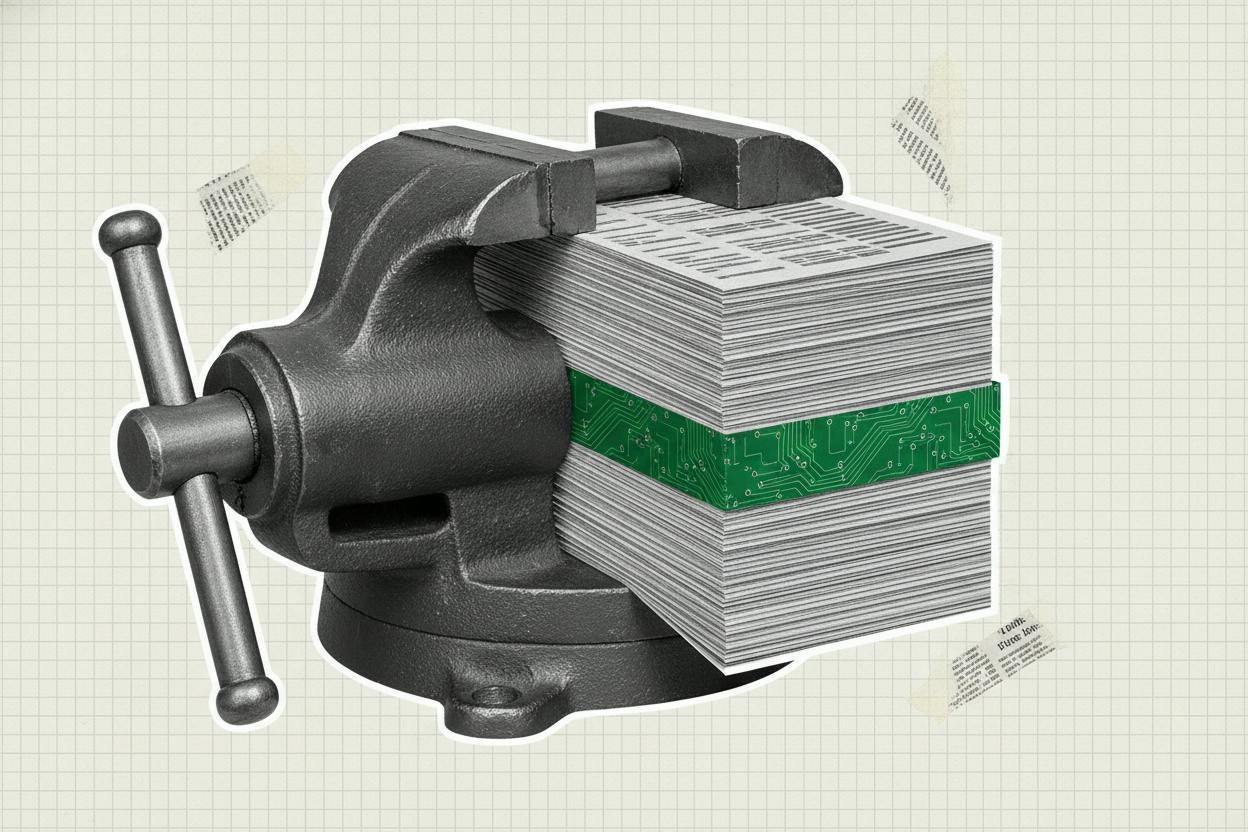
Tata Consultancy Services (TCS), India's biggest IT services company, delivered a reassuring message to investors on Friday: heavy spending on artificial intelligence doesn't have to come at the expense of profitability. The company said it kept its operating margin at 24% while stepping up its AI-related work, and its shares jumped as much as 6.2% in response.
For a company of TCS's size—it employs hundreds of thousands of people and serves clients across banking, retail, and manufacturing—holding the line on margins is no small feat. The IT services industry has been under pressure as clients tighten budgets and as firms pour money into AI capabilities, hoping to stay competitive. Many investors have worried that the cost of building AI tools and training staff would eat into profits.
Why the margin matters
Operating margin is a key measure of how efficiently a company turns revenue into profit. For TCS, a 24% margin is considered strong, especially in a sector where labor costs dominate. By keeping that figure steady while expanding AI work, TCS is signaling that it can adopt new technology without blowing up its cost structure.
The market's reaction—shares climbing as much as 6.2%—shows how much investors value that balance. In recent months, tech stocks have been volatile as companies report big AI investments that sometimes squeeze earnings. TCS's result offers a counter-narrative: that AI can be a growth driver rather than a margin killer.
This is particularly relevant for Indian IT stocks, which have faced headwinds from global economic uncertainty and concerns about visa restrictions in key markets like the US. Oil prices and visa worries have capped gains for Indian equities, but TCS's performance could help shift sentiment.
What this means for investors
For everyday investors, the takeaway is that not all AI spending is created equal. Some companies are seeing their margins shrink as they race to build AI infrastructure. TCS, by contrast, appears to be managing the transition more carefully, which could make it a more attractive holding for those worried about AI's impact on profitability.
It's also a reminder that IT services firms—often seen as slow movers—are adapting to the AI era. TCS's ability to hold margins while doing more AI work suggests that established players can leverage their scale and client relationships to make AI profitable.
Investors will likely watch whether TCS can sustain this balance in coming quarters. The company's next earnings report will be scrutinized for any signs that AI costs are creeping up. For now, the market is rewarding TCS for showing that AI and margins can coexist.
Broader Indian markets have been rebounding on TCS's signals of faster AI growth, and the stock's jump is a positive sign for the sector. However, investors should keep in mind that one quarter doesn't make a trend, and global factors like interest rates and oil prices still loom large.
The bigger picture
TCS's result comes at a time when tech companies worldwide are grappling with how to pay for AI. From cloud providers to software makers, the question is whether AI investments will eventually pay off. TCS's steady margin suggests that a disciplined approach can work, even in a capital-intensive area like AI.
For those invested in Indian IT stocks or considering them, TCS's performance is a useful benchmark. It shows that a large, established firm can embrace AI without sacrificing profitability—a reassuring sign in a market where AI hype often meets harsh reality.
As always, past performance isn't a guarantee of future results. But for now, TCS has given investors a reason to believe that AI spending doesn't have to squeeze margins.