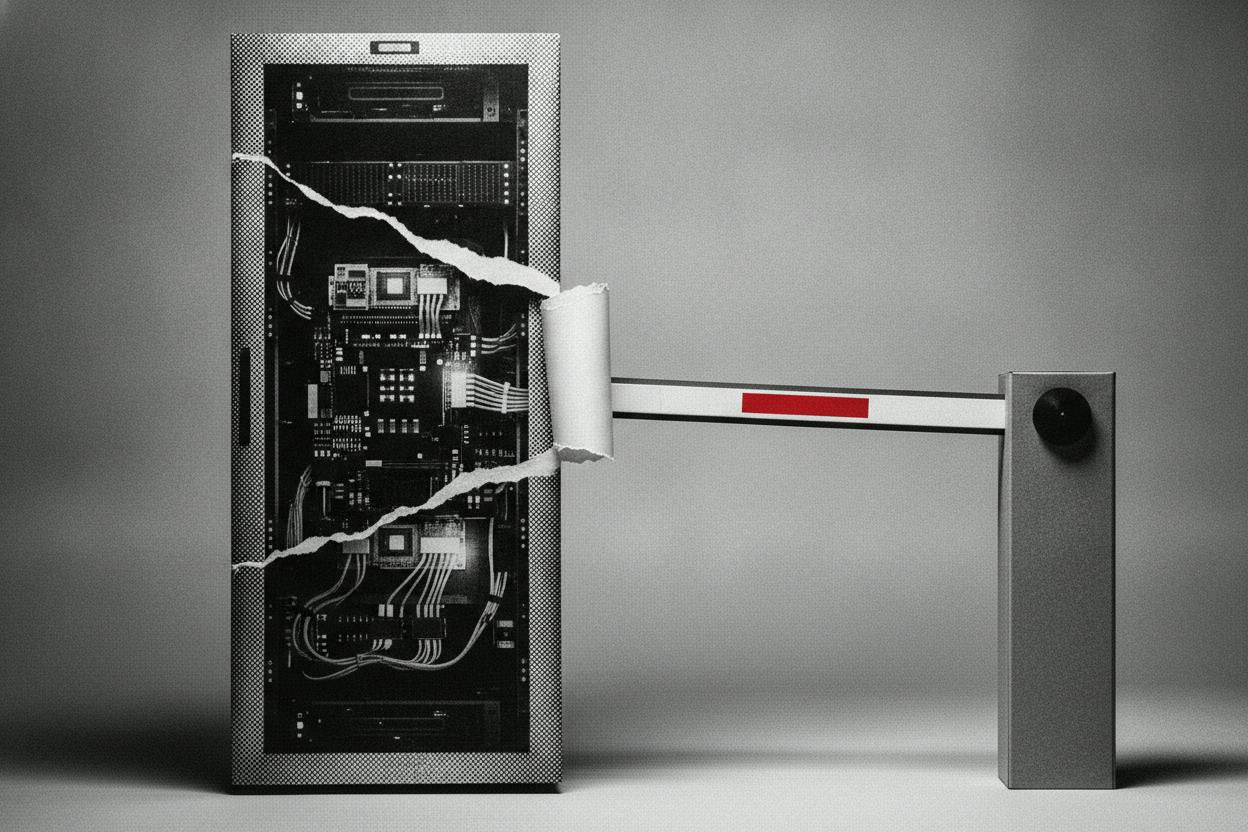
Tenstorrent, a Santa Clara-based chip startup, has raised $1.5 billion in a late-stage funding round, valuing the company at $6.2 billion after the investment. That is more than double its valuation from December 2024, according to the company. The money will go toward scaling production of its “Galaxy” AI servers, which bundle Tenstorrent's chips to run demanding AI workloads like chatbots, coding assistants, and video generators.
What is RISC-V and why does it matter?
At the heart of Tenstorrent's pitch is RISC-V, an open-source chip architecture. Unlike proprietary designs such as Arm's, RISC-V allows companies to design processors without paying licensing fees. This could reduce reliance on closed ecosystems and give buyers more flexibility. For years, RISC-V has been a promising but niche option, mostly used in academic and experimental settings. Tenstorrent's push to ship full server systems is a step toward making RISC-V a practical choice for real-world data centers.
New chip architectures rarely win on specs alone. They win when they are easy to buy, deploy, and develop for. By offering a complete server platform, Tenstorrent moves RISC-V from “you can experiment with it” to “you can run real jobs on it.” That helps developer tools mature and makes switching feel less risky for enterprise buyers.
Who is backing the bet?
The round was led by Trace Capital and Innovation X, with participation from ARK Invest, Sandisk, Morgan Stanley, T. Rowe Price, and Tether Investments. The mix of traditional asset managers and crypto-linked investors shows that capital is still flowing to “pick-and-shovel” AI infrastructure—especially when it is tied to hardware that can be delivered, not just promised.
This funding comes at a time when AI spending remains intense, but investors are becoming more selective. They want to see revenue and deployment, not just research. Tenstorrent's focus on manufacturing and shipping servers aligns with that demand.
What it means for investors
For markets, Tenstorrent's valuation tests the “Arm tollbooth” story. Arm's business model depends on collecting licensing and royalty fees when others ship chips based on its instruction set—the basic rulebook for how software talks to a processor. If RISC-V servers like Galaxy move from niche trials to volume deployments, more AI compute could be designed without those per-chip payments.
That is the real market read-through: late-stage funding aimed at manufacturing and deployments can change the competitive math faster than another research-heavy chip startup. It raises the stakes for proprietary platforms to defend their ecosystems with better tools, performance, and support, because pricing power looks strongest when switching is expensive—and weaker when a credible, off-the-shelf alternative exists.
For everyday investors, this is a reminder that the AI boom is not just about Nvidia. The infrastructure layer—chips, servers, and the software that ties them together—is becoming more contested. Companies that can deliver working hardware at scale may be the ones that capture value over the long term.
Tenstorrent is still private, so most retail investors cannot buy shares directly. But the company's progress could influence the fortunes of publicly traded rivals and partners. For example, banks like Santander are betting on Nvidia AI to cut costs, showing how entrenched the current leader is. If RISC-V gains traction, it could pressure Nvidia and Arm to innovate faster or adjust pricing.
Also, the funding round's participation from major asset managers like T. Rowe Price and Morgan Stanley suggests that institutional investors see long-term potential in open-source chip designs. That could lead to more capital flowing into the sector, benefiting other RISC-V startups and the broader semiconductor ecosystem.
What to watch next
Investors will be watching whether Tenstorrent can actually deliver Galaxy servers at scale and win enterprise customers. The company's ability to sign major deals will be a key test. If it succeeds, it could accelerate RISC-V adoption and reshape the competitive landscape in AI hardware.
For now, the $1.5 billion raise is a strong vote of confidence. It shows that even in a crowded field, there is room for challengers who offer a different approach. Whether that approach pays off will depend on execution, but the funding gives Tenstorrent the resources to try.



