Ternium, one of Latin America's largest steelmakers, swung back to profitability in the third quarter, helped by stronger steel volumes and resilient pricing. The company reported net income of $368 million, a sharp reversal from a $270 million loss a year earlier, as demand for its steel products improved.
Net sales rose 17% year over year to $4.64 billion, driven by an 8% increase in steel shipments to 4.0 million tons. Adjusted earnings before interest, taxes, depreciation, and amortization (EBITDA) jumped 87% to $785 million, reflecting the operating leverage that is central to the steel industry.
Why steel profits can swing so sharply
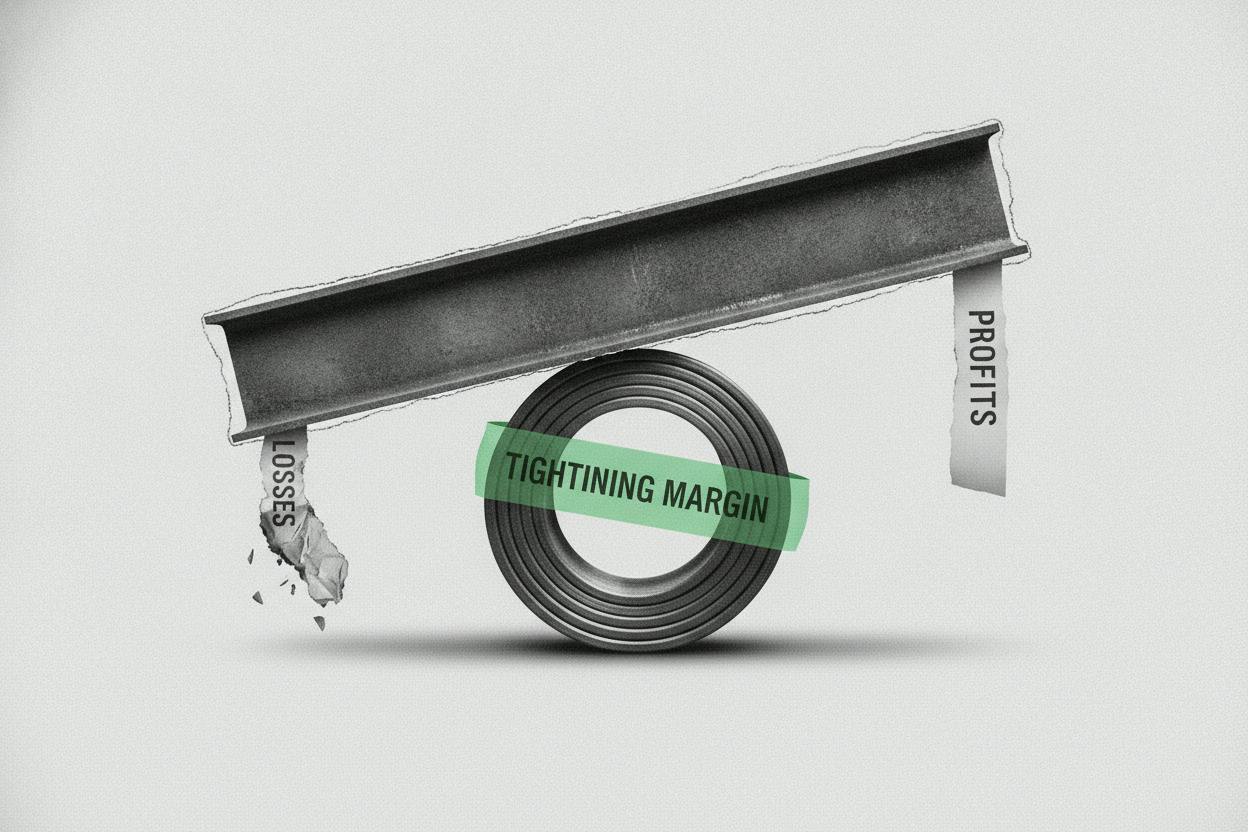
Steelmaking is a capital-intensive business with high fixed costs. Once a mill is running, the cost of producing an additional ton is relatively low, so even small changes in volume or price can have an outsized effect on profitability. That's why an 8% rise in shipments translated into an 87% jump in adjusted EBITDA.
"When volumes go up, those fixed costs get spread across more tons, and margins expand quickly," said a steel industry analyst. "But the flip side is that a small dip in demand or prices can hit profits just as hard."
For investors, this means Ternium's earnings can be volatile, and the outlook for the coming quarters often matters more than a single quarter's beat. Management's guidance that fourth-quarter EBITDA should remain broadly in line with the $785 million reported in Q3 is a key signal that the improvement may be sustainable, even as shipments typically dip seasonally.
Mining weakness and capital spending
Not everything went smoothly. Ternium's mining segment saw shipments fall 12% to 2.8 million tons, partly due to a temporary suspension at Mineração Usiminas in Brazil. That operation, a joint venture with Vale, was halted for a period, though the company did not specify the reason or duration.
Despite the mining setback, Ternium continued to invest heavily in its future. Capital expenditures reached $398 million, largely tied to a new slab mill being built in Pesquería, Mexico. The project is part of Ternium's strategy to increase its production capacity and reduce reliance on imported slabs.
"The Pesquería mill is a major strategic investment," said a company spokesperson. "It will give us more control over our supply chain and improve our cost structure over the long term."
What it means for investors
For everyday investors, Ternium's results highlight the cyclical nature of the steel industry. When global demand is strong and prices hold up, steelmakers can generate hefty profits. But when the cycle turns, losses can appear quickly, as they did a year ago.
The company's ability to maintain per-ton profitability while increasing volumes is a positive sign, but investors should watch for signs of softening demand or falling steel prices. Management's guidance for Q4 suggests they expect conditions to remain stable, but the industry remains sensitive to global economic trends, trade policies, and construction activity.
Ternium's performance also offers a window into the broader Latin American industrial economy. Steel is used in everything from buildings and bridges to cars and appliances, so rising shipments often signal healthy economic activity. The company's results come as other regional firms report mixed earnings—for instance, Banorte's profit rose on loan growth, while LATAM Airlines cut its outlook due to fuel costs.
Investors will also be watching how Ternium's capital spending affects its balance sheet. The $398 million in capex is a significant outlay, but the company appears committed to expanding capacity, which could pay off if steel demand remains strong.
For now, the swing back to profit is a welcome development for shareholders, but the cyclical nature of the business means they should stay alert to changes in the global steel market.