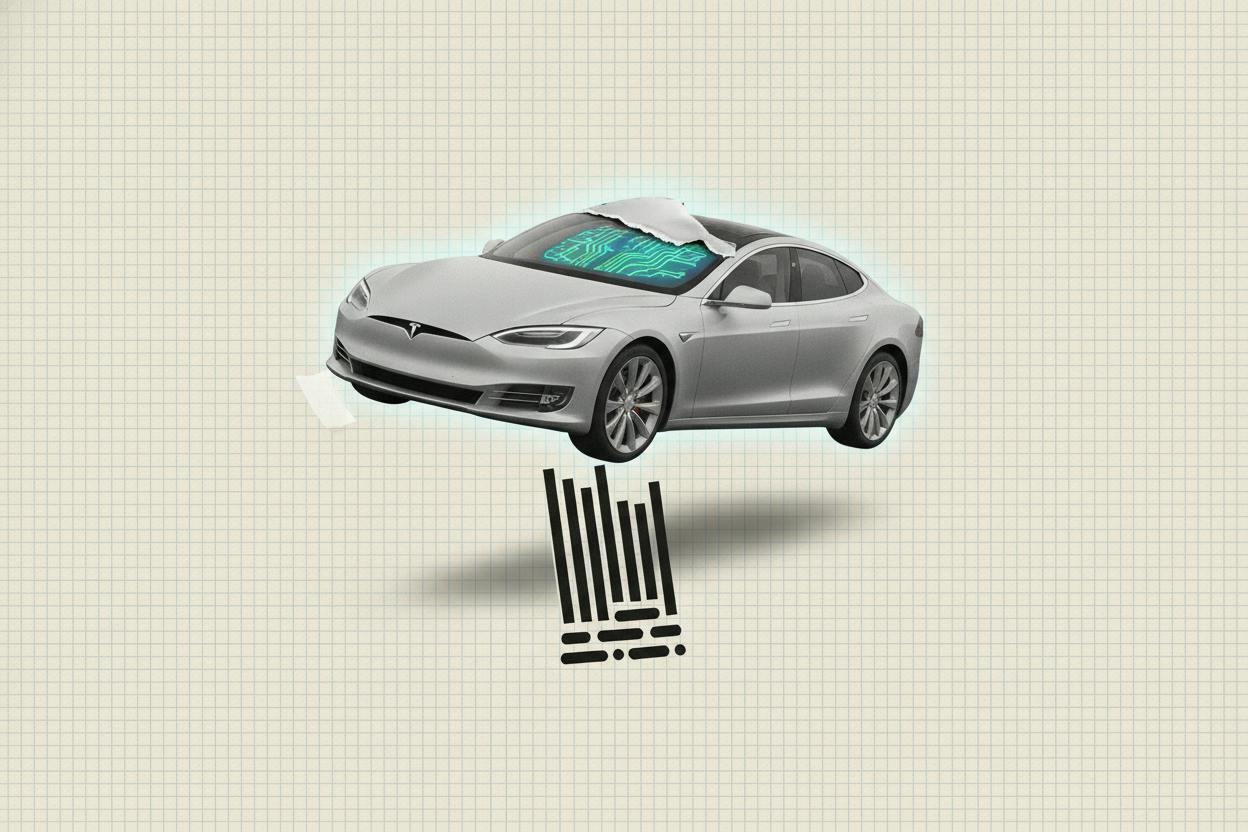
Tesla shares surged more than 12% on Tuesday after CEO Elon Musk said the company plans a "wide release" of its Full Self-Driving (FSD) version 15 in December. The announcement helped lift consumer stocks, as investors interpreted the timeline as a sign that Tesla's long-promised software business is moving closer to reality.
The jump underscores how markets often treat Tesla less like a traditional carmaker and more like a bet on future software profits. Full Self-Driving is an advanced driver-assistance package that Tesla sells as an optional add-on, and the real prize for investors is whether more owners will pay for it over time. Software can carry much higher margins than selling another vehicle, so even a timeline update can change how investors think about the odds and timing of those future fees.
Why a timeline matters so much
For years, Tesla has positioned Full Self-Driving as a key growth driver beyond car sales. The company has repeatedly pushed back launch dates, and investors have grown cautious about promises that don't materialize. So when Musk gives a specific month for a wide release, it signals that the technology may be closer to broader deployment than many had assumed.
That optimism quickly feeds into Tesla's valuation, which is heavily tied to expectations of future earnings. A more concrete timeline for FSD could mean higher subscription or one-time purchase revenue sooner, which would boost profitability. It also reinforces the narrative that Tesla is a technology company, not just an automaker, a distinction that supports a higher stock price.
The move also rippled through the broader market. Consumer stocks, which include companies that sell discretionary goods and services, rose as investors took the Tesla news as a positive signal for spending and confidence. Tesla's weight in major indices means its swings can influence index-level moves, and Tuesday's rally helped lift sentiment across the sector.
What it means for investors
For everyday investors, the key takeaway is that Tesla's stock can be highly sensitive to announcements about future products, even when those products aren't yet generating significant revenue. Full Self-Driving is still in development, and regulatory approval and safety concerns remain hurdles. The December timeline is a plan, not a guarantee, and delays have happened before.
Investors should also remember that Tesla's valuation already reflects a lot of optimism. A 12% single-day jump is a large move, and it can be driven by sentiment as much as fundamentals. While the FSD news is encouraging for those who believe in the technology, it doesn't change the fact that Tesla's core business still depends on selling cars at a time when competition is intensifying and price cuts have squeezed margins.
For those watching the broader market, the rally in consumer stocks may be narrower than it looks. As Tesla's 12% surge lifts consumer stocks, some analysts caution that the move could be driven by a handful of large-cap names rather than broad-based strength. That means the rally might not be as durable as it appears.
Investors should also keep an eye on upcoming economic data, such as the key PCE inflation test that could influence market direction in the holiday week. If inflation runs hot, it could pressure stocks across the board, including Tesla.
The bigger picture
Tesla's FSD ambitions are part of a broader trend in the auto industry toward software-defined vehicles. Rivals like GM and Ford are also investing heavily in driver-assistance and autonomous driving technology, but Tesla has a head start in data collection and brand recognition. If FSD V15 delivers on its promise, it could set a new benchmark for the industry.
However, the path to profitability for FSD is not guaranteed. The technology must prove safe and reliable, regulators must approve it, and consumers must be willing to pay for it. Tesla has already faced scrutiny over the safety of its driver-assistance systems, and any setback could quickly reverse investor enthusiasm.
For now, the December timeline gives Tesla bulls a reason to be optimistic. But as with any high-flying stock, the risk of disappointment remains. Investors should weigh the potential upside against the uncertainty, and remember that Tesla's share price can be volatile in both directions.
In the meantime, the broader market continues to digest mixed signals. While S&P 500 earnings surged 32% recently, stocks have slipped into correction territory, suggesting that strong corporate results aren't always enough to sustain a rally. Similarly, Asia stocks are mixed as investors reassess AI valuations after a Nasdaq slide, a reminder that sentiment can shift quickly.
For investors, the takeaway is to focus on the fundamentals and not get swept up in single-day moves. Tesla's FSD news is significant, but it's just one piece of a complex puzzle.



