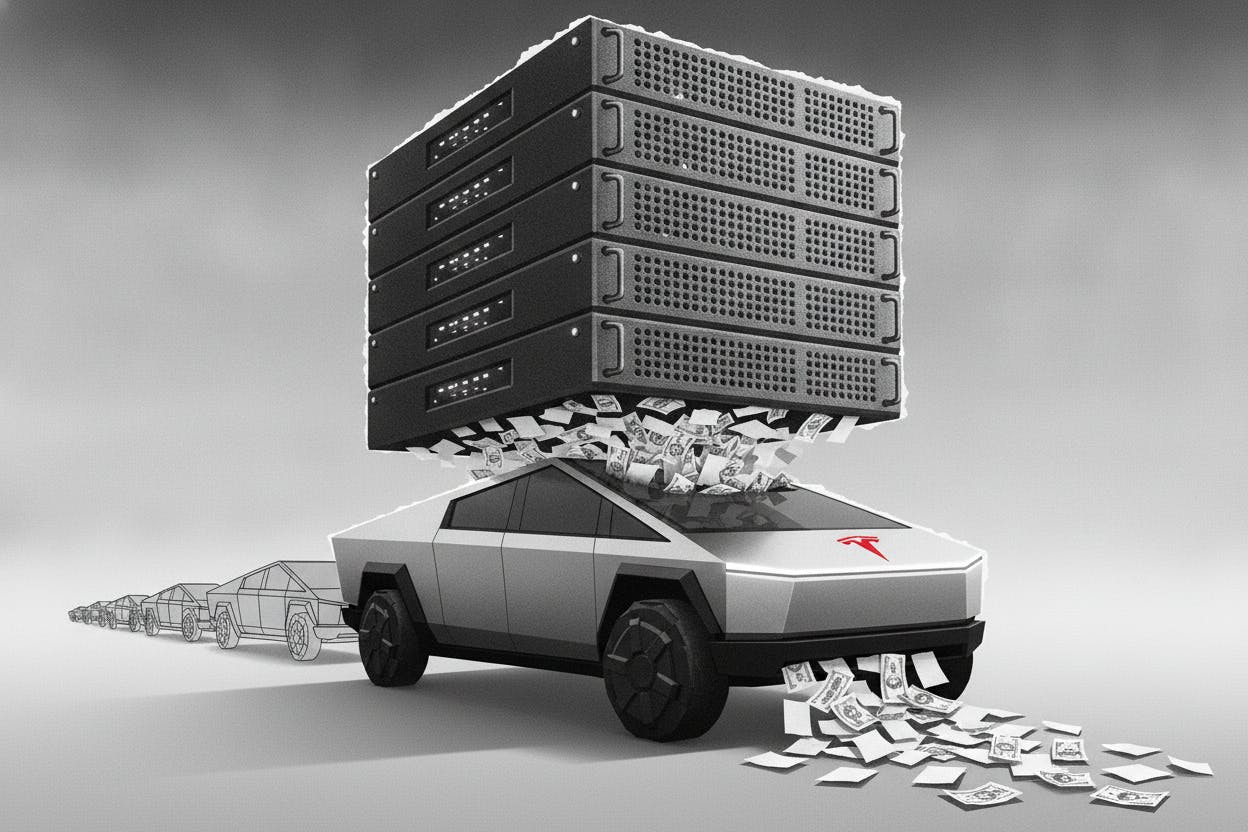
Tesla's free cash flow turned negative in the second quarter, with the electric vehicle maker burning $1.1 billion as it poured money into artificial intelligence computing and new manufacturing projects. The cash burn came even as the company delivered more vehicles than expected and its energy storage business continued to grow.
What Happened
Free cash flow — the cash a company has left after covering day-to-day expenses and making big investments — swung from positive to negative in the three months through June. Tesla's outflow was smaller than many analysts had feared: consensus estimates from LSEG had predicted a $3.3 billion burn, according to Reuters.
The better-than-expected cash position was partly helped by deliveries. Tesla delivered 480,126 vehicles during the quarter, beating production of 451,758 by more than 28,000 units. That meant the company sold down inventory it had built up earlier, which temporarily boosts cash because money tied up in unsold cars comes back in.
Why It Matters
The negative cash flow highlights a tension at the heart of Tesla's strategy. The company is spending heavily on AI infrastructure — including the supercomputers needed to train its self-driving software — and on new manufacturing capacity, such as the Cybertruck production line and next-generation vehicle platforms. Those investments are eating into cash even as the core auto business shows signs of stabilizing.
Tesla's energy storage business, which sells large-scale batteries for homes and utilities, continued to grow during the quarter. That division has become an increasingly important part of the company's story, offering a more predictable revenue stream than the volatile auto business. But it is still small relative to Tesla's overall size and has not yet been large enough to offset the cash drain from AI and manufacturing spending.
The broader context is that Tesla is in the middle of a massive capital expenditure cycle. The company has said it expects to spend around $10 billion on capital projects this year, much of it on AI compute and new factories. For everyday investors, that means the cash flow picture could remain choppy for several more quarters as those investments pay off — or not.
What It Means for Investors
Free cash flow is a key metric for investors because it shows how much cash a company is generating after all the spending needed to keep the business running and growing. A negative number means the company is burning through its cash reserves or borrowing to fund operations. That is not necessarily a problem if the investments are expected to generate strong returns down the line, but it does increase risk.
Tesla's cash burn comes at a time when the broader market is closely watching how AI spending is affecting corporate balance sheets. Wall Street Holds Breath as Alphabet and Tesla Earnings Test AI Rally's Staying Power — a reminder that investors are scrutinizing whether big tech's AI bets are paying off.
For Tesla specifically, the key question is whether the AI and manufacturing investments will eventually lead to higher sales and profits. The company's self-driving software, which relies on massive AI compute power, is seen as a potential future profit driver. But it is not yet generating significant revenue, and regulatory hurdles remain.
Meanwhile, the inventory drawdown that helped cushion the cash flow blow in Q2 is a one-time benefit. Once inventory is back to normal levels, that source of cash disappears. Investors will want to watch whether Tesla can keep deliveries ahead of production — and whether its energy storage business can grow fast enough to help offset the spending.
The broader market backdrop also matters. Stocks Edge Lower Ahead of Alphabet and Tesla Earnings; Oil Jumps 4.2% on Iran Strikes — showing that macro factors like oil prices and geopolitical tensions can also affect Tesla's stock, which is sensitive to interest rates and economic growth expectations.
Looking Ahead
Tesla's next earnings report will be closely watched for signs of whether the cash flow situation is improving. The company is expected to provide updates on its AI investments, the ramp-up of the Cybertruck, and the progress of its next-generation vehicle platform. Investors will also be looking for any changes to the full-year capital expenditure guidance.
For now, the message is clear: Tesla is betting big on AI and new manufacturing, and that bet is costing cash today. Whether it pays off tomorrow is the question every investor in the stock is asking.