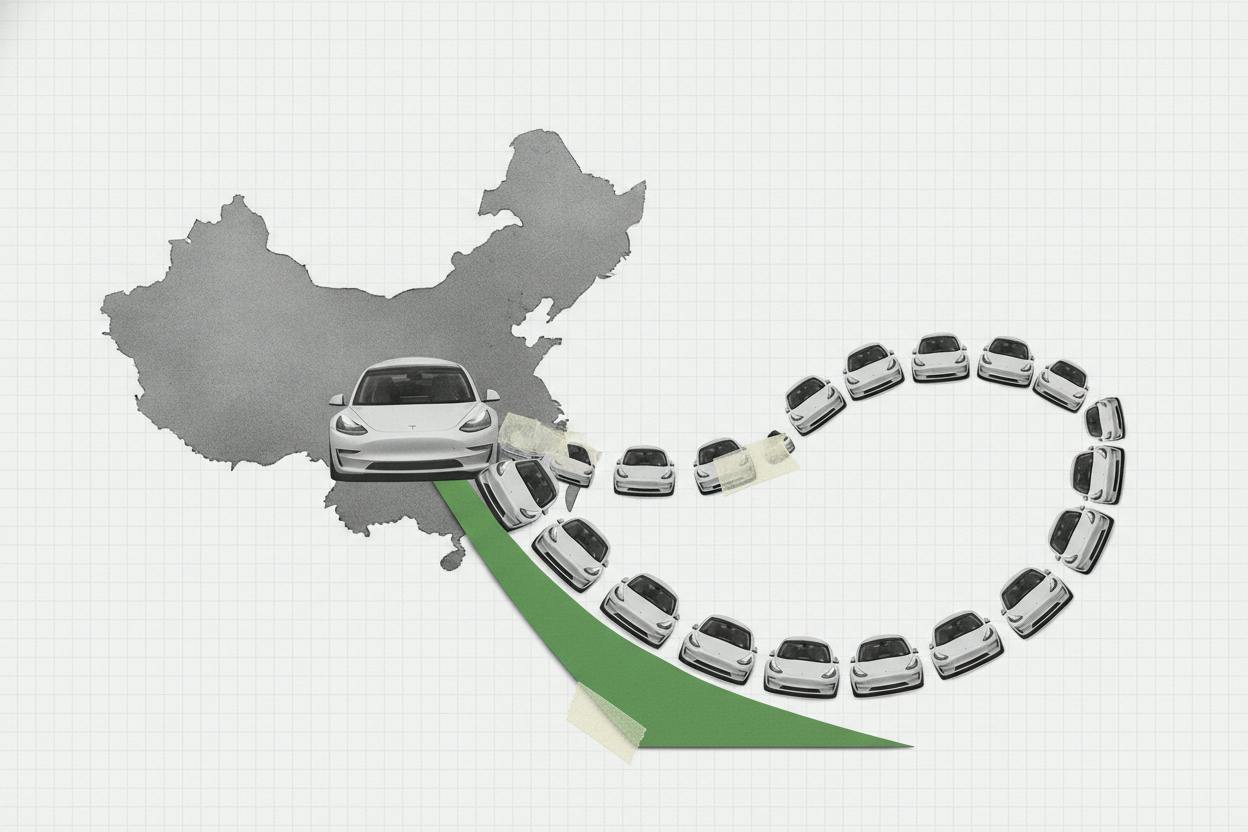
Tesla is signaling it will continue to increase production at its Shanghai factory, a facility that has become central to the company's global manufacturing strategy. CEO Elon Musk shared the plans during a meeting with Ren Hongbin, head of the China Council for the Promotion of International Trade, according to a social media account affiliated with China Central Television (CCTV), as reported by Reuters.
The Shanghai plant, which Reuters says can produce up to 950,000 vehicles a year, delivered 810,889 Model 3 and Model Y cars in the first 10 months of 2026. That pace suggests the factory is running near its capacity, and any further ramp-up would push it closer to its theoretical maximum.
Why Shanghai matters so much
Shanghai is not just another Tesla factory. It is the company's main manufacturing hub outside the United States, and it plays an outsized role in serving both the Chinese market and several export destinations. According to Reuters, the plant sources 98% of its parts from suppliers inside China. That high level of local sourcing typically means fewer supply-chain disruptions, as components don't have to travel long distances or clear multiple borders.
It also gives Tesla flexibility. Because the plant exports to Europe, South Korea, and Australia, any extra vehicles produced in Shanghai can be redirected to whichever region needs them most. That could translate into shorter wait times for customers in those markets or, in some cases, more competitive pricing if Tesla decides to use the additional supply to stimulate demand.
For investors, the significance is that Shanghai acts as a "swing" hub. When a factory is already close to full capacity, each additional vehicle tends to be cheaper to produce because fixed costs—like equipment, rent, and overhead—are spread across more units. That can improve profit margins, even if the selling price stays the same.
What it means for investors
The numbers from Shanghai offer a glimpse into how one facility can shape pricing and availability across multiple continents. If Tesla can keep increasing output, it may be able to meet demand in Europe, South Korea, and Australia without having to build new factories or expand existing ones. That saves capital and reduces risk.
But there are limits. A plant running near its maximum output has less room to absorb unexpected disruptions, such as a parts shortage or a sudden drop in demand. If Tesla pushes production too hard, it could end up with excess inventory that forces price cuts, which would squeeze margins.
Investors will likely watch how Tesla balances output growth with demand. The company has been known to adjust prices in response to market conditions, and the Shanghai plant's ability to quickly shift supply between regions gives it a tool that many competitors lack.
For context, Tesla's Shanghai operations are part of a broader picture of China's role in the global auto industry. While China's key lending rates are expected to hold steady, the country's manufacturing muscle remains a key factor for multinational companies. At the same time, US-China chip tensions have weighed on tech stocks, but Tesla's local sourcing helps insulate it from some of those cross-border frictions.
The Shanghai plant's export role also ties into broader trends in Asia. For instance, Taiwan stocks have slid as Asia's AI trade gets repriced, and Nvidia's strong forecast failed to lift its stock due to China export worries. Tesla's ability to produce and sell in China without relying heavily on imported components is a competitive advantage in this environment.
For everyday investors, the key takeaway is that Tesla's Shanghai factory is a powerful engine for growth, but it also carries risks. The company's ability to keep ramping output will depend on demand holding up in the markets it serves. If demand weakens, Tesla may have to cut prices, which could hurt profitability. Conversely, if demand stays strong, the extra production could boost earnings.
As always, it's important to remember that past performance and current production figures don't guarantee future results. Tesla's stock price will continue to be influenced by a range of factors, including global economic conditions, competition, and regulatory changes. Investors should keep an eye on how the Shanghai ramp-up progresses and whether it translates into better financial performance.