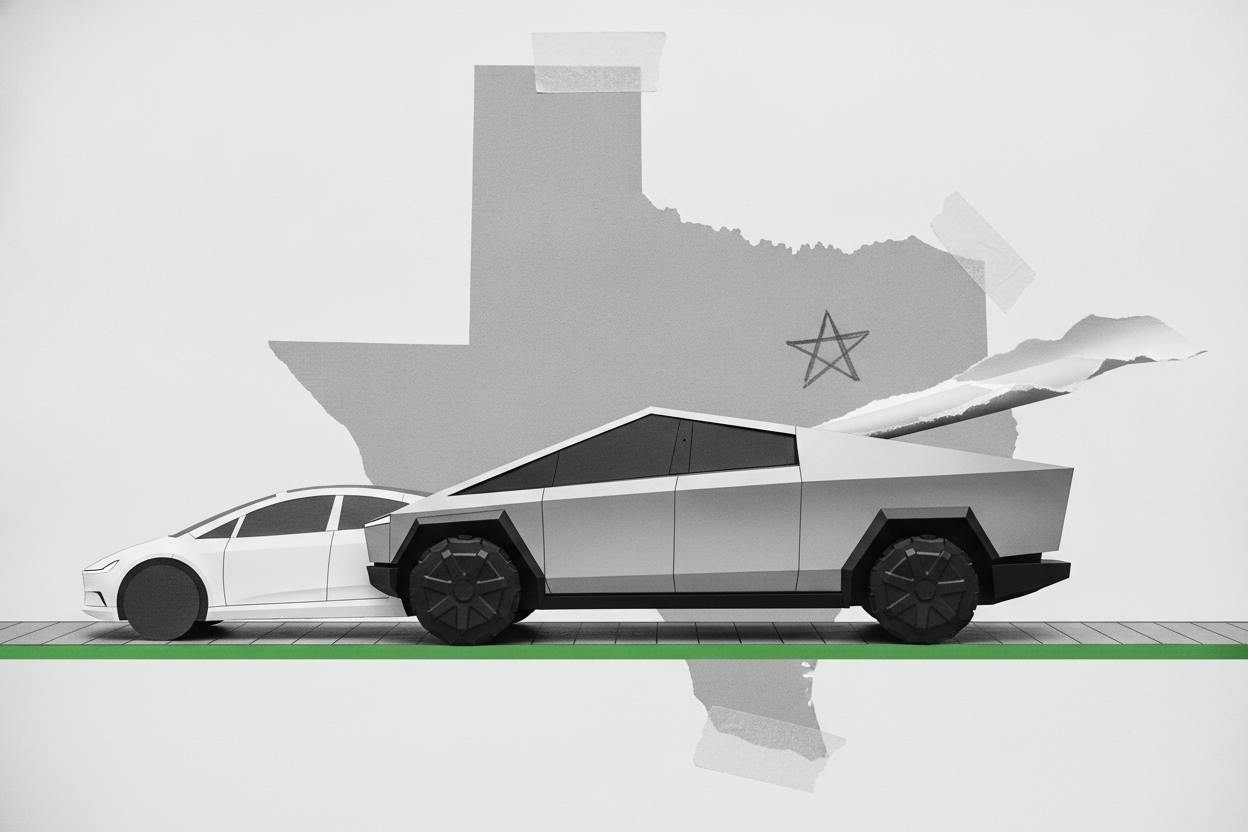
Tesla is preparing to wind down production of its Cybertruck at its Austin, Texas gigafactory around the middle of next year, according to CEO Elon Musk, who posted the update on X. The move is intended to free up factory capacity for the Cybercab, the company's purpose-built robotaxi, as Tesla shifts its focus toward autonomous driving and robotics.
The announcement, reported by Reuters, marks a notable change for a vehicle that has been a centerpiece of Tesla's lineup since its launch in late 2023. The Cybertruck has drawn attention for its angular design and stainless-steel body, but it has also faced recalls, quality concerns, and multiple price changes during its short time on the market.
Why Austin matters
Reuters notes that the Austin gigafactory is the only known Tesla plant equipped to produce the Cybertruck's specialized parts. That makes the site a critical bottleneck for the vehicle. If Tesla wants to continue selling the Cybertruck in meaningful volumes, it would need to replicate that bespoke tooling at another factory, a costly and time-consuming process. Alternatively, the company could accept lower Cybertruck output while it retools and reallocates the Texas lines.
Either path underscores a strategic pivot away from a headline-grabbing model toward a future built around autonomous vehicles. Cybertruck lead engineer Wes Morrill described the transition as a “handoff,” saying the pickup served as a technology platform that “lives on” in the Cybercab. That framing fits Musk's broader bet on self-driving and robotics, with the Cybercab positioned as the centerpiece of a future driverless ride-hailing network.
What it means for investors
For investors, the key concern is the financial impact of the transition. Factories carry significant fixed costs, including staffing, depreciation, and utilities. When production volumes fall, those costs get spread over fewer vehicles, which can pressure profit margins. If the Cybercab ramps up quickly enough to absorb the freed capacity, Tesla's delivery mix and automotive gross margin could remain relatively steady. If not, the handoff could show up as weaker margins and choppier quarterly delivery numbers.
The mid-next-year timeline puts added focus on Tesla's execution. The company will need to manage the wind-down of the Cybertruck while simultaneously scaling up Cybercab production, a complex operational challenge. Investors will likely watch for updates on Cybercab production targets, as well as any signs of production delays or cost overruns.
This is not the first time Tesla has shifted production priorities. The company has a history of adjusting its lineup based on demand and strategic goals. However, the Cybertruck's specialized manufacturing process makes this transition more complicated than a simple model changeover.
For everyday investors, the news is a reminder that Tesla's future growth is increasingly tied to its ability to execute on autonomous driving and robotics, rather than just selling more electric vehicles. The Cybercab represents a bet on a new business model, one that could generate recurring revenue from a driverless fleet. But that vision is still unproven, and the transition period could be bumpy.
In the broader context, Tesla's move comes as the company faces slowing EV demand and increased competition, particularly in China. The pivot toward robotaxis is part of a broader industry trend, with other companies also investing heavily in autonomous vehicle technology. However, Tesla's approach is unique in that it plans to use its own vehicles and its own ride-hailing platform, rather than partnering with existing ride-hailing services.
Investors should also consider the potential impact on Tesla's delivery numbers. The Cybertruck, despite its challenges, has contributed to Tesla's overall sales. A wind-down could reduce total deliveries in the short term, even as the Cybercab ramps up. That could affect quarterly earnings reports and investor sentiment.
Ultimately, the success of this transition will depend on whether Tesla can smoothly shift production from one vehicle to another without significant disruption. The company has a track record of overcoming production challenges, but the Cybertruck's unique manufacturing process adds an extra layer of difficulty.
For now, investors will be watching for more details on the timeline and any potential impact on Tesla's financial guidance. The mid-next-year transition is still several quarters away, leaving room for adjustments and updates.