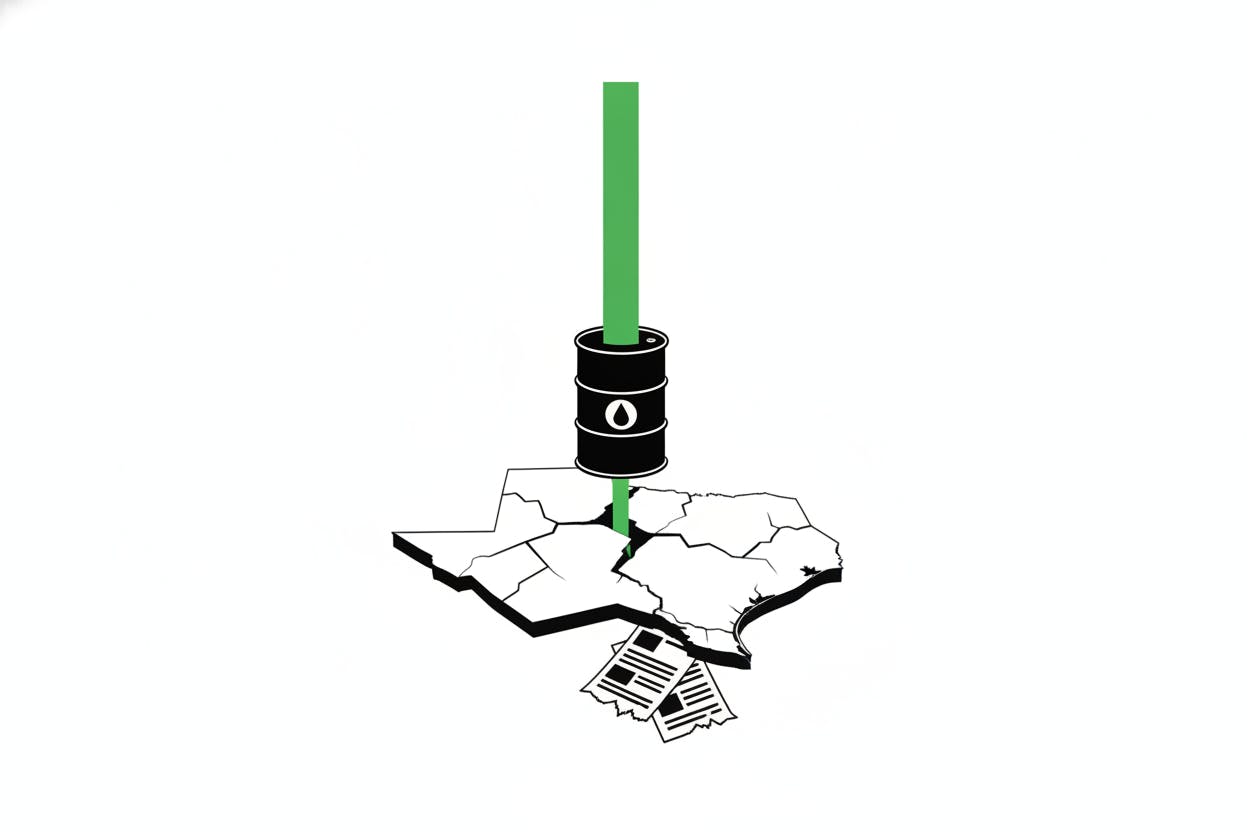
Texas Pacific Land, a company that owns vast acreage in the Permian Basin, reported second-quarter earnings that topped Wall Street's expectations, powered by higher oil prices and a record amount of oil and gas produced on its land.
The Dallas-based company posted diluted earnings per share of $2.23 for the quarter ended June 30, beating the $2.19 analysts had forecast, according to LSEG data. The profit beat came even though total revenue of $246.1 million fell short of the $254 million consensus estimate.
How Texas Pacific Land makes money
Unlike traditional oil producers that drill wells themselves, Texas Pacific Land is a royalty and land company. It owns mineral rights across roughly 873,000 acres in the Permian Basin, one of the most productive oil regions in the United States. When other companies drill on its land, Texas Pacific Land receives a royalty payment — a share of the revenue from the oil and gas produced.
In the second quarter, that royalty stream hit a record 39,700 barrels of oil equivalent per day (boepd). Combined with higher realized oil prices, royalty revenue rose to $145.6 million, up from the prior year. The company also earns fees from water services and other land uses, which provide additional income streams.
This business model means Texas Pacific Land's fortunes are tied to the activity of other producers in the Permian. When drilling picks up and oil prices are strong, its royalty payments grow. When activity slows or prices fall, its revenue can decline.
Why the revenue miss didn't matter
Investors often focus on earnings per share as the key measure of a company's profitability, and Texas Pacific Land's beat on that front was driven by its core royalty business. The revenue miss was largely due to lower revenue from other segments, such as water services, which can be more volatile quarter to quarter.
The company's ability to generate higher profit from its royalty stream, even as total revenue lagged, highlights the leverage in its model. Because royalty payments come with minimal operating costs, a small increase in production or prices can have an outsized impact on the bottom line.
What it means for investors
For everyday investors, Texas Pacific Land offers a way to gain exposure to the Permian Basin without the operational risks of drilling. The company's performance is a barometer for activity in one of the world's most important oil-producing regions.
The record royalty production suggests that producers are still actively drilling on Texas Pacific Land's acreage, a positive sign for the broader Permian economy. Higher realized oil prices also indicate that the company is capturing more value from each barrel produced.
However, investors should be aware that Texas Pacific Land's results are closely tied to commodity prices. If oil prices fall, royalty revenue could decline even if production remains steady. The company's water services business, which provides water for drilling and fracking operations, also depends on continued drilling activity.
The earnings beat comes amid a mixed earnings season for energy companies. Some producers have benefited from strong prices, while others have faced higher costs or operational challenges. Texas Pacific Land's results stand out because of its unique structure and the record royalty output.
Looking ahead, investors will likely watch whether the company can sustain this level of royalty production and how it manages its water services segment. The Permian Basin remains a key driver of U.S. oil output, and Texas Pacific Land is well positioned to benefit from continued development.
For those considering an investment, it's important to understand that Texas Pacific Land is not a typical oil stock. Its value is tied to the land it owns and the royalties it collects, making it more of a real estate and royalty play than a pure exploration and production company. That can offer diversification benefits, but it also means the stock's performance may differ from the broader energy sector.
As always, investors should consider their own financial goals and risk tolerance before making any decisions. The company's record quarter is a positive sign, but commodity markets are inherently unpredictable.