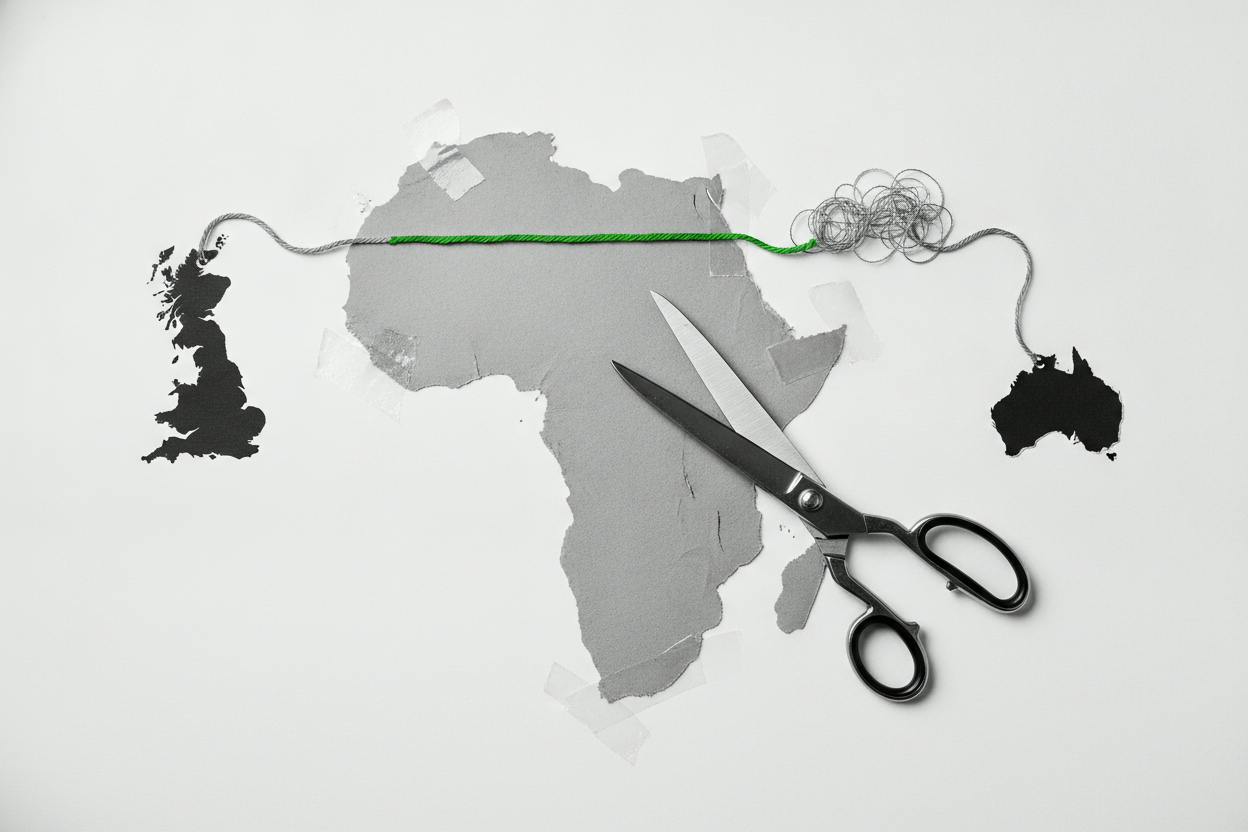
South African fashion group TFG reported a 6.8% drop in half-year profit on Thursday, as weaker trading in its overseas markets of the UK and Australia overshadowed the benefits of cost-cutting and store closures in its core African operations.
The owner of brands such as Foschini, Markham, and Jet in South Africa, as well as Phase Eight in the UK and Johnny Bigg in Australia, said headline earnings per share came in at 272.8 South African cents for the six months to September 30. Group operating profit fell 6.5% to 2.1 billion rand, even though revenue was essentially flat, edging up just 0.1% to 31.4 billion rand.
Why the overseas businesses are hurting
TFG has expanded aggressively into the UK and Australia over the past decade, acquiring brands like Phase Eight, Whistles, and Johnny Bigg. But those markets have proven challenging. Consumer spending in the UK has been squeezed by high inflation and elevated interest rates, while Australia has faced its own cost-of-living pressures and intense competition from both local and international retailers.
The company said the weaker results in these regions were the main reason for the profit decline. In contrast, its African operations—which include South Africa, Namibia, Botswana, and other countries—benefited from a restructuring program that involved closing underperforming stores and cutting costs. These measures helped support margins in the home market, but they were not enough to offset the drag from overseas.
What this means for investors
For everyday investors, the key takeaway is that TFG's growth story is now heavily dependent on its international expansion, which has yet to deliver consistent returns. The flat revenue suggests that the company is not growing its top line, and the profit decline indicates that cost savings alone cannot compensate for weak sales in key markets.
Investors will be watching whether TFG can turn around its UK and Australian operations, or whether it will decide to exit or restructure those businesses further. The company has already closed stores in Africa, and similar actions may be needed overseas if trading conditions do not improve.
It's also worth noting that TFG's results come against a backdrop of a challenging global retail environment. Many apparel retailers are facing softer demand as consumers prioritize spending on essentials over discretionary items. This is not unique to TFG—other retailers have reported similar pressures, as seen in recent earnings reports that highlight the mixed picture across consumer sectors.
Looking ahead
The second half of the fiscal year will be crucial for TFG. The holiday season is a key selling period for fashion retailers, and the company will be hoping for a stronger performance in its overseas markets. However, with consumer confidence still fragile in the UK and Australia, the outlook remains uncertain.
For investors, the key metrics to watch will be same-store sales growth, especially in the UK and Australia, and any further updates on cost-saving initiatives. If the overseas drag persists, TFG may need to take more drastic action, which could include further store closures or even divestitures.
In the meantime, the company's African business remains the anchor, and its ability to maintain profitability there will be critical. The success of its cost-cutting program in Africa shows that management is willing to make tough decisions, but whether that can translate into long-term shareholder value remains to be seen.
As always, it's important for investors to consider the broader context. Retail stocks are sensitive to interest rates and consumer spending trends. With central banks in the UK and Australia having raised rates over the past year, the pressure on discretionary spending is likely to continue. This is a factor that could weigh on TFG's shares in the near term.
Overall, TFG's half-year results highlight the challenges of international expansion in a tough retail environment. While the company's African core is holding up, the overseas drag is a reminder that growth is not guaranteed. Investors will be looking for signs of improvement in the second half, but for now, the picture is mixed.